
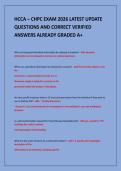
HCCA – CHPC EXAM 2026 LATEST UPDATE
QUESTIONS AND CORRECT VERIFIED
ANSWERS ALREADY GRADED A+
Who can Deceased Individuals information be released at anytime? - ANS-decedent
information can be released to coroners or medical examiners
When can a decedent information be released for research? - ANS-if the CE first obtains, from
the
researcher, a representation that the use or
disclosure sought is solely for research on the
protected health information of decedents.
Are two specific instances where a CE must seek permission from the individual if they want to
use or disclose PHI? - ANS-- "facility directories,"
- Second is "uses and disclosures for involvement in the individual's care and notification
purposes.
Is a valid authorization required for Psychotherapy Notes/Records? - ANS-yes, except for TPO
including the entity's internal
training program and Marketing.
What are the seven elements of a valid Authorization? - ANS-• A specific and meaningful
description of the
information to be disclosed, including specific
,• A specific division is identified as the one
authorized to disclose the medical record;
• The name or other specific identification of the
person(s) or entity(ies) to whom disclosure can
be made;
• A statement of the purpose of the requested
disclosure (which may be "at the request of the
client"), including any limitations on the use of
the information;
• An expiration date or a valid expiration event
AND check that the date has not passed nor
has the expiration event occurred;
• A signature dated by client or client's authorized
personal representative. If signed by the
authorized personal representative, a description
of such representative's authority to act for the
client is provided;
records and service dates;
What are the four statements are to be included in a valid Authorization? - ANS-• A statement
of client's right to revoke the
authorization, exceptions to this right, and a
description of how to revoke:
• A statement that treatment, payment,
enrollment or eligibility for benefits may NOT
be conditioned upon signing the authorization;
, • A statement regarding the potential that
the information disclosed pursuant to the
authorization may be re-disclosed by the
recipient and, if so, it may no longer be
protected by a federal confidentiality law;
• A statement that the person signing the
authorization has the right to (or will receive) a
copy of the authorization.
What are the draw backs in over-collecting authorizations? - ANS-- the entity must track the
expiration date
for renewals.
- there is a debate about using the information for any other purpose than what is stated on the
authorization
Request for Restrictions - ANS-patient has the right to request restrictions on the U&D of
information, even for the TPO exception
The entity must do what when a "Request for Restriction"? - ANS-- determine if the request is
reasonable
- if they can accommodate the request
- must abide by any agreed upon restrictions
Request for Confidential Communication Communication. - ANS-patient may request other
communication channels not typical for the entity, such as email, or meeting in off-site
locations.
QUESTIONS AND CORRECT VERIFIED
ANSWERS ALREADY GRADED A+
Who can Deceased Individuals information be released at anytime? - ANS-decedent
information can be released to coroners or medical examiners
When can a decedent information be released for research? - ANS-if the CE first obtains, from
the
researcher, a representation that the use or
disclosure sought is solely for research on the
protected health information of decedents.
Are two specific instances where a CE must seek permission from the individual if they want to
use or disclose PHI? - ANS-- "facility directories,"
- Second is "uses and disclosures for involvement in the individual's care and notification
purposes.
Is a valid authorization required for Psychotherapy Notes/Records? - ANS-yes, except for TPO
including the entity's internal
training program and Marketing.
What are the seven elements of a valid Authorization? - ANS-• A specific and meaningful
description of the
information to be disclosed, including specific
,• A specific division is identified as the one
authorized to disclose the medical record;
• The name or other specific identification of the
person(s) or entity(ies) to whom disclosure can
be made;
• A statement of the purpose of the requested
disclosure (which may be "at the request of the
client"), including any limitations on the use of
the information;
• An expiration date or a valid expiration event
AND check that the date has not passed nor
has the expiration event occurred;
• A signature dated by client or client's authorized
personal representative. If signed by the
authorized personal representative, a description
of such representative's authority to act for the
client is provided;
records and service dates;
What are the four statements are to be included in a valid Authorization? - ANS-• A statement
of client's right to revoke the
authorization, exceptions to this right, and a
description of how to revoke:
• A statement that treatment, payment,
enrollment or eligibility for benefits may NOT
be conditioned upon signing the authorization;
, • A statement regarding the potential that
the information disclosed pursuant to the
authorization may be re-disclosed by the
recipient and, if so, it may no longer be
protected by a federal confidentiality law;
• A statement that the person signing the
authorization has the right to (or will receive) a
copy of the authorization.
What are the draw backs in over-collecting authorizations? - ANS-- the entity must track the
expiration date
for renewals.
- there is a debate about using the information for any other purpose than what is stated on the
authorization
Request for Restrictions - ANS-patient has the right to request restrictions on the U&D of
information, even for the TPO exception
The entity must do what when a "Request for Restriction"? - ANS-- determine if the request is
reasonable
- if they can accommodate the request
- must abide by any agreed upon restrictions
Request for Confidential Communication Communication. - ANS-patient may request other
communication channels not typical for the entity, such as email, or meeting in off-site
locations.


