

CSD 425 FINAL EXAM UPDATED ACTUAL QUESTIONS
AND CORRECT ANSWERS
Question:
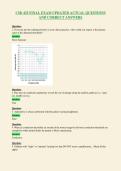
1. If you run into the audiogram below in your clinical practice, what would you suspect is the primary
cause of the abnormal thresholds?
Answer:
Noise Exposure
Question:
2. Pure tone air conduction audiometry reveals the site of damage along the auditory pathway (i.e., inner
ear, middle ear etc.).
Answer:
True
Question:
3. Audiometry is always performed with the patient wearing headphones.
Answer:
False
Question:
4. When air conduction thresholds are outside of the normal range but the bone conduction thresholds are
completely within normal limits the patient is likely experiencing
Answer:
Conductive
Question:
5. Children with "slight" or "minimal" hearing loss that DO NOT receive amplification... (Mark all that
apply)
,Answer:
Tend to experience listening fatigue, may have academic difficulties, may have difficulties hearing the
endings of words, and may have difficulties understanding speech in noise
Question:
6. What is possible etiology for conductive hearing loss?
Answer:
Otitis media, otosclerosis, infection, cerumen impaction
Question:
7. What are possible causes for mixed hearing loss?
Answer:
Perforated eardrum, hypoxia, noise exposure, presbycusis
Question:
8. Cochlear implants are recommended for patients with _______________________ hearing loss
Answer:
Sensorineural
Question:
9. Behind-the-ear (BTE) hearing aids have most of the components housed in a small case that fits the
pinna and are the most prevalent hearing aid style nowadays.
Answer:
True
Question:
10. Cochlear implants directly stimulate the ___________________ using electrical current.
Answer:
Auditory nerve
Question:
11. Which among the following is not a part of a typical hearing aid?
Answer:
Electrode array
Question:
12. Which among the following devices does not typically require any surgical procedures?
Answer:
Hearing aids
Question:
13. It is highly unlikely that hearing loss would affect the organization of a newborn's brain
Answer:
False
, Question:
14. Considering what your learned about neuroplasticity, it can be stated that the purpose of hearing
technology is to get auditory input to the brain.
Answer:
True
Question:
15. In the presence of auditory deprivation, primary and secondary auditory cortices get "decoupled",
leaving the secondary auditory cortex available for processing information from other senses (e.g., vision).
This is know as cross-modal reorganization.
Answer:
True
Question:
16. The end of the sensitive period for auditory and spoken language development is generally established
at ________ years of age
Answer:
Three
Question:
17. What's NOT true about the primary auditory cortex
Answer:
It is visible from the surface of the brain
Question:
18. The evidence-based principles state that to provide high-quality services SLPs and audiologists should
integrate the following into their clinical practice [mark all that apply]
Answer:
Patient, science, clinical experience
Question:
19. Strategies to maximize cultural competency include (mark all that apply)
Answer:
Using a cultural broker, practicing cultural humility, increasing cultural awareness
Question:
20. A 9-month-old baby is referred to your clinic with a suspicion of hearing loss. Which among the
following tests would you perform on this baby? (Choose all that apply.)
Answer:
VRA and OAEs
Question:
21. Which of the following hearing devices would be most adequate for a child with atresia (occluded ear
canal)
Answer:
BAHA
AND CORRECT ANSWERS
Question:
1. If you run into the audiogram below in your clinical practice, what would you suspect is the primary
cause of the abnormal thresholds?
Answer:
Noise Exposure
Question:
2. Pure tone air conduction audiometry reveals the site of damage along the auditory pathway (i.e., inner
ear, middle ear etc.).
Answer:
True
Question:
3. Audiometry is always performed with the patient wearing headphones.
Answer:
False
Question:
4. When air conduction thresholds are outside of the normal range but the bone conduction thresholds are
completely within normal limits the patient is likely experiencing
Answer:
Conductive
Question:
5. Children with "slight" or "minimal" hearing loss that DO NOT receive amplification... (Mark all that
apply)
,Answer:
Tend to experience listening fatigue, may have academic difficulties, may have difficulties hearing the
endings of words, and may have difficulties understanding speech in noise
Question:
6. What is possible etiology for conductive hearing loss?
Answer:
Otitis media, otosclerosis, infection, cerumen impaction
Question:
7. What are possible causes for mixed hearing loss?
Answer:
Perforated eardrum, hypoxia, noise exposure, presbycusis
Question:
8. Cochlear implants are recommended for patients with _______________________ hearing loss
Answer:
Sensorineural
Question:
9. Behind-the-ear (BTE) hearing aids have most of the components housed in a small case that fits the
pinna and are the most prevalent hearing aid style nowadays.
Answer:
True
Question:
10. Cochlear implants directly stimulate the ___________________ using electrical current.
Answer:
Auditory nerve
Question:
11. Which among the following is not a part of a typical hearing aid?
Answer:
Electrode array
Question:
12. Which among the following devices does not typically require any surgical procedures?
Answer:
Hearing aids
Question:
13. It is highly unlikely that hearing loss would affect the organization of a newborn's brain
Answer:
False
, Question:
14. Considering what your learned about neuroplasticity, it can be stated that the purpose of hearing
technology is to get auditory input to the brain.
Answer:
True
Question:
15. In the presence of auditory deprivation, primary and secondary auditory cortices get "decoupled",
leaving the secondary auditory cortex available for processing information from other senses (e.g., vision).
This is know as cross-modal reorganization.
Answer:
True
Question:
16. The end of the sensitive period for auditory and spoken language development is generally established
at ________ years of age
Answer:
Three
Question:
17. What's NOT true about the primary auditory cortex
Answer:
It is visible from the surface of the brain
Question:
18. The evidence-based principles state that to provide high-quality services SLPs and audiologists should
integrate the following into their clinical practice [mark all that apply]
Answer:
Patient, science, clinical experience
Question:
19. Strategies to maximize cultural competency include (mark all that apply)
Answer:
Using a cultural broker, practicing cultural humility, increasing cultural awareness
Question:
20. A 9-month-old baby is referred to your clinic with a suspicion of hearing loss. Which among the
following tests would you perform on this baby? (Choose all that apply.)
Answer:
VRA and OAEs
Question:
21. Which of the following hearing devices would be most adequate for a child with atresia (occluded ear
canal)
Answer:
BAHA


