
Question 1
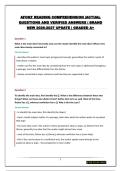
What is the main idea? Generally, how can the reader identify the main idea? What is the
main idea closely connected to?
Correct answer
- describes the author's main topic and general concept, generalizes the author's point of
view about a subject
- reader can find the main idea by considering how the main topic is addressed throughout
a passage, must also differentiate from the theme
- closely connected to topic sentences and how they are supported in text
Question 2
To identify the main idea, first identify the []. What is the difference between these two
things? What are these also distinct from? Define that term as well. Most of the time,
fiction has a [], whereas nonfiction has a []. Why is this the case?
Correct answer
- to identify the main idea, first identify the [topic]
- topic: overall subject matter of a passage, main idea: what the author wants to say about
that topic
- the main idea cover's the author's direct perspective about a topic, as distinct from the
theme: generally true idea that the reader might derive from a text
- most of the time, fiction has a [theme], whereas nonfiction has a [main idea]
- this is the case because in a nonfiction text, the author speaks more directly to the
audience about a topic - the perspective is more visible
1
@THE STUDY VAULT
, Question 3
What is the topic sentence? What is the summary sentence? How do the two differ?
Correct answer
- topic sentence - first, or near first, sentence in a paragraph, general statement that
introduces the topic, clearly and specifically directing the reader to access any previous
experience with that topic
- summary sentence - often at the end of a paragraph or passage, because it summarizes
the ideas presented, provides an understanding of what the author wants to say about the
topic and what conclusions to draw about it
- while a topic sentence acts as an introduction to a topic, allowing the reader to activate
his or her own ideas and experiences, the summary statement asks the reader to accept
the author's ideas about that topic, because of this a summary sentence helps the reader
quickly identify a piece's main idea
Question 4
What are supporting details? Supporting details come in many forms, the [] of a passage
dictates the [] that will support the []. What does a persuasive passage use? What does an
informative passage use? What does a narrative passage use? What is the most important
aspect of supporting details?
Correct answer
- supporting details - the rest of the paragraph between a topic sentence and a summary
sentence
- supporting details come in many forms, the [purpose] of a passage dictates the [type of
details] that will support the [main idea]
- persuasive passage - may use facts and data or detail specific reasons for the author's
opinion
- informative passage - primarily use facts about the topic to support the main idea
- narrative passage - use specific things the author says to develop the story and characters
- the most important aspect of supporting details is exactly what the term states: they
support the main idea - examining various supporting details and how they work with one
2
@THE STUDY VAULT
What is the main idea? Generally, how can the reader identify the main idea? What is the
main idea closely connected to?
Correct answer
- describes the author's main topic and general concept, generalizes the author's point of
view about a subject
- reader can find the main idea by considering how the main topic is addressed throughout
a passage, must also differentiate from the theme
- closely connected to topic sentences and how they are supported in text
Question 2
To identify the main idea, first identify the []. What is the difference between these two
things? What are these also distinct from? Define that term as well. Most of the time,
fiction has a [], whereas nonfiction has a []. Why is this the case?
Correct answer
- to identify the main idea, first identify the [topic]
- topic: overall subject matter of a passage, main idea: what the author wants to say about
that topic
- the main idea cover's the author's direct perspective about a topic, as distinct from the
theme: generally true idea that the reader might derive from a text
- most of the time, fiction has a [theme], whereas nonfiction has a [main idea]
- this is the case because in a nonfiction text, the author speaks more directly to the
audience about a topic - the perspective is more visible
1
@THE STUDY VAULT
, Question 3
What is the topic sentence? What is the summary sentence? How do the two differ?
Correct answer
- topic sentence - first, or near first, sentence in a paragraph, general statement that
introduces the topic, clearly and specifically directing the reader to access any previous
experience with that topic
- summary sentence - often at the end of a paragraph or passage, because it summarizes
the ideas presented, provides an understanding of what the author wants to say about the
topic and what conclusions to draw about it
- while a topic sentence acts as an introduction to a topic, allowing the reader to activate
his or her own ideas and experiences, the summary statement asks the reader to accept
the author's ideas about that topic, because of this a summary sentence helps the reader
quickly identify a piece's main idea
Question 4
What are supporting details? Supporting details come in many forms, the [] of a passage
dictates the [] that will support the []. What does a persuasive passage use? What does an
informative passage use? What does a narrative passage use? What is the most important
aspect of supporting details?
Correct answer
- supporting details - the rest of the paragraph between a topic sentence and a summary
sentence
- supporting details come in many forms, the [purpose] of a passage dictates the [type of
details] that will support the [main idea]
- persuasive passage - may use facts and data or detail specific reasons for the author's
opinion
- informative passage - primarily use facts about the topic to support the main idea
- narrative passage - use specific things the author says to develop the story and characters
- the most important aspect of supporting details is exactly what the term states: they
support the main idea - examining various supporting details and how they work with one
2
@THE STUDY VAULT


