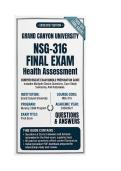
,NSG 316 Final Exam Health Assessment Questions And Answers
2026/2027 Grand
canyon university
Q1. Which finding is objective data?
A. "I feel short of breath."
B. "My pain is severe."
C. Respiratory rate of 26 breaths/min
D. "I feel weak."
Correct Answer: C
Rationale: Objective data are findings that can be observed or measured by
the examiner.
Q2. Which assessment is most appropriate during a client's first
comprehensive healthcare visit?
A. Focused assessment
B. Emergency assessment
C. Comprehensive assessment
D. Follow-up assessment only
Correct Answer: C
Rationale: A comprehensive assessment establishes a broad baseline of the
client's health history and physical status.
**Q3. Which finding should be documented during the general survey?
A. Gait
B. Serum potassium
C. Liver enzyme level
D. Urine culture
Correct Answer: A
Rationale: The general survey includes immediate observations such as
appearance, posture, mobility, behavior, and general nutritional status.
**Q4. Which client activity is an instrumental activity of daily living?
A. Bathing
B. Feeding
, C. Managing medications
D. Toileting
Correct Answer: C
Rationale: IADLs include more complex activities needed for independent
living, such as medication management, finances, shopping, and
transportation.
**Q5. Which finding during a general survey requires further assessment?
A. Steady gait
B. Appropriate grooming
C. New confusion
D. Clear speech
Correct Answer: C
Rationale: New confusion can indicate a neurologic, metabolic, infectious,
medication-related, or other acute problem.
Topic 2 — Health History and Communication
**Q6. Which question is most appropriate for beginning a health interview?
A. "Why did you wait so long to seek care?"
B. "Tell me what brought you in today."
C. "You don't smoke, correct?"
D. "Is your pain severe?"
Correct Answer: B
Rationale: An open-ended opening allows the client to describe the primary
concern in their own words.
**Q7. Which information belongs in the family history?
A. Previous surgeries
B. Current medications
C. Diseases affecting close relatives
D. Current vital signs
Correct Answer: C
Rationale: Family history identifies diseases or conditions among relatives
that may indicate inherited or familial risks.
**Q8. Which action demonstrates culturally sensitive interviewing?
2026/2027 Grand
canyon university
Q1. Which finding is objective data?
A. "I feel short of breath."
B. "My pain is severe."
C. Respiratory rate of 26 breaths/min
D. "I feel weak."
Correct Answer: C
Rationale: Objective data are findings that can be observed or measured by
the examiner.
Q2. Which assessment is most appropriate during a client's first
comprehensive healthcare visit?
A. Focused assessment
B. Emergency assessment
C. Comprehensive assessment
D. Follow-up assessment only
Correct Answer: C
Rationale: A comprehensive assessment establishes a broad baseline of the
client's health history and physical status.
**Q3. Which finding should be documented during the general survey?
A. Gait
B. Serum potassium
C. Liver enzyme level
D. Urine culture
Correct Answer: A
Rationale: The general survey includes immediate observations such as
appearance, posture, mobility, behavior, and general nutritional status.
**Q4. Which client activity is an instrumental activity of daily living?
A. Bathing
B. Feeding
, C. Managing medications
D. Toileting
Correct Answer: C
Rationale: IADLs include more complex activities needed for independent
living, such as medication management, finances, shopping, and
transportation.
**Q5. Which finding during a general survey requires further assessment?
A. Steady gait
B. Appropriate grooming
C. New confusion
D. Clear speech
Correct Answer: C
Rationale: New confusion can indicate a neurologic, metabolic, infectious,
medication-related, or other acute problem.
Topic 2 — Health History and Communication
**Q6. Which question is most appropriate for beginning a health interview?
A. "Why did you wait so long to seek care?"
B. "Tell me what brought you in today."
C. "You don't smoke, correct?"
D. "Is your pain severe?"
Correct Answer: B
Rationale: An open-ended opening allows the client to describe the primary
concern in their own words.
**Q7. Which information belongs in the family history?
A. Previous surgeries
B. Current medications
C. Diseases affecting close relatives
D. Current vital signs
Correct Answer: C
Rationale: Family history identifies diseases or conditions among relatives
that may indicate inherited or familial risks.
**Q8. Which action demonstrates culturally sensitive interviewing?