

HESI PHARMACOLOGY EVOLVE EXAM
COMPREHENSIVE PRACTICE
2026/2027 Edition • 150 Questions
HESI PHARMACOLOGY EVOLVE EXAM
COMPREHENSIVE PRACTICE (2026/2027 EDITION)
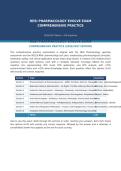
This comprehensive practice examination is aligned with the HESI Pharmacology specialty
assessment and the NCLEX-RN® pharmacology test plan, emphasizing pharmacological principles,
medication safety, and clinical application across major drug classes. It contains 150 multiple-choice
questions across eight sections, each with a complete rationale. Coverage reflects the exam
cognitive mix: approximately 30% recall, 50% application, and 20% analysis, with ≈75%
scenario-based items and ≈25% direct-knowledge items. Each question offers four options (A–D)
with exactly one correct response.
Section Topic Questions
Section 1 Pharmacokinetics & Pharmacodynamics – ADME, First-Pass, Half-Life, Therapeutic
20 Index, Agonists/Antagonists
Section 2 Medication Safety & Administration – Six Rights, Tall Man Lettering, Black Box20
Warnings, Error Prevention
Section 3 Autonomic Nervous System – Adrenergic, Cholinergic, Anticholinergic, Receptor
25 Effects (Alpha/Beta)
Section 4 Cardiovascular Medications – Antihypertensives, Anticoagulants, Antiplatelets,25
Digoxin, Statins
Section 5 Anti-Infective Agents – Antibiotics, Antivirals, Antifungals, Antimicrobial Stewardship
20
Section 6 Central Nervous System Drugs – Antidepressants, Antipsychotics, Anxiolytics, 15
Anticonvulsants, Opioids
Section 7 Endocrine & Respiratory Medications – Insulins, Oral Hypoglycemics, Thyroid, 15
Bronchodilators, Corticosteroids
Section 8 Integrated Clinical Scenarios – Complex, Multi-System Pharmacology Scenarios
10
TOTAL 150
How to use this exam: Work through the sections in order, marking your answers. Each item shows
four options (A–D) with exactly one correct response, followed by the answer and a rationale. A
consolidated answer key appears at the end for quick scoring.
,HESI PHARMACOLOGY EVOLVE EXAM — COMPREHENSIVE PRACTICE 2026/2027 Edition
Section 1: Pharmacokinetics & Pharmacodynamics – ADME, First-Pass, Half-Life,
Therapeutic Index, Agonists/Antagonists
Q1: Pharmacokinetics is BEST defined as the study of:
A. how the body processes a drug (ADME) [CORRECT]
B. how a drug affects the body
C. drug naming
D. drug pricing
Correct Answer: A
Rationale: Pharmacokinetics describes absorption, distribution, metabolism, and excretion.
Q2: The PRIMARY site of drug metabolism is the:
A. liver [CORRECT]
B. kidney
C. lung
D. stomach
Correct Answer: A
Rationale: The liver metabolizes most drugs via CYP450 enzymes.
Q3: Cytochrome P450 (CYP450) enzymes are primarily responsible for:
A. drug metabolism [CORRECT]
B. drug absorption
C. renal excretion
D. protein binding
Correct Answer: A
Rationale: CYP450 enzymes metabolize drugs in the liver.
Q4: The PRIMARY organ for excretion of most drugs is the:
A. kidneys [CORRECT]
B. liver
C. lungs
D. skin
Correct Answer: A
Rationale: Most drugs and metabolites are excreted renally.
Q5: The first-pass effect refers to:
A. hepatic metabolism of an oral drug before it reaches systemic circulation [CORRECT]
B. the first dose given
C. rapid renal clearance
D. the drug's peak effect
Correct Answer: A
Rationale: Oral drugs pass through the liver first, reducing systemic availability.
Q6: Bioavailability is BEST defined as:
A. the percentage of an administered dose reaching systemic circulation [CORRECT]
B. the speed of absorption
C. the degree of protein binding
D. the duration of action
Correct Answer: A
Rationale: Bioavailability is the fraction of the dose reaching circulation unchanged.
Page 2 of 28
, HESI PHARMACOLOGY EVOLVE EXAM — COMPREHENSIVE PRACTICE 2026/2027 Edition
Q7: Half-life is the time required for:
A. plasma drug concentration to decrease by 50% [CORRECT]
B. the drug to reach peak
C. complete elimination
D. receptor binding
Correct Answer: A
Rationale: Half-life is the time for concentration to fall by half.
Q8: A drug has a half-life of 8 hours. After 24 hours, what fraction remains?
A. 12.5% (three half-lives) [CORRECT]
B. 50%
C. 25%
D. 0%
Correct Answer: A
Rationale: 24 hours = 3 half-lives: 100→50→25→12.5%.
Q9: The therapeutic index is:
A. the ratio of toxic dose to therapeutic dose [CORRECT]
B. the number of doses needed
C. the time to peak
D. the protein-binding ratio
Correct Answer: A
Rationale: Therapeutic index = toxic dose / therapeutic dose.
Q10: Which drug has a NARROW therapeutic index requiring close monitoring?
A. Digoxin [CORRECT]
B. Acetaminophen
C. Vitamin C
D. Fiber supplement
Correct Answer: A
Rationale: Digoxin and lithium have narrow therapeutic indices.
Q11: An AGONIST drug:
A. activates a receptor to produce a response [CORRECT]
B. blocks a receptor
C. has no effect
D. destroys receptors
Correct Answer: A
Rationale: Agonists activate receptors.
Q12: An ANTAGONIST drug:
A. blocks receptor activation [CORRECT]
B. activates receptors
C. increases receptor number
D. acts like the endogenous ligand
Correct Answer: A
Rationale: Antagonists block receptors without activating them.
Page 3 of 28
COMPREHENSIVE PRACTICE
2026/2027 Edition • 150 Questions
HESI PHARMACOLOGY EVOLVE EXAM
COMPREHENSIVE PRACTICE (2026/2027 EDITION)
This comprehensive practice examination is aligned with the HESI Pharmacology specialty
assessment and the NCLEX-RN® pharmacology test plan, emphasizing pharmacological principles,
medication safety, and clinical application across major drug classes. It contains 150 multiple-choice
questions across eight sections, each with a complete rationale. Coverage reflects the exam
cognitive mix: approximately 30% recall, 50% application, and 20% analysis, with ≈75%
scenario-based items and ≈25% direct-knowledge items. Each question offers four options (A–D)
with exactly one correct response.
Section Topic Questions
Section 1 Pharmacokinetics & Pharmacodynamics – ADME, First-Pass, Half-Life, Therapeutic
20 Index, Agonists/Antagonists
Section 2 Medication Safety & Administration – Six Rights, Tall Man Lettering, Black Box20
Warnings, Error Prevention
Section 3 Autonomic Nervous System – Adrenergic, Cholinergic, Anticholinergic, Receptor
25 Effects (Alpha/Beta)
Section 4 Cardiovascular Medications – Antihypertensives, Anticoagulants, Antiplatelets,25
Digoxin, Statins
Section 5 Anti-Infective Agents – Antibiotics, Antivirals, Antifungals, Antimicrobial Stewardship
20
Section 6 Central Nervous System Drugs – Antidepressants, Antipsychotics, Anxiolytics, 15
Anticonvulsants, Opioids
Section 7 Endocrine & Respiratory Medications – Insulins, Oral Hypoglycemics, Thyroid, 15
Bronchodilators, Corticosteroids
Section 8 Integrated Clinical Scenarios – Complex, Multi-System Pharmacology Scenarios
10
TOTAL 150
How to use this exam: Work through the sections in order, marking your answers. Each item shows
four options (A–D) with exactly one correct response, followed by the answer and a rationale. A
consolidated answer key appears at the end for quick scoring.
,HESI PHARMACOLOGY EVOLVE EXAM — COMPREHENSIVE PRACTICE 2026/2027 Edition
Section 1: Pharmacokinetics & Pharmacodynamics – ADME, First-Pass, Half-Life,
Therapeutic Index, Agonists/Antagonists
Q1: Pharmacokinetics is BEST defined as the study of:
A. how the body processes a drug (ADME) [CORRECT]
B. how a drug affects the body
C. drug naming
D. drug pricing
Correct Answer: A
Rationale: Pharmacokinetics describes absorption, distribution, metabolism, and excretion.
Q2: The PRIMARY site of drug metabolism is the:
A. liver [CORRECT]
B. kidney
C. lung
D. stomach
Correct Answer: A
Rationale: The liver metabolizes most drugs via CYP450 enzymes.
Q3: Cytochrome P450 (CYP450) enzymes are primarily responsible for:
A. drug metabolism [CORRECT]
B. drug absorption
C. renal excretion
D. protein binding
Correct Answer: A
Rationale: CYP450 enzymes metabolize drugs in the liver.
Q4: The PRIMARY organ for excretion of most drugs is the:
A. kidneys [CORRECT]
B. liver
C. lungs
D. skin
Correct Answer: A
Rationale: Most drugs and metabolites are excreted renally.
Q5: The first-pass effect refers to:
A. hepatic metabolism of an oral drug before it reaches systemic circulation [CORRECT]
B. the first dose given
C. rapid renal clearance
D. the drug's peak effect
Correct Answer: A
Rationale: Oral drugs pass through the liver first, reducing systemic availability.
Q6: Bioavailability is BEST defined as:
A. the percentage of an administered dose reaching systemic circulation [CORRECT]
B. the speed of absorption
C. the degree of protein binding
D. the duration of action
Correct Answer: A
Rationale: Bioavailability is the fraction of the dose reaching circulation unchanged.
Page 2 of 28
, HESI PHARMACOLOGY EVOLVE EXAM — COMPREHENSIVE PRACTICE 2026/2027 Edition
Q7: Half-life is the time required for:
A. plasma drug concentration to decrease by 50% [CORRECT]
B. the drug to reach peak
C. complete elimination
D. receptor binding
Correct Answer: A
Rationale: Half-life is the time for concentration to fall by half.
Q8: A drug has a half-life of 8 hours. After 24 hours, what fraction remains?
A. 12.5% (three half-lives) [CORRECT]
B. 50%
C. 25%
D. 0%
Correct Answer: A
Rationale: 24 hours = 3 half-lives: 100→50→25→12.5%.
Q9: The therapeutic index is:
A. the ratio of toxic dose to therapeutic dose [CORRECT]
B. the number of doses needed
C. the time to peak
D. the protein-binding ratio
Correct Answer: A
Rationale: Therapeutic index = toxic dose / therapeutic dose.
Q10: Which drug has a NARROW therapeutic index requiring close monitoring?
A. Digoxin [CORRECT]
B. Acetaminophen
C. Vitamin C
D. Fiber supplement
Correct Answer: A
Rationale: Digoxin and lithium have narrow therapeutic indices.
Q11: An AGONIST drug:
A. activates a receptor to produce a response [CORRECT]
B. blocks a receptor
C. has no effect
D. destroys receptors
Correct Answer: A
Rationale: Agonists activate receptors.
Q12: An ANTAGONIST drug:
A. blocks receptor activation [CORRECT]
B. activates receptors
C. increases receptor number
D. acts like the endogenous ligand
Correct Answer: A
Rationale: Antagonists block receptors without activating them.
Page 3 of 28


