

HESI ADULT HEALTH 2 EXAM
COMPREHENSIVE PRACTICE
2026/2027 Edition • 150 Questions
HESI ADULT HEALTH 2 EXAM
COMPREHENSIVE PRACTICE (2026/2027 EDITION)
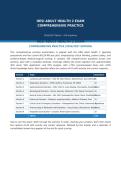
This comprehensive practice examination is aligned with the HESI Adult Health 2 specialty
assessment and the current NCLEX-RN test plan, emphasizing critical thinking, patient safety, and
evidence-based medical-surgical nursing. It contains 150 multiple-choice questions across nine
sections, each with a complete rationale. Coverage reflects the exam cognitive mix: approximately
30% recall, 50% application, and 20% analysis, with ≈75% scenario-based items and ≈25%
direct-knowledge items. Each question offers four options (A–D) with exactly one correct response.
Section Topic Questions
Section 1 Cardiovascular Disorders – CAD, MI, Heart Failure, Hypertension, Dysrhythmias
25
Section 2 Respiratory Disorders – COPD, Asthma, Pneumonia, PE, ARDS 20
Section 3 Gastrointestinal Disorders – PUD, Crohn's, Liver Disease, Pancreatitis, Diverticulosis
20
Section 4 Neurological Disorders – Stroke, Seizures, Parkinson's, MS, Spinal Cord Injury 20
Section 5 Renal & Urinary Disorders – AKI, CKD, Pyelonephritis, Renal Calculi, Fluid/Electrolytes
15
Section 6 Endocrine Disorders – Diabetes, Hyperthyroidism, Addison's Disease, Gout 15
Section 7 Critical Care & Emergency Situations – Postoperative Care, Shock, Autonomic 10
Dysreflexia
Section 8 Pharmacology & Medication Administration – Drug Classes, Mechanisms, Monitoring
15
Section 9 Integrated Case Studies – Complex, Multi-System Scenarios 10
TOTAL 150
How to use this exam: Work through the sections in order, marking your answers. Each item shows
four options (A–D) with exactly one correct response, followed by the answer and a rationale. A
consolidated answer key appears at the end for quick scoring.
,HESI ADULT HEALTH 2 — COMPREHENSIVE PRACTICE 2026/2027 Edition
Section 1: Cardiovascular Disorders – CAD, MI, Heart Failure, Hypertension,
Dysrhythmias
Q1: A patient presents with substernal crushing chest pain radiating to the left arm and jaw,
diaphoresis, and nausea. The nurse's FIRST priority is to:
A. obtain a 12-lead ECG and prepare for rapid evaluation [CORRECT]
B. encourage the patient to ambulate
C. administer a routine laxative
D. offer a full meal
Correct Answer: A
Rationale: Suspected MI requires immediate ECG; delays increase myocardial damage.
Q2: Which laboratory value is MOST specific for myocardial injury?
A. Cardiac troponin [CORRECT]
B. Creatine kinase total
C. Lactic acid
D. Amylase
Correct Answer: A
Rationale: Troponin is highly specific to cardiac muscle injury.
Q3: A patient in acute pulmonary edema is most comfortable and benefits from which position?
A. High Fowler's with legs dependent [CORRECT]
B. Flat supine
C. Trendelenburg
D. Left lateral recumbent
Correct Answer: A
Rationale: High Fowler's improves ventilation and decreases venous return/preload.
Q4: Which finding is characteristic of LEFT-sided heart failure?
A. Pulmonary crackles and dyspnea [CORRECT]
B. Peripheral edema
C. Jugular venous distension
D. Ascites
Correct Answer: A
Rationale: Left ventricular failure causes pulmonary congestion; right-sided failure causes systemic congestion.
Q5: Which finding is characteristic of RIGHT-sided heart failure?
A. Dependent edema and jugular venous distension [CORRECT]
B. Pulmonary crackles
C. Paroxysmal nocturnal dyspnea
D. Pink frothy sputum
Correct Answer: A
Rationale: Right-sided failure backs blood up into the systemic circulation.
Q6: The nurse teaches a heart failure patient to weigh daily and to call if weight increases by:
A. 2-3 lb in one day or 5 lb in one week [CORRECT]
B. 10 lb in one day
C. 1 lb in one month
D. Weight gain is never important
Correct Answer: A
Rationale: Rapid weight gain signals fluid retention and worsening heart failure.
Page 2 of 28
, HESI ADULT HEALTH 2 — COMPREHENSIVE PRACTICE 2026/2027 Edition
Q7: A patient prescribed benazepril (an ACE inhibitor) should be taught to report which adverse effect?
A. Angioedema (swelling of lips/tongue) [CORRECT]
B. Increased appetite
C. Constipation
D. Ringing in the ears
Correct Answer: A
Rationale: ACE inhibitors can cause angioedema, a potentially life-threatening reaction.
Q8: A patient taking an ACE inhibitor should have which laboratory value monitored?
A. Serum potassium [CORRECT]
B. Serum amylase
C. Platelet count only
D. Bilirubin
Correct Answer: A
Rationale: ACE inhibitors can cause hyperkalemia; potassium must be monitored.
Q9: Atrial fibrillation is BEST described as:
A. an irregularly irregular rhythm that increases stroke risk [CORRECT]
B. a regular rhythm at 40 bpm
C. a regular rhythm at 160 bpm
D. absence of all electrical activity
Correct Answer: A
Rationale: AF has no organized atrial activity, causing irregular ventricular response and clot risk.
Q10: The primary treatment for pulseless ventricular tachycardia or ventricular fibrillation is:
A. immediate defibrillation [CORRECT]
B. sublingual nitroglycerin
C. oral fluids
D. observation
Correct Answer: A
Rationale: Pulseless VT/VF are shockable rhythms treated with immediate defibrillation.
Q11: Following abdominal aortic aneurysm (AAA) repair, the nurse's priority assessment is:
A. pedal (peripheral) pulses and circulation to the lower extremities [CORRECT]
B. hearing acuity
C. visual acuity
D. gag reflex
Correct Answer: A
Rationale: Graft occlusion or emboli can compromise lower-extremity perfusion; pedal pulses are monitored.
Q12: The classic symptom of peripheral arterial disease is:
A. intermittent claudication that is relieved by rest and dependent position [CORRECT]
B. pain relieved by elevation
C. brown stasis dermatitis
D. constant itching
Correct Answer: A
Rationale: Arterial insufficiency causes cramping with activity, relieved by rest/dependency.
Page 3 of 28
COMPREHENSIVE PRACTICE
2026/2027 Edition • 150 Questions
HESI ADULT HEALTH 2 EXAM
COMPREHENSIVE PRACTICE (2026/2027 EDITION)
This comprehensive practice examination is aligned with the HESI Adult Health 2 specialty
assessment and the current NCLEX-RN test plan, emphasizing critical thinking, patient safety, and
evidence-based medical-surgical nursing. It contains 150 multiple-choice questions across nine
sections, each with a complete rationale. Coverage reflects the exam cognitive mix: approximately
30% recall, 50% application, and 20% analysis, with ≈75% scenario-based items and ≈25%
direct-knowledge items. Each question offers four options (A–D) with exactly one correct response.
Section Topic Questions
Section 1 Cardiovascular Disorders – CAD, MI, Heart Failure, Hypertension, Dysrhythmias
25
Section 2 Respiratory Disorders – COPD, Asthma, Pneumonia, PE, ARDS 20
Section 3 Gastrointestinal Disorders – PUD, Crohn's, Liver Disease, Pancreatitis, Diverticulosis
20
Section 4 Neurological Disorders – Stroke, Seizures, Parkinson's, MS, Spinal Cord Injury 20
Section 5 Renal & Urinary Disorders – AKI, CKD, Pyelonephritis, Renal Calculi, Fluid/Electrolytes
15
Section 6 Endocrine Disorders – Diabetes, Hyperthyroidism, Addison's Disease, Gout 15
Section 7 Critical Care & Emergency Situations – Postoperative Care, Shock, Autonomic 10
Dysreflexia
Section 8 Pharmacology & Medication Administration – Drug Classes, Mechanisms, Monitoring
15
Section 9 Integrated Case Studies – Complex, Multi-System Scenarios 10
TOTAL 150
How to use this exam: Work through the sections in order, marking your answers. Each item shows
four options (A–D) with exactly one correct response, followed by the answer and a rationale. A
consolidated answer key appears at the end for quick scoring.
,HESI ADULT HEALTH 2 — COMPREHENSIVE PRACTICE 2026/2027 Edition
Section 1: Cardiovascular Disorders – CAD, MI, Heart Failure, Hypertension,
Dysrhythmias
Q1: A patient presents with substernal crushing chest pain radiating to the left arm and jaw,
diaphoresis, and nausea. The nurse's FIRST priority is to:
A. obtain a 12-lead ECG and prepare for rapid evaluation [CORRECT]
B. encourage the patient to ambulate
C. administer a routine laxative
D. offer a full meal
Correct Answer: A
Rationale: Suspected MI requires immediate ECG; delays increase myocardial damage.
Q2: Which laboratory value is MOST specific for myocardial injury?
A. Cardiac troponin [CORRECT]
B. Creatine kinase total
C. Lactic acid
D. Amylase
Correct Answer: A
Rationale: Troponin is highly specific to cardiac muscle injury.
Q3: A patient in acute pulmonary edema is most comfortable and benefits from which position?
A. High Fowler's with legs dependent [CORRECT]
B. Flat supine
C. Trendelenburg
D. Left lateral recumbent
Correct Answer: A
Rationale: High Fowler's improves ventilation and decreases venous return/preload.
Q4: Which finding is characteristic of LEFT-sided heart failure?
A. Pulmonary crackles and dyspnea [CORRECT]
B. Peripheral edema
C. Jugular venous distension
D. Ascites
Correct Answer: A
Rationale: Left ventricular failure causes pulmonary congestion; right-sided failure causes systemic congestion.
Q5: Which finding is characteristic of RIGHT-sided heart failure?
A. Dependent edema and jugular venous distension [CORRECT]
B. Pulmonary crackles
C. Paroxysmal nocturnal dyspnea
D. Pink frothy sputum
Correct Answer: A
Rationale: Right-sided failure backs blood up into the systemic circulation.
Q6: The nurse teaches a heart failure patient to weigh daily and to call if weight increases by:
A. 2-3 lb in one day or 5 lb in one week [CORRECT]
B. 10 lb in one day
C. 1 lb in one month
D. Weight gain is never important
Correct Answer: A
Rationale: Rapid weight gain signals fluid retention and worsening heart failure.
Page 2 of 28
, HESI ADULT HEALTH 2 — COMPREHENSIVE PRACTICE 2026/2027 Edition
Q7: A patient prescribed benazepril (an ACE inhibitor) should be taught to report which adverse effect?
A. Angioedema (swelling of lips/tongue) [CORRECT]
B. Increased appetite
C. Constipation
D. Ringing in the ears
Correct Answer: A
Rationale: ACE inhibitors can cause angioedema, a potentially life-threatening reaction.
Q8: A patient taking an ACE inhibitor should have which laboratory value monitored?
A. Serum potassium [CORRECT]
B. Serum amylase
C. Platelet count only
D. Bilirubin
Correct Answer: A
Rationale: ACE inhibitors can cause hyperkalemia; potassium must be monitored.
Q9: Atrial fibrillation is BEST described as:
A. an irregularly irregular rhythm that increases stroke risk [CORRECT]
B. a regular rhythm at 40 bpm
C. a regular rhythm at 160 bpm
D. absence of all electrical activity
Correct Answer: A
Rationale: AF has no organized atrial activity, causing irregular ventricular response and clot risk.
Q10: The primary treatment for pulseless ventricular tachycardia or ventricular fibrillation is:
A. immediate defibrillation [CORRECT]
B. sublingual nitroglycerin
C. oral fluids
D. observation
Correct Answer: A
Rationale: Pulseless VT/VF are shockable rhythms treated with immediate defibrillation.
Q11: Following abdominal aortic aneurysm (AAA) repair, the nurse's priority assessment is:
A. pedal (peripheral) pulses and circulation to the lower extremities [CORRECT]
B. hearing acuity
C. visual acuity
D. gag reflex
Correct Answer: A
Rationale: Graft occlusion or emboli can compromise lower-extremity perfusion; pedal pulses are monitored.
Q12: The classic symptom of peripheral arterial disease is:
A. intermittent claudication that is relieved by rest and dependent position [CORRECT]
B. pain relieved by elevation
C. brown stasis dermatitis
D. constant itching
Correct Answer: A
Rationale: Arterial insufficiency causes cramping with activity, relieved by rest/dependency.
Page 3 of 28


