

Shabina
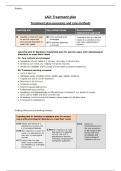
LAD: Treatment plan
Treatment plan processes and care methods
Grading criteria you are working towards:
,Shabina
Essential information for assessment decisions
Learning aim D
The selected service user may be chosen by learners or teachers. Alternatively, learners may develop
the plan with family members, relatives, neighbours or friends. However, learners must always
respect confidentiality and obtain formal consent from service users in order to report any
information. The physiological disorder that learners choose must be agreed with the teacher.
For pass standard,
learners will achieve planned outcomes by carrying out activities fully, correctly and safely when
assessing a service user’s care needs.
Learners must select and deploy appropriate processes and skills in familiar situations when
planning treatment for a service user, including the factors that need to be considered to meet
the needs of the service user.
Learners must review the success of processes and skills used in the treatment plan.
For merit standard,
learners will relate and differentiate the use of different skills when assessing a service user’s
care needs.
They must modify processes and skills to suit contexts and to deal with contingencies when
planning treatment for a service user, including the factors that need to be considered to meet
the needs of the service user.
Learners must modify techniques and processes to suit contexts and to deal with contingencies
For distinction standard,
learners will make the most appropriate selections in given constraints and desired outcomes
when assessing a service user’s care needs.
Case study:
, Shabina
Name of Patient: Diagnosis:
Mahruk Mohammed Coronary Heart Disease
Gorska
Basic details Career and lifestyle:
DOB: 15.06.1981 Mahruk is currently unemployed but is working towards finding
a job that is suitable for her.
Date of diagnosis: Smokes 2 cigarettes a day
22.02.22 Drinks 25 units of alcohol per week
Age: 43 Isn't very physically active because she has no job so spends
most of her time at home
Ethnicity: Isn't very physically active because she has no job so spends
Pakistani/Polish most of her time at home
Has obesity
Gender: Female
Individual needs (including culture, religions, disability):
Mahruk suffers with anxiety, she was diagnosed with disorder shortly after her CHD
diagnoses, however she was put on some medication (benzodiazepines) in order to assist
her and help her through it. (“Anxiety Medication UK”)
Mahruk suffers with depression, she was diagnosed with this disorder after the divorce
with her now ex-husband, she was put on some medication (Fluoxetine) in order to assist
her and help her through it, however after partaking in a couple therapy sessions, she
stopped taking the medication as it was getting better.
(NHS).
What does the patient want the outcome of the care plan to be?
Improved breathing
Reduced chest pain
Improved diet and lifestyle
LAD: Treatment plan
Treatment plan processes and care methods
Grading criteria you are working towards:
,Shabina
Essential information for assessment decisions
Learning aim D
The selected service user may be chosen by learners or teachers. Alternatively, learners may develop
the plan with family members, relatives, neighbours or friends. However, learners must always
respect confidentiality and obtain formal consent from service users in order to report any
information. The physiological disorder that learners choose must be agreed with the teacher.
For pass standard,
learners will achieve planned outcomes by carrying out activities fully, correctly and safely when
assessing a service user’s care needs.
Learners must select and deploy appropriate processes and skills in familiar situations when
planning treatment for a service user, including the factors that need to be considered to meet
the needs of the service user.
Learners must review the success of processes and skills used in the treatment plan.
For merit standard,
learners will relate and differentiate the use of different skills when assessing a service user’s
care needs.
They must modify processes and skills to suit contexts and to deal with contingencies when
planning treatment for a service user, including the factors that need to be considered to meet
the needs of the service user.
Learners must modify techniques and processes to suit contexts and to deal with contingencies
For distinction standard,
learners will make the most appropriate selections in given constraints and desired outcomes
when assessing a service user’s care needs.
Case study:
, Shabina
Name of Patient: Diagnosis:
Mahruk Mohammed Coronary Heart Disease
Gorska
Basic details Career and lifestyle:
DOB: 15.06.1981 Mahruk is currently unemployed but is working towards finding
a job that is suitable for her.
Date of diagnosis: Smokes 2 cigarettes a day
22.02.22 Drinks 25 units of alcohol per week
Age: 43 Isn't very physically active because she has no job so spends
most of her time at home
Ethnicity: Isn't very physically active because she has no job so spends
Pakistani/Polish most of her time at home
Has obesity
Gender: Female
Individual needs (including culture, religions, disability):
Mahruk suffers with anxiety, she was diagnosed with disorder shortly after her CHD
diagnoses, however she was put on some medication (benzodiazepines) in order to assist
her and help her through it. (“Anxiety Medication UK”)
Mahruk suffers with depression, she was diagnosed with this disorder after the divorce
with her now ex-husband, she was put on some medication (Fluoxetine) in order to assist
her and help her through it, however after partaking in a couple therapy sessions, she
stopped taking the medication as it was getting better.
(NHS).
What does the patient want the outcome of the care plan to be?
Improved breathing
Reduced chest pain
Improved diet and lifestyle


