
https://www.stuvia.com/user/performance
Emergency Medicine Practice Examination Original Post-Test Questions | All Chapters | Based
on Standard Emergency Medicine Curriculum
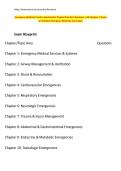
Exam Blueprint
Chapter/Topic Area Questions
Chapter 1: Emergency Medical Services & Systems
Chapter 2: Airway Management & Ventilation
Chapter 3: Shock & Resuscitation
Chapter 4: Cardiovascular Emergencies
Chapter 5: Respiratory Emergencies
Chapter 6: Neurologic Emergencies
Chapter 7: Trauma & Injury Management
Chapter 8: Abdominal & Gastrointestinal Emergencies
Chapter 9: Endocrine & Metabolic Emergencies
Chapter 10: Toxicologic Emergencies
, https://www.stuvia.com/user/performance
Chapter/Topic Area Questions
Chapter 11: Environmental Emergencies
Chapter 12: Obstetric & Gynecologic Emergencies
Chapter 13: Pediatric Emergencies
Chapter 14: Geriatric Emergencies
Chapter 15: Psychiatric & Behavioral Emergencies
Chapter 16: Infectious Disease Emergencies
Chapter 17: Legal & Ethical Issues
Total 220
CHAPTER 1: Emergency Medical Services & Systems
1. What is the primary goal of an emergency medical services
(EMS) system?
A. To transport all patients to the nearest hospital
B. To provide rapid, efficient, and effective prehospital care and
,https://www.stuvia.com/user/performance
transport
C. To replace hospital emergency departments
D. To provide only basic first aid
Answer: B
Rationale: The primary goal of EMS is to provide rapid, efficient,
and effective prehospital assessment, treatment, and transport
to definitive care.
2. Which level of EMS provider is trained to perform advanced
airway management, administer medications, and interpret
ECGs?
A. Emergency Medical Responder (EMR)
B. Emergency Medical Technician (EMT)
C. Advanced EMT (AEMT)
D. Paramedic
Answer: D
Rationale: Paramedics receive the most advanced prehospital
training, including advanced airway management, medication
administration, and ECG interpretation.
3. What is the purpose of medical direction in an EMS system?
A. To limit the scope of practice of providers
B. To provide physician oversight and guidance for prehospital
, https://www.stuvia.com/user/performance
care
C. To increase liability for EMS agencies
D. To replace protocols
Answer: B
Rationale: Medical direction provides physician oversight,
develops protocols, and ensures quality of prehospital care
through online (direct) and offline (standing orders) guidance.
4. What is the role of the emergency department in the
continuum of emergency care?
A. To provide only trauma care
B. To provide definitive evaluation and treatment for acutely ill
and injured patients
C. To replace EMS
D. To provide only psychiatric care
Answer: B
Rationale: The emergency department provides definitive
evaluation and treatment for acutely ill and injured patients,
serving as the entry point for hospital admission.
5. What is triage?
A. The process of treating all patients equally
B. A system for prioritizing patients based on the severity of
Emergency Medicine Practice Examination Original Post-Test Questions | All Chapters | Based
on Standard Emergency Medicine Curriculum
Exam Blueprint
Chapter/Topic Area Questions
Chapter 1: Emergency Medical Services & Systems
Chapter 2: Airway Management & Ventilation
Chapter 3: Shock & Resuscitation
Chapter 4: Cardiovascular Emergencies
Chapter 5: Respiratory Emergencies
Chapter 6: Neurologic Emergencies
Chapter 7: Trauma & Injury Management
Chapter 8: Abdominal & Gastrointestinal Emergencies
Chapter 9: Endocrine & Metabolic Emergencies
Chapter 10: Toxicologic Emergencies
, https://www.stuvia.com/user/performance
Chapter/Topic Area Questions
Chapter 11: Environmental Emergencies
Chapter 12: Obstetric & Gynecologic Emergencies
Chapter 13: Pediatric Emergencies
Chapter 14: Geriatric Emergencies
Chapter 15: Psychiatric & Behavioral Emergencies
Chapter 16: Infectious Disease Emergencies
Chapter 17: Legal & Ethical Issues
Total 220
CHAPTER 1: Emergency Medical Services & Systems
1. What is the primary goal of an emergency medical services
(EMS) system?
A. To transport all patients to the nearest hospital
B. To provide rapid, efficient, and effective prehospital care and
,https://www.stuvia.com/user/performance
transport
C. To replace hospital emergency departments
D. To provide only basic first aid
Answer: B
Rationale: The primary goal of EMS is to provide rapid, efficient,
and effective prehospital assessment, treatment, and transport
to definitive care.
2. Which level of EMS provider is trained to perform advanced
airway management, administer medications, and interpret
ECGs?
A. Emergency Medical Responder (EMR)
B. Emergency Medical Technician (EMT)
C. Advanced EMT (AEMT)
D. Paramedic
Answer: D
Rationale: Paramedics receive the most advanced prehospital
training, including advanced airway management, medication
administration, and ECG interpretation.
3. What is the purpose of medical direction in an EMS system?
A. To limit the scope of practice of providers
B. To provide physician oversight and guidance for prehospital
, https://www.stuvia.com/user/performance
care
C. To increase liability for EMS agencies
D. To replace protocols
Answer: B
Rationale: Medical direction provides physician oversight,
develops protocols, and ensures quality of prehospital care
through online (direct) and offline (standing orders) guidance.
4. What is the role of the emergency department in the
continuum of emergency care?
A. To provide only trauma care
B. To provide definitive evaluation and treatment for acutely ill
and injured patients
C. To replace EMS
D. To provide only psychiatric care
Answer: B
Rationale: The emergency department provides definitive
evaluation and treatment for acutely ill and injured patients,
serving as the entry point for hospital admission.
5. What is triage?
A. The process of treating all patients equally
B. A system for prioritizing patients based on the severity of


