NUR 612 EXAM 4 QUESTIONS WITH VERIFIED ANSWERS
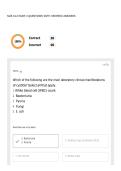
Correct
Incorrect
1 of 30
Term
Which of the following are the main laboratory clinical manifestations
of cystitis? Select all that apply.
1. White blood cell (WBC) count
2. Bacteriuria
3. Pyuria
4. Fungi
5. E. coli
Give this one a try later!
2. Bacteriuria
3. Restless legs syndrome (RLS)
3. Pyuria
2. Fat necrosis 3. Breast mass
, Don't know?
2 of 30
Term
A clinician is performing sensory assessment on a patient presenting
signs and symptoms ofneurological disease. During the assessment,
the clinician notices that the patient has a decreased sense of both
pain and temperature. Which of the following may be affected?
1. Spinothalamic tract
2. Cranial nerve VII
3. Posterior column
4. Posterior horn
Give this one a try later!
1. Substantia nigra 1. Cystitis
1. Stroke
2. Subdural hematoma 1. Spinothalamic tract
3. Meningitis
Don't know?
3 of 30
Term
, Prostate cancer is the most common and leading cause of cancer
death in men. Which of the following statements is true about prostate
cancer?
1. There is usually a sudden onset of pain in the early stages.
2. Asian men are at highest risk for developing prostate cancer.
3. Development of prostate cancer has been linked with prior
vasectomy.
4. There are usually no symptoms with early disease.
Give this one a try later!
1. Stroke 1. Postmenopausal obesity
2. Subdural hematoma 2. Alcohol intake
3. Meningitis 4. Menopause hormone therapy
1. Substance abuse.
4. There are usually no
2. Use of supplements.
symptoms with early disease.
4. Current occupation.
Don't know?
4 of 30
Term
Neurological assessment of the older adult requires specific tools and
considerations to assess patient mental status. Which of the following
should be used to assess patient cognition?
1. Administer SLUMS, a short dementia assessment.
2. Administer MoCA v 7.1, a 12-item assessment to detect mild
neurocognitive disorders.
Correct
Incorrect
1 of 30
Term
Which of the following are the main laboratory clinical manifestations
of cystitis? Select all that apply.
1. White blood cell (WBC) count
2. Bacteriuria
3. Pyuria
4. Fungi
5. E. coli
Give this one a try later!
2. Bacteriuria
3. Restless legs syndrome (RLS)
3. Pyuria
2. Fat necrosis 3. Breast mass
, Don't know?
2 of 30
Term
A clinician is performing sensory assessment on a patient presenting
signs and symptoms ofneurological disease. During the assessment,
the clinician notices that the patient has a decreased sense of both
pain and temperature. Which of the following may be affected?
1. Spinothalamic tract
2. Cranial nerve VII
3. Posterior column
4. Posterior horn
Give this one a try later!
1. Substantia nigra 1. Cystitis
1. Stroke
2. Subdural hematoma 1. Spinothalamic tract
3. Meningitis
Don't know?
3 of 30
Term
, Prostate cancer is the most common and leading cause of cancer
death in men. Which of the following statements is true about prostate
cancer?
1. There is usually a sudden onset of pain in the early stages.
2. Asian men are at highest risk for developing prostate cancer.
3. Development of prostate cancer has been linked with prior
vasectomy.
4. There are usually no symptoms with early disease.
Give this one a try later!
1. Stroke 1. Postmenopausal obesity
2. Subdural hematoma 2. Alcohol intake
3. Meningitis 4. Menopause hormone therapy
1. Substance abuse.
4. There are usually no
2. Use of supplements.
symptoms with early disease.
4. Current occupation.
Don't know?
4 of 30
Term
Neurological assessment of the older adult requires specific tools and
considerations to assess patient mental status. Which of the following
should be used to assess patient cognition?
1. Administer SLUMS, a short dementia assessment.
2. Administer MoCA v 7.1, a 12-item assessment to detect mild
neurocognitive disorders.