
NUR163 - Concepts of Practical Nursing in the Care of Elderly Patients Final Exam Review 2026/2027
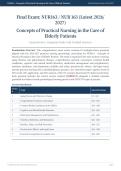
Final Exam: NUR163 / NUR 163 (Latest 2026/
2027)
Concepts of Practical Nursing in the Care of
Elderly Patients
Exam Review | Complete Guide with Verified Answers
Examination Overview: This comprehensive exam review contains 85 multiple-choice questions
aligned with the 2026-2027 practical nursing gerontology curriculum for NUR163 - Concepts of
Practical Nursing in the Care of Elderly Patients. The exam is organized into nine sections covering:
aging theories and physiological changes; comprehensive geriatric assessment; common health
conditions; cognitive and mental health disorders; medication management and polypharmacy;
nutrition, hydration, and elimination; mobility and safety; psychosocial, ethical, and legal issues;
and the practical nursing role in interdisciplinary geriatric care. Questions target cognitive levels of
30% recall, 50% application, and 20% analysis, with 75% scenario-based and 25% direct-recall items.
Each question includes the correct answer marked [CORRECT] alongside a detailed rationale
grounded in evidence-based gerontological nursing practice and LPN/LVN scope of practice.
Section Distribution:
Sectio
Topic Question Range
n
1 Aging Process and Theories of Aging Q1 - Q15
2 Comprehensive Geriatric Assessment Q16 - Q25
3 Common Health Conditions in the Elderly Q26 - Q40
4 Cognitive and Mental Health Disorders Q41 - Q50
5 Medication Management and Polypharmacy Q51 - Q60
6 Nutrition, Hydration, and Elimination Q61 - Q68
7 Mobility, Safety, and Fall Prevention Q69 - Q75
8 Psychosocial, Ethical, and Legal Issues Q76 - Q80
9 Practical Nursing Role in Geriatric Care Q81 - Q85
Complete Guide with Verified Answers Page 1
,NUR163 - Concepts of Practical Nursing in the Care of Elderly Patients Final Exam Review 2026/2027
Section 1: Aging Process and Theories of Aging
Biological, Psychological, Sociological Theories & Normal Physiological Changes (Q1-Q15)
Q1. An 82-year-old resident has cells that show accumulated oxidative damage from
mitochondrial byproducts over decades. Which biological theory of aging best explains this
cellular damage accumulation process?
A. Programmed aging theory
B. Free radical theory [CORRECT]
C. Neuroendocrine theory
D. Immunological theory
Correct Answer: B
Rationale:
The free radical theory is a stochastic theory proposing that accumulated oxidative damage from reactive
oxygen species (ROS) produced during cellular metabolism progressively injures lipids, proteins, and
DNA. The programmed theory (A) is non-stochastic and genetically predetermined; neuroendocrine (C)
focuses on hormone regulation decline; immunological (D) describes immune function deterioration.
The LPN should recognize cumulative oxidative damage as the hallmark of free radical theory when
educating older adults about antioxidant-rich nutrition.
Q2. Which of the following theories is classified as a NON-stochastic theory of aging?
A. Wear and tear theory
B. Free radical theory
C. Programmed longevity theory [CORRECT]
D. Cross-linkage theory
Correct Answer: C
Rationale:
Non-stochastic theories view aging as genetically predetermined and internally regulated, including
programmed longevity, immunological, and neuroendocrine theories. Stochastic theories (A, B, D)
attribute aging to random accumulated damage from environmental and internal insults over time. The
programmed longevity theory proposes that genes regulate cellular senescence and lifespan through
apoptosis and telomere shortening. The LPN should distinguish stochastic (random damage) from
non-stochastic (genetically programmed) when explaining aging concepts to patients and families.
Q3. An older adult who worked as a heavy laborer for 45 years now presents with advanced
osteoarthritis and chronic joint deterioration. Which biological aging theory best accounts
for this cumulative physical stress effect?
A. Free radical theory
B. Wear and tear theory [CORRECT]
C. Apoptosis theory
D. Immunological theory
Correct Answer: B
Rationale:
The wear and tear theory, a stochastic theory, proposes that cumulative physical stress and repetitive use
over years progressively damages tissues and organs beyond repair capacity. This theory explains joint
Complete Guide with Verified Answers Page 2
,NUR163 - Concepts of Practical Nursing in the Care of Elderly Patients Final Exam Review 2026/2027
deterioration in laborers and athletes. Free radical theory (A) describes oxidative cellular
damage;immunological theory (D) describes immune decline; apoptosis theory (C) describes
programmed celldeath. The LPN uses this concept to teach older adults about pacing activities, joint
protection, and theimportance of moderation in lifelong physical demands.
Q4. Research shows that telomere shortening at the ends of chromosomes limits the
number of cell divisions a somatic cell can undergo (Hayflick limit). This mechanism is
central to which theory of aging?
A. Programmed aging theory [CORRECT]
B. Free radical theory
C. Wear and tear theory
D. Cross-linkage theory
Correct Answer: A
Rationale:
The programmed aging theory (non-stochastic) holds that genetic mechanisms, including telomere
shortening, regulate cell division limits (Hayflick limit, ~50 divisions) and trigger cellular senescence.
Free radical theory (B) involves oxidative damage; wear and tear (C) involves accumulated physical
damage; cross-linkage (D) involves protein glycation. The LPN should understand that programmed
aging explains why lifespan has species-specific genetic ceilings, supporting health-promotion education
focused on maximizing genetic potential rather than reversing aging.
Q5. An older adult experiences progressive thymic involution, reduced T-cell response, and
decreased ability to distinguish self from non-self, leading to increased susceptibility to
infections and autoimmune conditions. This describes which aging theory?
A. Neuroendocrine theory
B. Immunological theory [CORRECT]
C. Apoptosis theory
D. Cross-linkage theory
Correct Answer: B
Rationale:
The immunological theory (non-stochastic) describes age-related changes in the immune system
including thymic involution, decreased T-cell function, reduced antibody response, and impaired
self-recognition, leading to increased infections, autoimmune disorders, and cancer risk.
Neuroendocrine theory (A) involves hormonal regulation decline; apoptosis (C) describes programmed
cell death; cross-linkage (D) involves protein glycation. The LPN applies this theory by prioritizing
immunizations (influenza, pneumococcal, shingles, RSV) and strict infection prevention practices in
geriatric care.
Complete Guide with Verified Answers Page 3
, NUR163 - Concepts of Practical Nursing in the Care of Elderly Patients Final Exam Review 2026/2027
Q6. According to the neuroendocrine theory of aging, which physiological change is most
directly associated with aging due to declining hypothalamic-pituitary-endocrine axis
function?
A. Increased bone density and muscle mass
B. Decreased estrogen, testosterone, and growth hormone levels [CORRECT]
C. Enhanced immune antibody production
D. Increased basal metabolic rate
Correct Answer: B
Rationale:
The neuroendocrine theory proposes that aging results from progressive decline in hormonal regulation
via the hypothalamic-pituitary-endocrine axis, including decreased estrogen, testosterone, DHEA,
melatonin, and growth hormone. This causes menopause, sarcopenia, sleep disturbances, and altered
metabolism. Options A, C, and D describe opposite changes that contradict normal aging. The LPN
recognizes hormonal decline effects when assessing older adults for osteoporosis risk, sleep disorders,
and changes in body composition, coordinating hormone-related care with the interdisciplinary team.
Q7. A 78-year-old patient expresses satisfaction with life, reflecting on a long career and
family with a sense of accomplishment and accepting mortality without fear. According to
Erikson's psychosocial development, which stage is this patient successfully navigating?
A. Industry vs. Inferiority
B. Identity vs. Role Confusion
C. Intimacy vs. Isolation
D. Ego Integrity vs. Despair [CORRECT]
Correct Answer: D
Rationale:
Erikson's eighth and final stage, Ego Integrity vs. Despair, occurs in late adulthood (65+ years). Success
yields wisdom, life acceptance, and the ability to face death peacefully; failure leads to regret, bitterness,
and despair over unfulfilled life. Industry (A) is school-age; identity (B) is adolescence; intimacy (C) is
young adulthood. The LPN supports ego integrity through life review therapy, reminiscence, validating
the patient's life story, and identifying unresolved conflicts for referral to counseling or chaplaincy
services.
Q8. An active 80-year-old volunteers at a local library three days per week, attends a senior
exercise class, and participates in community gardening. Which psychosocial theory of
aging does this lifestyle best exemplify?
A. Disengagement theory
B. Activity theory [CORRECT]
C. Continuity theory
D. Gerotranscendence theory
Correct Answer: B
Rationale:
Activity theory (Havighurst) proposes that continued social, physical, and intellectual engagement
preserves life satisfaction and well-being in older adults. Active participation maintains self-concept and
role identity. Disengagement theory (A) suggests mutual withdrawal is natural; continuity theory (C)
emphasizes consistent personality and patterns; gerotranscendence (D) describes a shift toward cosmic
Complete Guide with Verified Answers Page 4
Final Exam: NUR163 / NUR 163 (Latest 2026/
2027)
Concepts of Practical Nursing in the Care of
Elderly Patients
Exam Review | Complete Guide with Verified Answers
Examination Overview: This comprehensive exam review contains 85 multiple-choice questions
aligned with the 2026-2027 practical nursing gerontology curriculum for NUR163 - Concepts of
Practical Nursing in the Care of Elderly Patients. The exam is organized into nine sections covering:
aging theories and physiological changes; comprehensive geriatric assessment; common health
conditions; cognitive and mental health disorders; medication management and polypharmacy;
nutrition, hydration, and elimination; mobility and safety; psychosocial, ethical, and legal issues;
and the practical nursing role in interdisciplinary geriatric care. Questions target cognitive levels of
30% recall, 50% application, and 20% analysis, with 75% scenario-based and 25% direct-recall items.
Each question includes the correct answer marked [CORRECT] alongside a detailed rationale
grounded in evidence-based gerontological nursing practice and LPN/LVN scope of practice.
Section Distribution:
Sectio
Topic Question Range
n
1 Aging Process and Theories of Aging Q1 - Q15
2 Comprehensive Geriatric Assessment Q16 - Q25
3 Common Health Conditions in the Elderly Q26 - Q40
4 Cognitive and Mental Health Disorders Q41 - Q50
5 Medication Management and Polypharmacy Q51 - Q60
6 Nutrition, Hydration, and Elimination Q61 - Q68
7 Mobility, Safety, and Fall Prevention Q69 - Q75
8 Psychosocial, Ethical, and Legal Issues Q76 - Q80
9 Practical Nursing Role in Geriatric Care Q81 - Q85
Complete Guide with Verified Answers Page 1
,NUR163 - Concepts of Practical Nursing in the Care of Elderly Patients Final Exam Review 2026/2027
Section 1: Aging Process and Theories of Aging
Biological, Psychological, Sociological Theories & Normal Physiological Changes (Q1-Q15)
Q1. An 82-year-old resident has cells that show accumulated oxidative damage from
mitochondrial byproducts over decades. Which biological theory of aging best explains this
cellular damage accumulation process?
A. Programmed aging theory
B. Free radical theory [CORRECT]
C. Neuroendocrine theory
D. Immunological theory
Correct Answer: B
Rationale:
The free radical theory is a stochastic theory proposing that accumulated oxidative damage from reactive
oxygen species (ROS) produced during cellular metabolism progressively injures lipids, proteins, and
DNA. The programmed theory (A) is non-stochastic and genetically predetermined; neuroendocrine (C)
focuses on hormone regulation decline; immunological (D) describes immune function deterioration.
The LPN should recognize cumulative oxidative damage as the hallmark of free radical theory when
educating older adults about antioxidant-rich nutrition.
Q2. Which of the following theories is classified as a NON-stochastic theory of aging?
A. Wear and tear theory
B. Free radical theory
C. Programmed longevity theory [CORRECT]
D. Cross-linkage theory
Correct Answer: C
Rationale:
Non-stochastic theories view aging as genetically predetermined and internally regulated, including
programmed longevity, immunological, and neuroendocrine theories. Stochastic theories (A, B, D)
attribute aging to random accumulated damage from environmental and internal insults over time. The
programmed longevity theory proposes that genes regulate cellular senescence and lifespan through
apoptosis and telomere shortening. The LPN should distinguish stochastic (random damage) from
non-stochastic (genetically programmed) when explaining aging concepts to patients and families.
Q3. An older adult who worked as a heavy laborer for 45 years now presents with advanced
osteoarthritis and chronic joint deterioration. Which biological aging theory best accounts
for this cumulative physical stress effect?
A. Free radical theory
B. Wear and tear theory [CORRECT]
C. Apoptosis theory
D. Immunological theory
Correct Answer: B
Rationale:
The wear and tear theory, a stochastic theory, proposes that cumulative physical stress and repetitive use
over years progressively damages tissues and organs beyond repair capacity. This theory explains joint
Complete Guide with Verified Answers Page 2
,NUR163 - Concepts of Practical Nursing in the Care of Elderly Patients Final Exam Review 2026/2027
deterioration in laborers and athletes. Free radical theory (A) describes oxidative cellular
damage;immunological theory (D) describes immune decline; apoptosis theory (C) describes
programmed celldeath. The LPN uses this concept to teach older adults about pacing activities, joint
protection, and theimportance of moderation in lifelong physical demands.
Q4. Research shows that telomere shortening at the ends of chromosomes limits the
number of cell divisions a somatic cell can undergo (Hayflick limit). This mechanism is
central to which theory of aging?
A. Programmed aging theory [CORRECT]
B. Free radical theory
C. Wear and tear theory
D. Cross-linkage theory
Correct Answer: A
Rationale:
The programmed aging theory (non-stochastic) holds that genetic mechanisms, including telomere
shortening, regulate cell division limits (Hayflick limit, ~50 divisions) and trigger cellular senescence.
Free radical theory (B) involves oxidative damage; wear and tear (C) involves accumulated physical
damage; cross-linkage (D) involves protein glycation. The LPN should understand that programmed
aging explains why lifespan has species-specific genetic ceilings, supporting health-promotion education
focused on maximizing genetic potential rather than reversing aging.
Q5. An older adult experiences progressive thymic involution, reduced T-cell response, and
decreased ability to distinguish self from non-self, leading to increased susceptibility to
infections and autoimmune conditions. This describes which aging theory?
A. Neuroendocrine theory
B. Immunological theory [CORRECT]
C. Apoptosis theory
D. Cross-linkage theory
Correct Answer: B
Rationale:
The immunological theory (non-stochastic) describes age-related changes in the immune system
including thymic involution, decreased T-cell function, reduced antibody response, and impaired
self-recognition, leading to increased infections, autoimmune disorders, and cancer risk.
Neuroendocrine theory (A) involves hormonal regulation decline; apoptosis (C) describes programmed
cell death; cross-linkage (D) involves protein glycation. The LPN applies this theory by prioritizing
immunizations (influenza, pneumococcal, shingles, RSV) and strict infection prevention practices in
geriatric care.
Complete Guide with Verified Answers Page 3
, NUR163 - Concepts of Practical Nursing in the Care of Elderly Patients Final Exam Review 2026/2027
Q6. According to the neuroendocrine theory of aging, which physiological change is most
directly associated with aging due to declining hypothalamic-pituitary-endocrine axis
function?
A. Increased bone density and muscle mass
B. Decreased estrogen, testosterone, and growth hormone levels [CORRECT]
C. Enhanced immune antibody production
D. Increased basal metabolic rate
Correct Answer: B
Rationale:
The neuroendocrine theory proposes that aging results from progressive decline in hormonal regulation
via the hypothalamic-pituitary-endocrine axis, including decreased estrogen, testosterone, DHEA,
melatonin, and growth hormone. This causes menopause, sarcopenia, sleep disturbances, and altered
metabolism. Options A, C, and D describe opposite changes that contradict normal aging. The LPN
recognizes hormonal decline effects when assessing older adults for osteoporosis risk, sleep disorders,
and changes in body composition, coordinating hormone-related care with the interdisciplinary team.
Q7. A 78-year-old patient expresses satisfaction with life, reflecting on a long career and
family with a sense of accomplishment and accepting mortality without fear. According to
Erikson's psychosocial development, which stage is this patient successfully navigating?
A. Industry vs. Inferiority
B. Identity vs. Role Confusion
C. Intimacy vs. Isolation
D. Ego Integrity vs. Despair [CORRECT]
Correct Answer: D
Rationale:
Erikson's eighth and final stage, Ego Integrity vs. Despair, occurs in late adulthood (65+ years). Success
yields wisdom, life acceptance, and the ability to face death peacefully; failure leads to regret, bitterness,
and despair over unfulfilled life. Industry (A) is school-age; identity (B) is adolescence; intimacy (C) is
young adulthood. The LPN supports ego integrity through life review therapy, reminiscence, validating
the patient's life story, and identifying unresolved conflicts for referral to counseling or chaplaincy
services.
Q8. An active 80-year-old volunteers at a local library three days per week, attends a senior
exercise class, and participates in community gardening. Which psychosocial theory of
aging does this lifestyle best exemplify?
A. Disengagement theory
B. Activity theory [CORRECT]
C. Continuity theory
D. Gerotranscendence theory
Correct Answer: B
Rationale:
Activity theory (Havighurst) proposes that continued social, physical, and intellectual engagement
preserves life satisfaction and well-being in older adults. Active participation maintains self-concept and
role identity. Disengagement theory (A) suggests mutual withdrawal is natural; continuity theory (C)
emphasizes consistent personality and patterns; gerotranscendence (D) describes a shift toward cosmic
Complete Guide with Verified Answers Page 4


