
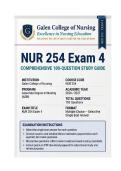
,NUR 254 Exam 4 | Maternal & Pediatric Nursing
(2026/2027) PDF | Nursing | Galen
1. A child with leukemia has a white blood cell count below 1000 cells/mm³.
Which intervention should the nurse include in the plan of care?
A) Administer the prescribed inactivated influenza vaccine
B) Avoid all vaccines regardless of type
C) Encourage visitors with recent live vaccines
D) Discontinue hand hygiene to reduce skin breakdown
Correct Answer: A) Administer the prescribed inactivated influenza vaccine
Rationale: A child with leukemia and severe neutropenia is
immunocompromised and should receive inactivated vaccines such as influenza
to reduce infection risk. Live vaccines are contraindicated. Hand hygiene
remains essential to prevent infection.
2. The nurse is teaching staff about osteosarcoma. Which statement by an
attendee indicates a need for further teaching?
A) Osteosarcoma is the most common primary malignant bone tumor in
children
B) Early symptoms are often mistaken for normal growing pains
C) Biopsy confirms the diagnosis
D) Surgery and chemotherapy may be part of treatment
Correct Answer: B) Early symptoms are often mistaken for normal growing pains
,Rationale: While early osteosarcoma symptoms may be vague, persistent bone
pain worse at night with swelling should not be dismissed as growing pains. This
misconception requires correction to avoid delayed diagnosis.
3. A child is suspected of having a Wilms tumor. Which nursing action indicates
a need for additional training?
A) Monitoring blood pressure daily
B) Preparing the child for surgery
C) Palpating the abdomen to assess the mass
D) Placing a sign above the bed that says "No Abdominal Palpation"
Correct Answer: C) Palpating the abdomen to assess the mass
Rationale: Palpating a Wilms tumor can rupture the capsule and spread cancer
cells. Abdominal palpation is contraindicated, and a sign should be posted to
prevent accidental palpation.
4. A 5-year-old with sickle cell disease is receiving continuous IV morphine for
vaso-occlusive crisis. The child is difficult to arouse and has a respiratory rate of
10 breaths/min. Which action should the nurse take?
A) Increase the morphine infusion
B) Apply oxygen and continue monitoring
C) Notify the provider after 1 hour
D) Administer naloxone as prescribed
Correct Answer: D) Administer naloxone as prescribed
, Rationale: Decreased arousal and slow respirations indicate opioid-induced
respiratory depression. Naloxone is the opioid antagonist and must be given
immediately to reverse life-threatening effects.
5. A client 24 hours post-myocardial infarction develops sudden severe chest
pain, hypotension, distended neck veins, muffled heart sounds, and pulsus
paradoxus of 18 mm Hg. Which complication should the nurse suspect?
A) Cardiac tamponade
B) Papillary muscle rupture
C) Cardiogenic shock
D) Ventricular septal defect
Correct Answer: A) Cardiac tamponade
Rationale: Beck's triad—hypotension, jugular venous distention, muffled heart
sounds—combined with pulsus paradoxus indicates cardiac tamponade, a
surgical emergency requiring pericardiocentesis.
6. A client with acute decompensated heart failure has an ejection fraction of
35%, severe dyspnea, and 3+ pitting edema. Which nursing intervention is the
priority during the first 8 hours?
A) Increase carvedilol to 12.5 mg PO twice daily
B) Obtain strict intake and output measurements and daily weights
C) Place in high Fowler's with legs elevated above heart level
D) Restrict all oral fluids to 500 mL/day without order
(2026/2027) PDF | Nursing | Galen
1. A child with leukemia has a white blood cell count below 1000 cells/mm³.
Which intervention should the nurse include in the plan of care?
A) Administer the prescribed inactivated influenza vaccine
B) Avoid all vaccines regardless of type
C) Encourage visitors with recent live vaccines
D) Discontinue hand hygiene to reduce skin breakdown
Correct Answer: A) Administer the prescribed inactivated influenza vaccine
Rationale: A child with leukemia and severe neutropenia is
immunocompromised and should receive inactivated vaccines such as influenza
to reduce infection risk. Live vaccines are contraindicated. Hand hygiene
remains essential to prevent infection.
2. The nurse is teaching staff about osteosarcoma. Which statement by an
attendee indicates a need for further teaching?
A) Osteosarcoma is the most common primary malignant bone tumor in
children
B) Early symptoms are often mistaken for normal growing pains
C) Biopsy confirms the diagnosis
D) Surgery and chemotherapy may be part of treatment
Correct Answer: B) Early symptoms are often mistaken for normal growing pains
,Rationale: While early osteosarcoma symptoms may be vague, persistent bone
pain worse at night with swelling should not be dismissed as growing pains. This
misconception requires correction to avoid delayed diagnosis.
3. A child is suspected of having a Wilms tumor. Which nursing action indicates
a need for additional training?
A) Monitoring blood pressure daily
B) Preparing the child for surgery
C) Palpating the abdomen to assess the mass
D) Placing a sign above the bed that says "No Abdominal Palpation"
Correct Answer: C) Palpating the abdomen to assess the mass
Rationale: Palpating a Wilms tumor can rupture the capsule and spread cancer
cells. Abdominal palpation is contraindicated, and a sign should be posted to
prevent accidental palpation.
4. A 5-year-old with sickle cell disease is receiving continuous IV morphine for
vaso-occlusive crisis. The child is difficult to arouse and has a respiratory rate of
10 breaths/min. Which action should the nurse take?
A) Increase the morphine infusion
B) Apply oxygen and continue monitoring
C) Notify the provider after 1 hour
D) Administer naloxone as prescribed
Correct Answer: D) Administer naloxone as prescribed
, Rationale: Decreased arousal and slow respirations indicate opioid-induced
respiratory depression. Naloxone is the opioid antagonist and must be given
immediately to reverse life-threatening effects.
5. A client 24 hours post-myocardial infarction develops sudden severe chest
pain, hypotension, distended neck veins, muffled heart sounds, and pulsus
paradoxus of 18 mm Hg. Which complication should the nurse suspect?
A) Cardiac tamponade
B) Papillary muscle rupture
C) Cardiogenic shock
D) Ventricular septal defect
Correct Answer: A) Cardiac tamponade
Rationale: Beck's triad—hypotension, jugular venous distention, muffled heart
sounds—combined with pulsus paradoxus indicates cardiac tamponade, a
surgical emergency requiring pericardiocentesis.
6. A client with acute decompensated heart failure has an ejection fraction of
35%, severe dyspnea, and 3+ pitting edema. Which nursing intervention is the
priority during the first 8 hours?
A) Increase carvedilol to 12.5 mg PO twice daily
B) Obtain strict intake and output measurements and daily weights
C) Place in high Fowler's with legs elevated above heart level
D) Restrict all oral fluids to 500 mL/day without order


