
7a;
utional,
Industrial,
Structural,
Category
Institutional,
and
7a; Industrial,
Health-Related
Structural,
Institutional,
and
Pest.pdf!!!!!!!!!!!!!!!!!!!~~~~~~~~~~~~~~~~~~~~~~~~~~~~~~~~~~~~~~@@@@@@@@@@@@@@@@@@@@@@@@
Health-Related
Structural, and Pest.pdf!!!!!!!!!!!!!!!!!!!~~~~~~~~~~~~~~~~~~~~~~~~~~~~~~~~~~~~~~@@@@@@@@@@@@@@@@@@@@
Health-Related Pest.pdf!!!!!!!!!!!!!!!!!!!~~~~~~~~~~~~~~~~~~~~~~~~~~~~~~~~~~~~~~@@@@@@@@@@@@
Category
Category 7a:Institutional,
7a: Industrial, Industrial, Institutional,
Structural, Structural,
and Health-Related and Health-Related
Pest Management Pest
(Answers)
Management
Study online at https://quizlet.com/_esuby7
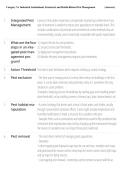
1. Integrated Pest A process that utilizes inspections and periodic monitoring to determine if any
Management type of treatment is needed to reduce pest populations to tolerable levels. This
includes combinations of pesticide and nonchemical control methods that are
environmentally, socially, and economically compatible with public expectations.
2. What are the four 1.) Inspect the site for pest problems.
steps in an inte- 2.) Set pest action plan thresholds.
gated pest man- 3.) Apply pest management procedures
agement pro- 4.) Monitor the pest management program (post-treatment).
gram?
3. Action Threshold The level of pest infestation which requires initiating a control strategy.
4. Pest exclusion - The best way to manage pests is to deny them entry into buildings in the first
place. It can be labor-intensive and potentially costly, it is sometimes the only
solution to a pest problem.
-Examples: Keeping pest out of builidings by sealing gaps and installing proper
door thresholds, or by installing screens, chimney caps, door closure devices, etc.
5. Pest habitat ma- - A control strategy that denies pest access to food, water, and shelter, usually
nipulation through concentrated sanitation efforts. It also might include temperature and
humidity modification to make a structure less suitable to the pest.
- Example: Pests such as cockroaches and rodents do so well in filty conditions that
it enhances their reproductive rates, but by changing up the environment through
the means of sanitation one can impact these pests livelihood.
6. Pest removal - The most direct method of managing pest populations.
- Examples:
~Lethal trapping and disposal (snap traps for rat and mice; multiple catch traps
and glue boards for mouse control; sticky traps for insect control; insect light traps
and jar traps for flying insects)
~ Live trapping and removal ( commonly used to remove nuisance wild life as
7a;
utional,
Industrial,
Structural,
Category
Institutional,
and
7a; Industrial,
Health-Related
Structural,
Institutional,
and
Pest.pdf!!!!!!!!!!!!!!!!!!!~~~~~~~~~~~~~~~~~~~~~~~~~~~~~~~~~~~~~~@@@@@@@@@@@@@@@@@@@@@@@@
Health-Related
Structural, and Pest.pdf!!!!!!!!!!!!!!!!!!!~~~~~~~~~~~~~~~~~~~~~~~~~~~~~~~~~~~~~~@@@@@@@@@@@@@@@@@@@@
Health-Related Pest.pdf!!!!!!!!!!!!!!!!!!!~~~~~~~~~~~~~~~~~~~~~~~~~~~~~~~~~~~~~~@@@@@@@@@@@@
,7a;
utional,
Industrial,
Structural,
Category
Institutional,
and
7a; Industrial,
Health-Related
Structural,
Institutional,
and
Pest.pdf!!!!!!!!!!!!!!!!!!!~~~~~~~~~~~~~~~~~~~~~~~~~~~~~~~~~~~~~~@@@@@@@@@@@@@@@@@@@@@@@@
Health-Related
Structural, and Pest.pdf!!!!!!!!!!!!!!!!!!!~~~~~~~~~~~~~~~~~~~~~~~~~~~~~~~~~~~~~~@@@@@@@@@@@@@@@@@@@@
Health-Related Pest.pdf!!!!!!!!!!!!!!!!!!!~~~~~~~~~~~~~~~~~~~~~~~~~~~~~~~~~~~~~~@@@@@@@@@@@@
Category
Category 7a:Institutional,
7a: Industrial, Industrial, Institutional,
Structural, Structural,
and Health-Related and Health-Related
Pest Management Pest
(Answers)
Management
Study online at https://quizlet.com/_esuby7
part of a management program. Requires skill and training and must comply with
fedral and state regulations)
~ Direct removal techniques (vacuuming)
7. How do contact Penetrate through the insect body covering. These materials may be applied
insecticides ? directly to the insect or as a residue on a surface for the insect to crawl through.
8. How do stomach They are ingested by the insect during feeding or grooming.
poisons work ?
9. Residual insecti- Insecticides may persist for weeks or longer.
cides
10. Non-residual in- Insecticides break down quickly after treatment.
secticides
11. Desiccants These types of insecticides disrupt the water balance (e.g., cause rapid water loss)
of insects that contact them.
12. Pyrethrins They interrupt the normal transmission of an insect's nerve impluses. They are
formulated to provide a quick knockdown with little residual activity.
13. Synthetic They interfere with the transmission of nerve impluses and have quick knockdown
pyrethroids activity, but they are engineered to be more stable and persistent.
14. Insect growth Chemicals that mimic the juvenile growth hormone and prevent the immature
regulators insect from molting into the adult stage and, in so doing, disrupt the insect's life
cycle by preventing it from reproducing.
15. Chitin synthesis Often grouped together with IGRs. Chemicals are used to treat the (chitin) compo-
inhibitors nent of the insect exoskeleton and immature insects to prevent them from molting
into the next stage of development.
7a;
utional,
Industrial,
Structural,
Category
Institutional,
and
7a; Industrial,
Health-Related
Structural,
Institutional,
and
Pest.pdf!!!!!!!!!!!!!!!!!!!~~~~~~~~~~~~~~~~~~~~~~~~~~~~~~~~~~~~~~@@@@@@@@@@@@@@@@@@@@@@@@
Health-Related
Structural, and Pest.pdf!!!!!!!!!!!!!!!!!!!~~~~~~~~~~~~~~~~~~~~~~~~~~~~~~~~~~~~~~@@@@@@@@@@@@@@@@@@@@
Health-Related Pest.pdf!!!!!!!!!!!!!!!!!!!~~~~~~~~~~~~~~~~~~~~~~~~~~~~~~~~~~~~~~@@@@@@@@@@@@
,7a;
utional,
Industrial,
Structural,
Category
Institutional,
and
7a; Industrial,
Health-Related
Structural,
Institutional,
and
Pest.pdf!!!!!!!!!!!!!!!!!!!~~~~~~~~~~~~~~~~~~~~~~~~~~~~~~~~~~~~~~@@@@@@@@@@@@@@@@@@@@@@@@
Health-Related
Structural, and Pest.pdf!!!!!!!!!!!!!!!!!!!~~~~~~~~~~~~~~~~~~~~~~~~~~~~~~~~~~~~~~@@@@@@@@@@@@@@@@@@@@
Health-Related Pest.pdf!!!!!!!!!!!!!!!!!!!~~~~~~~~~~~~~~~~~~~~~~~~~~~~~~~~~~~~~~@@@@@@@@@@@@
Category
Category 7a:Institutional,
7a: Industrial, Industrial, Institutional,
Structural, Structural,
and Health-Related and Health-Related
Pest Management Pest
(Answers)
Management
Study online at https://quizlet.com/_esuby7
16. Baits Advantages: They are available in ready-to-use bait stations and as gels that can
be applied into insect harborages with a syringe-type bait guns. Their placement
makes them inaccessible to people and pets. They offer ease of placement and
are odorless.
Disadvantages: In order to be effective the target pest must consume the bait, and
they are less attractive to pests if unsanitary conditions provide alternative food
sources.
17. Dusts Advantages: They provide excellent coverage within cracks, crevices, and other
voids, and may be used around eletrical outlets.
Disadvantages: If applied carelessly, it can drift into nontarget areas.
18. Granules Advantages: Formulated for exterior applications where longevity under wet, hot
conditions is desirable.
Disadvantages:
19. Wettable pow- Advantages: It is easy to store, they have only a mild ordor, and provide better
ders residual properties than other formulations on porous surfaces such as wood and
concrete.
Disadvantages: They present an inhalation hazard when mixing the powder with
water. After mixing, they must be agitated frequently to keep them in suspension,
and they leave a surface residue when the spray evaporates.
20. Emulsifiable con- Advantages:
centrates Disadvantages: One must make sure to read the product labels carefully to ensure
that they will not stain or damage the treatment site or "burn" any desirable plant
foliage that they contact.
21. Suspension con- Advantages:After dilution in water, they typically require less agitation than wet-
centrates table powders.
Disadvantages:
7a;
utional,
Industrial,
Structural,
Category
Institutional,
and
7a; Industrial,
Health-Related
Structural,
Institutional,
and
Pest.pdf!!!!!!!!!!!!!!!!!!!~~~~~~~~~~~~~~~~~~~~~~~~~~~~~~~~~~~~~~@@@@@@@@@@@@@@@@@@@@@@@@
Health-Related
Structural, and Pest.pdf!!!!!!!!!!!!!!!!!!!~~~~~~~~~~~~~~~~~~~~~~~~~~~~~~~~~~~~~~@@@@@@@@@@@@@@@@@@@@
Health-Related Pest.pdf!!!!!!!!!!!!!!!!!!!~~~~~~~~~~~~~~~~~~~~~~~~~~~~~~~~~~~~~~@@@@@@@@@@@@
,7a;
utional,
Industrial,
Structural,
Category
Institutional,
and
7a; Industrial,
Health-Related
Structural,
Institutional,
and
Pest.pdf!!!!!!!!!!!!!!!!!!!~~~~~~~~~~~~~~~~~~~~~~~~~~~~~~~~~~~~~~@@@@@@@@@@@@@@@@@@@@@@@@
Health-Related
Structural, and Pest.pdf!!!!!!!!!!!!!!!!!!!~~~~~~~~~~~~~~~~~~~~~~~~~~~~~~~~~~~~~~@@@@@@@@@@@@@@@@@@@@
Health-Related Pest.pdf!!!!!!!!!!!!!!!!!!!~~~~~~~~~~~~~~~~~~~~~~~~~~~~~~~~~~~~~~@@@@@@@@@@@@
Category
Category 7a:Institutional,
7a: Industrial, Industrial, Institutional,
Structural, Structural,
and Health-Related and Health-Related
Pest Management Pest
(Answers)
Management
Study online at https://quizlet.com/_esuby7
22. Microencapsu- Advantages:
lates Disadvantages:
23. Aerosols Advantages:
Disadvantages:
24. How does antico- These products kill rodents by preventing their blood from coagulating (clotting),
agulant rodenti- causing the animal to bleed internally.
cides work?
25. What is the First-generation anticoagulants are multiple-dose rodenticides; rodents must
difference be- consume treated bait over several days to ingest enough rodenticide to cause
tween first- death. Where second-generation anticoagulants were developed to kill the ro-
and second-gen- dents after a few feedings. Second-generation was designed this way due to rat
eration antico- and mouse populations developing a resistance to the first-generation.
agulant rodenti-
cides?
26. Grain pellet baits Advantages: They are relatively inexpensive and easy to apply. Professionals can
easily adjust the amount to apply for light, moderate, or heavy infestations.
Disadvantages: One must take care when applying these products as rodents may
carry the pellets away from the application site and store them in undesirable
locations.
27. Block baits Advantages: They hold up well in both interior and exterior baiting programs. They
can be secured within bait stations to prevent rodents from moving the bait to
other locations that might endanger people, pets, or wildlife, thus, maximizing
safety.
Disadvantages:
28. Cereal meal baits Advantages: They are less susceptible than grain pellets to being carried off by
rodents.
7a;
utional,
Industrial,
Structural,
Category
Institutional,
and
7a; Industrial,
Health-Related
Structural,
Institutional,
and
Pest.pdf!!!!!!!!!!!!!!!!!!!~~~~~~~~~~~~~~~~~~~~~~~~~~~~~~~~~~~~~~@@@@@@@@@@@@@@@@@@@@@@@@
Health-Related
Structural, and Pest.pdf!!!!!!!!!!!!!!!!!!!~~~~~~~~~~~~~~~~~~~~~~~~~~~~~~~~~~~~~~@@@@@@@@@@@@@@@@@@@@
Health-Related Pest.pdf!!!!!!!!!!!!!!!!!!!~~~~~~~~~~~~~~~~~~~~~~~~~~~~~~~~~~~~~~@@@@@@@@@@@@
utional,
Industrial,
Structural,
Category
Institutional,
and
7a; Industrial,
Health-Related
Structural,
Institutional,
and
Pest.pdf!!!!!!!!!!!!!!!!!!!~~~~~~~~~~~~~~~~~~~~~~~~~~~~~~~~~~~~~~@@@@@@@@@@@@@@@@@@@@@@@@
Health-Related
Structural, and Pest.pdf!!!!!!!!!!!!!!!!!!!~~~~~~~~~~~~~~~~~~~~~~~~~~~~~~~~~~~~~~@@@@@@@@@@@@@@@@@@@@
Health-Related Pest.pdf!!!!!!!!!!!!!!!!!!!~~~~~~~~~~~~~~~~~~~~~~~~~~~~~~~~~~~~~~@@@@@@@@@@@@
Category
Category 7a:Institutional,
7a: Industrial, Industrial, Institutional,
Structural, Structural,
and Health-Related and Health-Related
Pest Management Pest
(Answers)
Management
Study online at https://quizlet.com/_esuby7
1. Integrated Pest A process that utilizes inspections and periodic monitoring to determine if any
Management type of treatment is needed to reduce pest populations to tolerable levels. This
includes combinations of pesticide and nonchemical control methods that are
environmentally, socially, and economically compatible with public expectations.
2. What are the four 1.) Inspect the site for pest problems.
steps in an inte- 2.) Set pest action plan thresholds.
gated pest man- 3.) Apply pest management procedures
agement pro- 4.) Monitor the pest management program (post-treatment).
gram?
3. Action Threshold The level of pest infestation which requires initiating a control strategy.
4. Pest exclusion - The best way to manage pests is to deny them entry into buildings in the first
place. It can be labor-intensive and potentially costly, it is sometimes the only
solution to a pest problem.
-Examples: Keeping pest out of builidings by sealing gaps and installing proper
door thresholds, or by installing screens, chimney caps, door closure devices, etc.
5. Pest habitat ma- - A control strategy that denies pest access to food, water, and shelter, usually
nipulation through concentrated sanitation efforts. It also might include temperature and
humidity modification to make a structure less suitable to the pest.
- Example: Pests such as cockroaches and rodents do so well in filty conditions that
it enhances their reproductive rates, but by changing up the environment through
the means of sanitation one can impact these pests livelihood.
6. Pest removal - The most direct method of managing pest populations.
- Examples:
~Lethal trapping and disposal (snap traps for rat and mice; multiple catch traps
and glue boards for mouse control; sticky traps for insect control; insect light traps
and jar traps for flying insects)
~ Live trapping and removal ( commonly used to remove nuisance wild life as
7a;
utional,
Industrial,
Structural,
Category
Institutional,
and
7a; Industrial,
Health-Related
Structural,
Institutional,
and
Pest.pdf!!!!!!!!!!!!!!!!!!!~~~~~~~~~~~~~~~~~~~~~~~~~~~~~~~~~~~~~~@@@@@@@@@@@@@@@@@@@@@@@@
Health-Related
Structural, and Pest.pdf!!!!!!!!!!!!!!!!!!!~~~~~~~~~~~~~~~~~~~~~~~~~~~~~~~~~~~~~~@@@@@@@@@@@@@@@@@@@@
Health-Related Pest.pdf!!!!!!!!!!!!!!!!!!!~~~~~~~~~~~~~~~~~~~~~~~~~~~~~~~~~~~~~~@@@@@@@@@@@@
,7a;
utional,
Industrial,
Structural,
Category
Institutional,
and
7a; Industrial,
Health-Related
Structural,
Institutional,
and
Pest.pdf!!!!!!!!!!!!!!!!!!!~~~~~~~~~~~~~~~~~~~~~~~~~~~~~~~~~~~~~~@@@@@@@@@@@@@@@@@@@@@@@@
Health-Related
Structural, and Pest.pdf!!!!!!!!!!!!!!!!!!!~~~~~~~~~~~~~~~~~~~~~~~~~~~~~~~~~~~~~~@@@@@@@@@@@@@@@@@@@@
Health-Related Pest.pdf!!!!!!!!!!!!!!!!!!!~~~~~~~~~~~~~~~~~~~~~~~~~~~~~~~~~~~~~~@@@@@@@@@@@@
Category
Category 7a:Institutional,
7a: Industrial, Industrial, Institutional,
Structural, Structural,
and Health-Related and Health-Related
Pest Management Pest
(Answers)
Management
Study online at https://quizlet.com/_esuby7
part of a management program. Requires skill and training and must comply with
fedral and state regulations)
~ Direct removal techniques (vacuuming)
7. How do contact Penetrate through the insect body covering. These materials may be applied
insecticides ? directly to the insect or as a residue on a surface for the insect to crawl through.
8. How do stomach They are ingested by the insect during feeding or grooming.
poisons work ?
9. Residual insecti- Insecticides may persist for weeks or longer.
cides
10. Non-residual in- Insecticides break down quickly after treatment.
secticides
11. Desiccants These types of insecticides disrupt the water balance (e.g., cause rapid water loss)
of insects that contact them.
12. Pyrethrins They interrupt the normal transmission of an insect's nerve impluses. They are
formulated to provide a quick knockdown with little residual activity.
13. Synthetic They interfere with the transmission of nerve impluses and have quick knockdown
pyrethroids activity, but they are engineered to be more stable and persistent.
14. Insect growth Chemicals that mimic the juvenile growth hormone and prevent the immature
regulators insect from molting into the adult stage and, in so doing, disrupt the insect's life
cycle by preventing it from reproducing.
15. Chitin synthesis Often grouped together with IGRs. Chemicals are used to treat the (chitin) compo-
inhibitors nent of the insect exoskeleton and immature insects to prevent them from molting
into the next stage of development.
7a;
utional,
Industrial,
Structural,
Category
Institutional,
and
7a; Industrial,
Health-Related
Structural,
Institutional,
and
Pest.pdf!!!!!!!!!!!!!!!!!!!~~~~~~~~~~~~~~~~~~~~~~~~~~~~~~~~~~~~~~@@@@@@@@@@@@@@@@@@@@@@@@
Health-Related
Structural, and Pest.pdf!!!!!!!!!!!!!!!!!!!~~~~~~~~~~~~~~~~~~~~~~~~~~~~~~~~~~~~~~@@@@@@@@@@@@@@@@@@@@
Health-Related Pest.pdf!!!!!!!!!!!!!!!!!!!~~~~~~~~~~~~~~~~~~~~~~~~~~~~~~~~~~~~~~@@@@@@@@@@@@
,7a;
utional,
Industrial,
Structural,
Category
Institutional,
and
7a; Industrial,
Health-Related
Structural,
Institutional,
and
Pest.pdf!!!!!!!!!!!!!!!!!!!~~~~~~~~~~~~~~~~~~~~~~~~~~~~~~~~~~~~~~@@@@@@@@@@@@@@@@@@@@@@@@
Health-Related
Structural, and Pest.pdf!!!!!!!!!!!!!!!!!!!~~~~~~~~~~~~~~~~~~~~~~~~~~~~~~~~~~~~~~@@@@@@@@@@@@@@@@@@@@
Health-Related Pest.pdf!!!!!!!!!!!!!!!!!!!~~~~~~~~~~~~~~~~~~~~~~~~~~~~~~~~~~~~~~@@@@@@@@@@@@
Category
Category 7a:Institutional,
7a: Industrial, Industrial, Institutional,
Structural, Structural,
and Health-Related and Health-Related
Pest Management Pest
(Answers)
Management
Study online at https://quizlet.com/_esuby7
16. Baits Advantages: They are available in ready-to-use bait stations and as gels that can
be applied into insect harborages with a syringe-type bait guns. Their placement
makes them inaccessible to people and pets. They offer ease of placement and
are odorless.
Disadvantages: In order to be effective the target pest must consume the bait, and
they are less attractive to pests if unsanitary conditions provide alternative food
sources.
17. Dusts Advantages: They provide excellent coverage within cracks, crevices, and other
voids, and may be used around eletrical outlets.
Disadvantages: If applied carelessly, it can drift into nontarget areas.
18. Granules Advantages: Formulated for exterior applications where longevity under wet, hot
conditions is desirable.
Disadvantages:
19. Wettable pow- Advantages: It is easy to store, they have only a mild ordor, and provide better
ders residual properties than other formulations on porous surfaces such as wood and
concrete.
Disadvantages: They present an inhalation hazard when mixing the powder with
water. After mixing, they must be agitated frequently to keep them in suspension,
and they leave a surface residue when the spray evaporates.
20. Emulsifiable con- Advantages:
centrates Disadvantages: One must make sure to read the product labels carefully to ensure
that they will not stain or damage the treatment site or "burn" any desirable plant
foliage that they contact.
21. Suspension con- Advantages:After dilution in water, they typically require less agitation than wet-
centrates table powders.
Disadvantages:
7a;
utional,
Industrial,
Structural,
Category
Institutional,
and
7a; Industrial,
Health-Related
Structural,
Institutional,
and
Pest.pdf!!!!!!!!!!!!!!!!!!!~~~~~~~~~~~~~~~~~~~~~~~~~~~~~~~~~~~~~~@@@@@@@@@@@@@@@@@@@@@@@@
Health-Related
Structural, and Pest.pdf!!!!!!!!!!!!!!!!!!!~~~~~~~~~~~~~~~~~~~~~~~~~~~~~~~~~~~~~~@@@@@@@@@@@@@@@@@@@@
Health-Related Pest.pdf!!!!!!!!!!!!!!!!!!!~~~~~~~~~~~~~~~~~~~~~~~~~~~~~~~~~~~~~~@@@@@@@@@@@@
,7a;
utional,
Industrial,
Structural,
Category
Institutional,
and
7a; Industrial,
Health-Related
Structural,
Institutional,
and
Pest.pdf!!!!!!!!!!!!!!!!!!!~~~~~~~~~~~~~~~~~~~~~~~~~~~~~~~~~~~~~~@@@@@@@@@@@@@@@@@@@@@@@@
Health-Related
Structural, and Pest.pdf!!!!!!!!!!!!!!!!!!!~~~~~~~~~~~~~~~~~~~~~~~~~~~~~~~~~~~~~~@@@@@@@@@@@@@@@@@@@@
Health-Related Pest.pdf!!!!!!!!!!!!!!!!!!!~~~~~~~~~~~~~~~~~~~~~~~~~~~~~~~~~~~~~~@@@@@@@@@@@@
Category
Category 7a:Institutional,
7a: Industrial, Industrial, Institutional,
Structural, Structural,
and Health-Related and Health-Related
Pest Management Pest
(Answers)
Management
Study online at https://quizlet.com/_esuby7
22. Microencapsu- Advantages:
lates Disadvantages:
23. Aerosols Advantages:
Disadvantages:
24. How does antico- These products kill rodents by preventing their blood from coagulating (clotting),
agulant rodenti- causing the animal to bleed internally.
cides work?
25. What is the First-generation anticoagulants are multiple-dose rodenticides; rodents must
difference be- consume treated bait over several days to ingest enough rodenticide to cause
tween first- death. Where second-generation anticoagulants were developed to kill the ro-
and second-gen- dents after a few feedings. Second-generation was designed this way due to rat
eration antico- and mouse populations developing a resistance to the first-generation.
agulant rodenti-
cides?
26. Grain pellet baits Advantages: They are relatively inexpensive and easy to apply. Professionals can
easily adjust the amount to apply for light, moderate, or heavy infestations.
Disadvantages: One must take care when applying these products as rodents may
carry the pellets away from the application site and store them in undesirable
locations.
27. Block baits Advantages: They hold up well in both interior and exterior baiting programs. They
can be secured within bait stations to prevent rodents from moving the bait to
other locations that might endanger people, pets, or wildlife, thus, maximizing
safety.
Disadvantages:
28. Cereal meal baits Advantages: They are less susceptible than grain pellets to being carried off by
rodents.
7a;
utional,
Industrial,
Structural,
Category
Institutional,
and
7a; Industrial,
Health-Related
Structural,
Institutional,
and
Pest.pdf!!!!!!!!!!!!!!!!!!!~~~~~~~~~~~~~~~~~~~~~~~~~~~~~~~~~~~~~~@@@@@@@@@@@@@@@@@@@@@@@@
Health-Related
Structural, and Pest.pdf!!!!!!!!!!!!!!!!!!!~~~~~~~~~~~~~~~~~~~~~~~~~~~~~~~~~~~~~~@@@@@@@@@@@@@@@@@@@@
Health-Related Pest.pdf!!!!!!!!!!!!!!!!!!!~~~~~~~~~~~~~~~~~~~~~~~~~~~~~~~~~~~~~~@@@@@@@@@@@@


