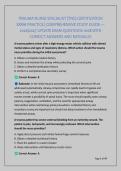
TRAUMA NURSE SPECIALIST (TNS) CERTIFICATION
EXAM PRACTICE | COMPREHENSIVE STUDY GUIDE —
2026/2027 UPDATE EXAM QUESTIONS 100% WITH
CORRECT ANSWERS AND RATIOALES
A trauma patient arrives after a high-energy motor vehicle collision with altered
mental status and signs of respiratory distress. Which action should the trauma
nurse prioritize during the initial assessment?
A. Obtain a complete medical history
B. Assess and maintain the airway while protecting the cervical spine
C. Obtain a detailed medication history
D. Perform a comprehensive secondary survey
Correct Answer: B
Rationale: In the initial trauma assessment, immediate threats to life are
addressed systematically. Airway compromise can rapidly lead to hypoxia and
cardiac arrest, while cervical spine protection is important when significant
trauma creates a possibility of spinal injury. The nurse should rapidly assess airway
patency, oxygenation, ventilation, and the need for appropriate airway
intervention while maintaining spinal precautions. A detailed history and
secondary survey are important but should not delay treatment of an immediately
threatened airway.
A trauma patient has severe external bleeding from an extremity wound. The
patient is pale, tachycardic, and increasingly confused. Which intervention
should the nurse prioritize?
A. Apply direct pressure and initiate hemorrhage-control measures
B. Obtain a detailed nutritional history
C. Place the patient in a warm shower
D. Delay intervention until laboratory results return
Correct Answer: A
Page 1 of 47
, Rationale: Uncontrolled hemorrhage is a major preventable cause of
traumatic death. A patient with obvious severe bleeding and signs of shock
requires immediate hemorrhage control. Direct pressure is an initial measure for
many external hemorrhages, with additional interventions such as appropriate
wound packing or a tourniquet considered according to the injury and established
trauma protocols. Waiting for laboratory confirmation can delay life-saving
treatment.
A trauma patient has a blood pressure of 78/46 mmHg, heart rate of 138/min,
cool clammy skin, and altered mental status after blunt abdominal trauma.
Which condition should the nurse suspect most strongly?
A. Hemorrhagic shock
B. Mild dehydration
C. Isolated anxiety
D. Stable neurogenic injury
Correct Answer: A
Rationale: Hypotension, marked tachycardia, altered mental status, and poor
peripheral perfusion following significant trauma strongly suggest shock, with
internal hemorrhage being a major concern in the setting of blunt abdominal
injury. The absence of visible bleeding does not exclude major blood loss. The
trauma team should rapidly identify and control the source of hemorrhage while
supporting oxygenation, ventilation, circulation, and perfusion.
A patient with suspected spinal trauma develops hypotension accompanied by
an inappropriately low heart rate. Which type of shock should the trauma nurse
consider?
A. Neurogenic shock
B. Hemorrhagic shock
C. Hypovolemic dehydration
D. Obstructive shock from tension pneumothorax
Correct Answer: A
Page 2 of 47
, Rationale: Neurogenic shock can occur after significant spinal cord injury,
particularly when sympathetic pathways are disrupted. Loss of sympathetic
vascular tone can produce vasodilation and hypotension, while disruption of
sympathetic cardiac stimulation can result in bradycardia or an inappropriately
normal heart rate. This differs from typical hemorrhagic shock, in which
tachycardia is commonly expected as a compensatory response.
A trauma patient suddenly develops severe respiratory distress, hypotension,
distended neck veins, and markedly decreased breath sounds on one side.
Which injury should the nurse suspect?
A. Tension pneumothorax
B. Simple rib fracture
C. Pulmonary contusion only
D. Isolated clavicle fracture
Correct Answer: A
Rationale: The combination of acute respiratory compromise, hypotension,
unilateral markedly decreased breath sounds, and signs of obstructed venous
return is highly concerning for tension pneumothorax. Increasing intrathoracic
pressure can impair lung expansion and venous return to the heart, producing
cardiovascular collapse. This is a time-critical emergency requiring immediate
recognition and intervention according to trauma protocols rather than waiting for
definitive imaging.
A patient with chest trauma has paradoxical movement of a segment of the
chest wall during respiration. Which injury is most likely?
A. Flail chest
B. Simple pneumothorax
C. Cardiac tamponade
D. Pulmonary embolism
Correct Answer: A
Page 3 of 47
, Rationale: Flail chest occurs when multiple adjacent ribs are fractured in
multiple locations, producing a segment of chest wall that moves paradoxically
relative to the rest of the thorax. The injury may significantly impair ventilation
and is often associated with underlying pulmonary contusion. Management
focuses on oxygenation, adequate ventilation, pain control, and careful
monitoring for respiratory deterioration.
A trauma patient has muffled heart sounds, hypotension, and distended neck
veins following penetrating chest trauma. Which condition should the nurse
suspect?
A. Cardiac tamponade
B. Simple pneumothorax
C. Isolated rib fracture
D. Pulmonary contusion
Correct Answer: A
Rationale: Blood accumulating within the pericardial space can compress the
heart and restrict ventricular filling, producing cardiac tamponade. Hypotension
and distended neck veins in the appropriate trauma context should raise strong
concern for obstructive shock caused by impaired cardiac filling. Muffled heart
sounds may occur but are not necessarily present in every patient. Rapid
recognition and emergency management are essential.
A trauma patient with a suspected cervical spine injury is being moved from the
stretcher to another surface. Which principle is most important?
A. Maintain spinal alignment and minimize unnecessary movement
B. Flex the patient's neck to improve comfort
C. Allow the patient to sit independently
D. Remove all spinal precautions immediately
Correct Answer: A
Rationale: When spinal injury is suspected, unnecessary movement can
potentially worsen neurologic injury. Appropriate spinal precautions should be
Page 4 of 47
EXAM PRACTICE | COMPREHENSIVE STUDY GUIDE —
2026/2027 UPDATE EXAM QUESTIONS 100% WITH
CORRECT ANSWERS AND RATIOALES
A trauma patient arrives after a high-energy motor vehicle collision with altered
mental status and signs of respiratory distress. Which action should the trauma
nurse prioritize during the initial assessment?
A. Obtain a complete medical history
B. Assess and maintain the airway while protecting the cervical spine
C. Obtain a detailed medication history
D. Perform a comprehensive secondary survey
Correct Answer: B
Rationale: In the initial trauma assessment, immediate threats to life are
addressed systematically. Airway compromise can rapidly lead to hypoxia and
cardiac arrest, while cervical spine protection is important when significant
trauma creates a possibility of spinal injury. The nurse should rapidly assess airway
patency, oxygenation, ventilation, and the need for appropriate airway
intervention while maintaining spinal precautions. A detailed history and
secondary survey are important but should not delay treatment of an immediately
threatened airway.
A trauma patient has severe external bleeding from an extremity wound. The
patient is pale, tachycardic, and increasingly confused. Which intervention
should the nurse prioritize?
A. Apply direct pressure and initiate hemorrhage-control measures
B. Obtain a detailed nutritional history
C. Place the patient in a warm shower
D. Delay intervention until laboratory results return
Correct Answer: A
Page 1 of 47
, Rationale: Uncontrolled hemorrhage is a major preventable cause of
traumatic death. A patient with obvious severe bleeding and signs of shock
requires immediate hemorrhage control. Direct pressure is an initial measure for
many external hemorrhages, with additional interventions such as appropriate
wound packing or a tourniquet considered according to the injury and established
trauma protocols. Waiting for laboratory confirmation can delay life-saving
treatment.
A trauma patient has a blood pressure of 78/46 mmHg, heart rate of 138/min,
cool clammy skin, and altered mental status after blunt abdominal trauma.
Which condition should the nurse suspect most strongly?
A. Hemorrhagic shock
B. Mild dehydration
C. Isolated anxiety
D. Stable neurogenic injury
Correct Answer: A
Rationale: Hypotension, marked tachycardia, altered mental status, and poor
peripheral perfusion following significant trauma strongly suggest shock, with
internal hemorrhage being a major concern in the setting of blunt abdominal
injury. The absence of visible bleeding does not exclude major blood loss. The
trauma team should rapidly identify and control the source of hemorrhage while
supporting oxygenation, ventilation, circulation, and perfusion.
A patient with suspected spinal trauma develops hypotension accompanied by
an inappropriately low heart rate. Which type of shock should the trauma nurse
consider?
A. Neurogenic shock
B. Hemorrhagic shock
C. Hypovolemic dehydration
D. Obstructive shock from tension pneumothorax
Correct Answer: A
Page 2 of 47
, Rationale: Neurogenic shock can occur after significant spinal cord injury,
particularly when sympathetic pathways are disrupted. Loss of sympathetic
vascular tone can produce vasodilation and hypotension, while disruption of
sympathetic cardiac stimulation can result in bradycardia or an inappropriately
normal heart rate. This differs from typical hemorrhagic shock, in which
tachycardia is commonly expected as a compensatory response.
A trauma patient suddenly develops severe respiratory distress, hypotension,
distended neck veins, and markedly decreased breath sounds on one side.
Which injury should the nurse suspect?
A. Tension pneumothorax
B. Simple rib fracture
C. Pulmonary contusion only
D. Isolated clavicle fracture
Correct Answer: A
Rationale: The combination of acute respiratory compromise, hypotension,
unilateral markedly decreased breath sounds, and signs of obstructed venous
return is highly concerning for tension pneumothorax. Increasing intrathoracic
pressure can impair lung expansion and venous return to the heart, producing
cardiovascular collapse. This is a time-critical emergency requiring immediate
recognition and intervention according to trauma protocols rather than waiting for
definitive imaging.
A patient with chest trauma has paradoxical movement of a segment of the
chest wall during respiration. Which injury is most likely?
A. Flail chest
B. Simple pneumothorax
C. Cardiac tamponade
D. Pulmonary embolism
Correct Answer: A
Page 3 of 47
, Rationale: Flail chest occurs when multiple adjacent ribs are fractured in
multiple locations, producing a segment of chest wall that moves paradoxically
relative to the rest of the thorax. The injury may significantly impair ventilation
and is often associated with underlying pulmonary contusion. Management
focuses on oxygenation, adequate ventilation, pain control, and careful
monitoring for respiratory deterioration.
A trauma patient has muffled heart sounds, hypotension, and distended neck
veins following penetrating chest trauma. Which condition should the nurse
suspect?
A. Cardiac tamponade
B. Simple pneumothorax
C. Isolated rib fracture
D. Pulmonary contusion
Correct Answer: A
Rationale: Blood accumulating within the pericardial space can compress the
heart and restrict ventricular filling, producing cardiac tamponade. Hypotension
and distended neck veins in the appropriate trauma context should raise strong
concern for obstructive shock caused by impaired cardiac filling. Muffled heart
sounds may occur but are not necessarily present in every patient. Rapid
recognition and emergency management are essential.
A trauma patient with a suspected cervical spine injury is being moved from the
stretcher to another surface. Which principle is most important?
A. Maintain spinal alignment and minimize unnecessary movement
B. Flex the patient's neck to improve comfort
C. Allow the patient to sit independently
D. Remove all spinal precautions immediately
Correct Answer: A
Rationale: When spinal injury is suspected, unnecessary movement can
potentially worsen neurologic injury. Appropriate spinal precautions should be
Page 4 of 47