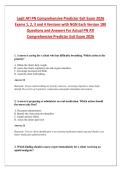
Legit ATI PN Comprehensive Predictor Exit Exam 2026
Exams 1, 2, 3 and 4 Versions with NGN Each Version 180
Ques ons and Answers For Actual PN ATI
Comprehensive Predictor Exit Exam 2026
1. A nurse is caring for a client who has difficulty breathing. Which action is the
priority?
A. Obtain the client's daily weight
B. Assess the client's respiratory rate and oxygen saturation
C. Encourage increased oral fluids
D. Assist the client with bathing
Answer: B
Rationale: Airway and breathing are priority concerns. Assessing respiratory status helps
identify the severity of respiratory compromise and guides immediate intervention.
2. A nurse is preparing to administer an oral medication. Which action should
the nurse take first?
A. Document administration
B. Identify the client using two identifiers
C. Explain adverse effects
D. Assess the client's pain level
Answer: B
Rationale: Correct client identification is an essential medication-safety step and should occur
before medication administration.
3. Which finding should a nurse report immediately for a client receiving an
opioid analgesic?
,A. Respiratory rate of 8/min
B. Pain rating of 5/10
C. Heart rate of 88/min
D. Blood pressure of 130/78 mm Hg
Answer: A
Rationale: Respiratory depression is a potentially life-threatening adverse effect of opioids and
requires immediate intervention.
4. A nurse is caring for a client with suspected Clostridioides difficile infection.
Which precaution is appropriate?
A. Droplet precautions
B. Airborne precautions
C. Contact precautions
D. Protective isolation
Answer: C
Rationale: C. difficile is transmitted through spores and requires contact precautions and
appropriate hand hygiene.
5. Which action is appropriate when caring for a client with a seizure disorder?
A. Insert an oral airway at the onset of a seizure
B. Restrain the client's extremities
C. Place the client on their side during the seizure
D. Offer fluids immediately after seizure activity begins
Answer: C
Rationale: Positioning the client on their side helps maintain the airway and reduces aspiration
risk. The nurse should not restrain the client or place objects in the mouth.
6. A nurse notes that a postoperative client has a rigid abdomen and sudden
severe pain. What should the nurse do?
A. Encourage ambulation
B. Assess vital signs and notify the provider
,C. Administer a laxative
D. Offer oral fluids
Answer: B
Rationale: Sudden severe pain and abdominal rigidity can indicate a serious complication. The
nurse should rapidly assess the client and obtain additional medical assistance.
7. Which laboratory value should concern the nurse most?
A. Sodium 140 mEq/L
B. Potassium 6.2 mEq/L
C. Hemoglobin 14 g/dL
D. Glucose 100 mg/dL
Answer: B
Rationale: Severe hyperkalemia can cause life-threatening cardiac dysrhythmias and requires
prompt intervention.
8. A client with diabetes is conscious and has a blood glucose level of 52 mg/dL.
What is the priority action?
A. Administer insulin
B. Provide 15 g of rapid-acting carbohydrate
C. Restrict oral intake
D. Administer a long-acting carbohydrate immediately
Answer: B
Rationale: A conscious client with hypoglycemia should receive a rapid source of carbohydrate
to quickly increase the blood glucose level.
9. Which finding indicates possible dehydration?
A. Bounding pulse
B. Moist mucous membranes
C. Dark concentrated urine
D. Decreased hematocrit
, Answer: C
Rationale: Concentrated, dark urine commonly occurs when fluid volume is reduced.
10. A nurse is caring for a client receiving furosemide. Which laboratory result
requires close monitoring?
A. Potassium
B. Calcium only
C. Hemoglobin only
D. Platelet count only
Answer: A
Rationale: Furosemide can cause potassium loss, increasing the risk for hypokalemia and
cardiac dysrhythmias.
11. A nurse should question a prescription for potassium chloride when which
finding is present?
A. Urine output of 15 mL/hr
B. Blood pressure of 120/70 mm Hg
C. Respiratory rate of 18/min
D. Temperature of 37°C (98.6°F)
Answer: A
Rationale: Adequate renal function and urine output should be confirmed before administering
potassium because impaired excretion can cause dangerous hyperkalemia.
12. Which intervention helps prevent postoperative deep-vein thrombosis?
A. Limiting fluid intake
B. Early ambulation
C. Maintaining strict bed rest
D. Applying heat directly to the calves
Answer: B
Exams 1, 2, 3 and 4 Versions with NGN Each Version 180
Ques ons and Answers For Actual PN ATI
Comprehensive Predictor Exit Exam 2026
1. A nurse is caring for a client who has difficulty breathing. Which action is the
priority?
A. Obtain the client's daily weight
B. Assess the client's respiratory rate and oxygen saturation
C. Encourage increased oral fluids
D. Assist the client with bathing
Answer: B
Rationale: Airway and breathing are priority concerns. Assessing respiratory status helps
identify the severity of respiratory compromise and guides immediate intervention.
2. A nurse is preparing to administer an oral medication. Which action should
the nurse take first?
A. Document administration
B. Identify the client using two identifiers
C. Explain adverse effects
D. Assess the client's pain level
Answer: B
Rationale: Correct client identification is an essential medication-safety step and should occur
before medication administration.
3. Which finding should a nurse report immediately for a client receiving an
opioid analgesic?
,A. Respiratory rate of 8/min
B. Pain rating of 5/10
C. Heart rate of 88/min
D. Blood pressure of 130/78 mm Hg
Answer: A
Rationale: Respiratory depression is a potentially life-threatening adverse effect of opioids and
requires immediate intervention.
4. A nurse is caring for a client with suspected Clostridioides difficile infection.
Which precaution is appropriate?
A. Droplet precautions
B. Airborne precautions
C. Contact precautions
D. Protective isolation
Answer: C
Rationale: C. difficile is transmitted through spores and requires contact precautions and
appropriate hand hygiene.
5. Which action is appropriate when caring for a client with a seizure disorder?
A. Insert an oral airway at the onset of a seizure
B. Restrain the client's extremities
C. Place the client on their side during the seizure
D. Offer fluids immediately after seizure activity begins
Answer: C
Rationale: Positioning the client on their side helps maintain the airway and reduces aspiration
risk. The nurse should not restrain the client or place objects in the mouth.
6. A nurse notes that a postoperative client has a rigid abdomen and sudden
severe pain. What should the nurse do?
A. Encourage ambulation
B. Assess vital signs and notify the provider
,C. Administer a laxative
D. Offer oral fluids
Answer: B
Rationale: Sudden severe pain and abdominal rigidity can indicate a serious complication. The
nurse should rapidly assess the client and obtain additional medical assistance.
7. Which laboratory value should concern the nurse most?
A. Sodium 140 mEq/L
B. Potassium 6.2 mEq/L
C. Hemoglobin 14 g/dL
D. Glucose 100 mg/dL
Answer: B
Rationale: Severe hyperkalemia can cause life-threatening cardiac dysrhythmias and requires
prompt intervention.
8. A client with diabetes is conscious and has a blood glucose level of 52 mg/dL.
What is the priority action?
A. Administer insulin
B. Provide 15 g of rapid-acting carbohydrate
C. Restrict oral intake
D. Administer a long-acting carbohydrate immediately
Answer: B
Rationale: A conscious client with hypoglycemia should receive a rapid source of carbohydrate
to quickly increase the blood glucose level.
9. Which finding indicates possible dehydration?
A. Bounding pulse
B. Moist mucous membranes
C. Dark concentrated urine
D. Decreased hematocrit
, Answer: C
Rationale: Concentrated, dark urine commonly occurs when fluid volume is reduced.
10. A nurse is caring for a client receiving furosemide. Which laboratory result
requires close monitoring?
A. Potassium
B. Calcium only
C. Hemoglobin only
D. Platelet count only
Answer: A
Rationale: Furosemide can cause potassium loss, increasing the risk for hypokalemia and
cardiac dysrhythmias.
11. A nurse should question a prescription for potassium chloride when which
finding is present?
A. Urine output of 15 mL/hr
B. Blood pressure of 120/70 mm Hg
C. Respiratory rate of 18/min
D. Temperature of 37°C (98.6°F)
Answer: A
Rationale: Adequate renal function and urine output should be confirmed before administering
potassium because impaired excretion can cause dangerous hyperkalemia.
12. Which intervention helps prevent postoperative deep-vein thrombosis?
A. Limiting fluid intake
B. Early ambulation
C. Maintaining strict bed rest
D. Applying heat directly to the calves
Answer: B