

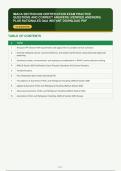
IMACA SECTION 609 CERTIFICATION EXAM PRACTICE
QUESTIONS AND CORRECT ANSWERS (VERIFIED ANSWERS)
PLUS RATIONALES Q&A INSTANT DOWNLOAD PDF
100 QUESTIONS
TABLE OF CONTENTS
# TOPIC
1 Analyze EPA Section 609 requirements and apply them to complex service scenarios
2 Evaluate refrigerant purity, recovery efficiency, and system performance using advanced diagnostic
reasoning
3 Synthesize safety, environmental, and regulatory considerations in MVAC service decision-making
4 IMACA Section 609 Certification Exam Practice Questions And Correct Answers
5 Verified Answers
6 Plus Rationales Q&A Instant Download Pdf
7 Foundations of Automotive HVAC and Refrigerant Handling (IMACA Section 609)
8 Applied Automotive HVAC and Refrigerant Handling (IMACA Section 609)
9 Advanced Automotive HVAC and Refrigerant Handling (IMACA Section 609)
10 Automotive HVAC and Refrigerant Handling (IMACA Section 609) Review
Page 1
,Q1 ANALYZE EPA SECTION 609 REQUIREMENTS AND APPLY THEM TO COMPLEX SERVICE
SCENARIOS
During a routine MVAC service, an technician encounters a system containing a
refrigerant blend that exhibits a vapor pressure of 80 psig at 80°F (26.7°C). The
technician suspects contamination. Which refrigerant or blend is most likely
present, and what is the critical regulatory implication?
A. R-134a; it must be recovered and recycled on-site, but can be vented if the system has a
leak.
B. R-1234yf; it must be recovered with certified equipment, and venting is prohibited under
Section 609. CORRECT
C. R-12; it is an ozone-depleting substance and must be recovered, but venting is allowed for
small leaks.
D. A hydrocarbon blend; it is flammable and must be recovered, but venting is permitted for
safety.
RATIONALE: R-1234yf has a vapor pressure near 80 psig at 80°F, and under Section 609, all
refrigerants must be recovered; venting is illegal. R-134a has a higher pressure (~90 psig), R-12
lower (~70 psig), and hydrocarbon blends are not approved for MVAC use and also require
recovery.
Page 2
,Q2 ANALYZE EPA SECTION 609 REQUIREMENTS AND APPLY THEM TO COMPLEX SERVICE
SCENARIOS
A technician is using a recovery-only machine that meets SAE J2788. After
recovering from a system that was previously serviced with R-12, the machine's
filter drier becomes clogged. What is the most likely cause, and what is the
required next step?
A. Moisture froze in the filter drier; replace the filter and continue recovery.
B. Mineral oil from the R-12 system is incompatible with the machine; switch to a dedicated R-12
recovery unit.
C. The system contained residual R-12, which reacted with the R-134a in the recovery machine
to form corrosive acids; flush the machine with nitrogen.
D. The filter drier is saturated with desiccant fines; replace it and continue, but the recovered
refrigerant is now contaminated and must be sent to a reclaimer. CORRECT
RATIONALE: Cross-contamination (e.g., R-12 in an R-134a system) can cause the filter drier to
become clogged with debris or desiccant fines. Once contaminated, the refrigerant must be sent
to a reclaimer for proper processing; continuing recovery with a clogged filter may damage the
equipment and violate purity standards.
Q3 ANALYZE EPA SECTION 609 REQUIREMENTS AND APPLY THEM TO COMPLEX SERVICE
SCENARIOS
A technician is pressure-testing an MVAC system after a compressor replacement.
The system uses R-1234yf and the ambient temperature is 75°F. What is the
maximum allowable test pressure, and what type of gas must be used?
A. 50 psig; compressed air is acceptable for leak testing.
B. 200 psig; nitrogen or the refrigerant itself is allowed, but oxygen is prohibited. CORRECT
C. 350 psig; only R-1234yf can be used for pressure testing.
D. 150 psig; nitrogen is allowed, but the system must be evacuated before charging.
RATIONALE: Section 609 and SAE J2844 require that R-1234yf systems be leak-tested with
nitrogen or the refrigerant itself, never with compressed air or oxygen (which can form flammable
mixtures). The test pressure is typically 200 psig for high-side tests. Using oxygen is hazardous
and violates safety standards.
Page 3
, Q4 ANALYZE EPA SECTION 609 REQUIREMENTS AND APPLY THEM TO COMPLEX SERVICE
SCENARIOS
A technician is servicing a hybrid electric vehicle's MVAC system. The compressor
is driven by an electric motor and uses R-1234yf. What special consideration
applies to the recovery process?
A. The system must be disabled by removing the high-voltage service plug and waiting 10
minutes for capacitor discharge. CORRECT
B. The recovery machine must be approved for use on high-voltage systems to prevent electric
shock.
C. The system must be evacuated to 0 psig before opening the service valves to prevent
refrigerant from entering the high-voltage components.
D. The compressor must be run at maximum speed during recovery to ensure complete
refrigerant removal.
RATIONALE: Hybrid and electric vehicles have high-voltage systems that must be de-energized
before servicing to avoid electric shock. Following the manufacturer's service procedure,
including disabling the high-voltage system and waiting for capacitor discharge, is critical.
Recovery machines are not rated for high voltage, and running the compressor is not required.
Q5 ANALYZE EPA SECTION 609 REQUIREMENTS AND APPLY THEM TO COMPLEX SERVICE
SCENARIOS
A technician is using a refrigerant identifier before recovering refrigerant from an
MVAC system. The identifier displays a purity of 96% R-134a and 4% R-12. What is
the correct course of action?
A. Proceed with recovery into a standard recovery cylinder, as the mixture is still mostly R-134a.
B. Recover into a separate cylinder labeled 'Contaminated R-134a' and send it to a reclaimer.
CORRECT
C. Vent the mixture to the atmosphere because it is not a pure refrigerant and cannot be reused.
D. Add fresh R-134a to dilute the contamination, then recover the mixture into a standard
cylinder.
RATIONALE: Section 609 prohibits venting and requires that contaminated refrigerant be
recovered into a dedicated cylinder and sent to a reclaimer. Mixing with fresh refrigerant does not
remove contamination and is not allowed. The mixture must not be introduced into other
equipment or the same cylinder as pure refrigerant.
Page 4
QUESTIONS AND CORRECT ANSWERS (VERIFIED ANSWERS)
PLUS RATIONALES Q&A INSTANT DOWNLOAD PDF
100 QUESTIONS
TABLE OF CONTENTS
# TOPIC
1 Analyze EPA Section 609 requirements and apply them to complex service scenarios
2 Evaluate refrigerant purity, recovery efficiency, and system performance using advanced diagnostic
reasoning
3 Synthesize safety, environmental, and regulatory considerations in MVAC service decision-making
4 IMACA Section 609 Certification Exam Practice Questions And Correct Answers
5 Verified Answers
6 Plus Rationales Q&A Instant Download Pdf
7 Foundations of Automotive HVAC and Refrigerant Handling (IMACA Section 609)
8 Applied Automotive HVAC and Refrigerant Handling (IMACA Section 609)
9 Advanced Automotive HVAC and Refrigerant Handling (IMACA Section 609)
10 Automotive HVAC and Refrigerant Handling (IMACA Section 609) Review
Page 1
,Q1 ANALYZE EPA SECTION 609 REQUIREMENTS AND APPLY THEM TO COMPLEX SERVICE
SCENARIOS
During a routine MVAC service, an technician encounters a system containing a
refrigerant blend that exhibits a vapor pressure of 80 psig at 80°F (26.7°C). The
technician suspects contamination. Which refrigerant or blend is most likely
present, and what is the critical regulatory implication?
A. R-134a; it must be recovered and recycled on-site, but can be vented if the system has a
leak.
B. R-1234yf; it must be recovered with certified equipment, and venting is prohibited under
Section 609. CORRECT
C. R-12; it is an ozone-depleting substance and must be recovered, but venting is allowed for
small leaks.
D. A hydrocarbon blend; it is flammable and must be recovered, but venting is permitted for
safety.
RATIONALE: R-1234yf has a vapor pressure near 80 psig at 80°F, and under Section 609, all
refrigerants must be recovered; venting is illegal. R-134a has a higher pressure (~90 psig), R-12
lower (~70 psig), and hydrocarbon blends are not approved for MVAC use and also require
recovery.
Page 2
,Q2 ANALYZE EPA SECTION 609 REQUIREMENTS AND APPLY THEM TO COMPLEX SERVICE
SCENARIOS
A technician is using a recovery-only machine that meets SAE J2788. After
recovering from a system that was previously serviced with R-12, the machine's
filter drier becomes clogged. What is the most likely cause, and what is the
required next step?
A. Moisture froze in the filter drier; replace the filter and continue recovery.
B. Mineral oil from the R-12 system is incompatible with the machine; switch to a dedicated R-12
recovery unit.
C. The system contained residual R-12, which reacted with the R-134a in the recovery machine
to form corrosive acids; flush the machine with nitrogen.
D. The filter drier is saturated with desiccant fines; replace it and continue, but the recovered
refrigerant is now contaminated and must be sent to a reclaimer. CORRECT
RATIONALE: Cross-contamination (e.g., R-12 in an R-134a system) can cause the filter drier to
become clogged with debris or desiccant fines. Once contaminated, the refrigerant must be sent
to a reclaimer for proper processing; continuing recovery with a clogged filter may damage the
equipment and violate purity standards.
Q3 ANALYZE EPA SECTION 609 REQUIREMENTS AND APPLY THEM TO COMPLEX SERVICE
SCENARIOS
A technician is pressure-testing an MVAC system after a compressor replacement.
The system uses R-1234yf and the ambient temperature is 75°F. What is the
maximum allowable test pressure, and what type of gas must be used?
A. 50 psig; compressed air is acceptable for leak testing.
B. 200 psig; nitrogen or the refrigerant itself is allowed, but oxygen is prohibited. CORRECT
C. 350 psig; only R-1234yf can be used for pressure testing.
D. 150 psig; nitrogen is allowed, but the system must be evacuated before charging.
RATIONALE: Section 609 and SAE J2844 require that R-1234yf systems be leak-tested with
nitrogen or the refrigerant itself, never with compressed air or oxygen (which can form flammable
mixtures). The test pressure is typically 200 psig for high-side tests. Using oxygen is hazardous
and violates safety standards.
Page 3
, Q4 ANALYZE EPA SECTION 609 REQUIREMENTS AND APPLY THEM TO COMPLEX SERVICE
SCENARIOS
A technician is servicing a hybrid electric vehicle's MVAC system. The compressor
is driven by an electric motor and uses R-1234yf. What special consideration
applies to the recovery process?
A. The system must be disabled by removing the high-voltage service plug and waiting 10
minutes for capacitor discharge. CORRECT
B. The recovery machine must be approved for use on high-voltage systems to prevent electric
shock.
C. The system must be evacuated to 0 psig before opening the service valves to prevent
refrigerant from entering the high-voltage components.
D. The compressor must be run at maximum speed during recovery to ensure complete
refrigerant removal.
RATIONALE: Hybrid and electric vehicles have high-voltage systems that must be de-energized
before servicing to avoid electric shock. Following the manufacturer's service procedure,
including disabling the high-voltage system and waiting for capacitor discharge, is critical.
Recovery machines are not rated for high voltage, and running the compressor is not required.
Q5 ANALYZE EPA SECTION 609 REQUIREMENTS AND APPLY THEM TO COMPLEX SERVICE
SCENARIOS
A technician is using a refrigerant identifier before recovering refrigerant from an
MVAC system. The identifier displays a purity of 96% R-134a and 4% R-12. What is
the correct course of action?
A. Proceed with recovery into a standard recovery cylinder, as the mixture is still mostly R-134a.
B. Recover into a separate cylinder labeled 'Contaminated R-134a' and send it to a reclaimer.
CORRECT
C. Vent the mixture to the atmosphere because it is not a pure refrigerant and cannot be reused.
D. Add fresh R-134a to dilute the contamination, then recover the mixture into a standard
cylinder.
RATIONALE: Section 609 prohibits venting and requires that contaminated refrigerant be
recovered into a dedicated cylinder and sent to a reclaimer. Mixing with fresh refrigerant does not
remove contamination and is not allowed. The mixture must not be introduced into other
equipment or the same cylinder as pure refrigerant.
Page 4


