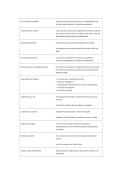
Healthcare Leadership Exam 1 Questions and Answers
how is leadership holistic? leadership requires leading laterally and collaboratively and
not just upper echelons in a top-down approach
evidence-based practice clinical decision making that integrates the empirical evidence
from outcome and structure of practice, with clinical expertise
and patient characteristics and preferences
Why study leadership? Its all around us and we will all be leaders at one point
helps people have something specula that makes other feel
good
Four States of Knowing unconscious incompetence, conscious incompetence,
conscious competence, unconscious competence
What's the duty of a healthcare leader? to merge the complexity of managing resources into a culture
that serves communities by maintaining and improving the
patients health
Great leadership requires 1. communication, knowledge and skills
2. emotional intelligence
3. understanding relationships b/w trust and understanding
4. be flexible and adaptive
5. have strong integrity
Leadership as an art encompasses relationships, interpersonal skills, power and
intuition
relationship oriented, decision based on perception
Leadership as a science embodied technical acumen, skills and principles
budgeting, decisions based on analysis and expert system
healthcare manager is more reactive & stays more closely coupled to
organizational policies, standards, guidelines & established
processes
Healthcare Leader more proactive and involved in developing organizational
culture
look for employees and create vision
situation phase of leadership explains effective leadership w/in the context of larger work
of situation
Healthcare Leadership Exam 1 Questions and Answers
, Healthcare Leadership Exam 1 Questions and Answers
descriptive vs. prescriptive theory descriptive illustrated a phenomena and a prescriptive does
the same but provides recommendation w/ regard to action
or process
Healthcare Leadership Exam 1 Questions and Answers
how is leadership holistic? leadership requires leading laterally and collaboratively and
not just upper echelons in a top-down approach
evidence-based practice clinical decision making that integrates the empirical evidence
from outcome and structure of practice, with clinical expertise
and patient characteristics and preferences
Why study leadership? Its all around us and we will all be leaders at one point
helps people have something specula that makes other feel
good
Four States of Knowing unconscious incompetence, conscious incompetence,
conscious competence, unconscious competence
What's the duty of a healthcare leader? to merge the complexity of managing resources into a culture
that serves communities by maintaining and improving the
patients health
Great leadership requires 1. communication, knowledge and skills
2. emotional intelligence
3. understanding relationships b/w trust and understanding
4. be flexible and adaptive
5. have strong integrity
Leadership as an art encompasses relationships, interpersonal skills, power and
intuition
relationship oriented, decision based on perception
Leadership as a science embodied technical acumen, skills and principles
budgeting, decisions based on analysis and expert system
healthcare manager is more reactive & stays more closely coupled to
organizational policies, standards, guidelines & established
processes
Healthcare Leader more proactive and involved in developing organizational
culture
look for employees and create vision
situation phase of leadership explains effective leadership w/in the context of larger work
of situation
Healthcare Leadership Exam 1 Questions and Answers
, Healthcare Leadership Exam 1 Questions and Answers
descriptive vs. prescriptive theory descriptive illustrated a phenomena and a prescriptive does
the same but provides recommendation w/ regard to action
or process
Healthcare Leadership Exam 1 Questions and Answers