

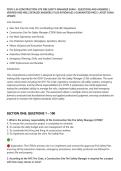
FDNY S-56 CONSTRUCTION SITE FIRE SAFETY MANAGER EXAM – QUESTIONS AND ANSWERS |
VERIFIED AND WELL DETAILED ANSWERS | PLUS RATIONALES | GUARANTEED PASS | LATEST EXAM
UPDATE
Core Domains:
New York City Fire Code (FC) and Building Code (BC) Regulations
Construction Site Fire Safety Manager (CFSM) Roles and Responsibilities
Hot Work Operations and Permits
Fire Protection Systems (Standpipes, Sprinklers, Alarms)
Means of Egress and Evacuation Procedures
Fire Extinguishers and Suppression Systems
Hazardous Materials Storage and Handling
Emergency Planning, Drills, and Incident Command
FDNY Enforcement and Penalties
Introduction:
This comprehensive examination is designed to rigorously assess the knowledge and practical decision-
making skills required for the FDNY Construction Site Fire Safety Manager (S-56) certification. The exam
covers critical areas including the NYC Fire Code, regulatory compliance, life safety systems, emergency
response protocols, and the ethical responsibilities of a CFSM. It emphasizes real-world application,
testing the candidate's ability to manage fire risks, implement safety procedures, and lead emergency
responses on active construction sites. The assessment utilizes a multiple-choice and scenario-based
format to evaluate both foundational theory and applied professional judgment, ensuring candidates are
prepared to maintain the highest standards of fire safety.
SECTION ONE: QUESTIONS 1 – 100
1. What is the primary responsibility of the Construction Site Fire Safety Manager (CFSM)?
A. To ensure the construction project is completed on schedule.
B. To oversee the daily budget and cost management of the site.
C. To coordinate the hiring and firing of construction workers.
D. To implement and oversee the site's Fire Safety Plan.
🟢D
🔴 Explanation: The CFSM's primary role is to implement and oversee the approved Fire Safety Plan,
ensuring all fire prevention measures, emergency procedures, and safety protocols are followed to
protect life and property.
2. According to the NYC Fire Code, a Construction Site Fire Safety Manager is required for a project
with how many stories or more?
,A. One story
B. Three stories
C. Five stories
D. Ten stories
🟢D
🔴 Explanation: The Fire Code mandates that a CFSM be designated for any new building or major
alteration that is ten (10) stories or more in height. This is to manage the complex fire safety
challenges inherent in high-rise construction.
3. A Hot Work Permit is required for operations that involve:
A. Operating a cement mixer.
B. Open flames, welding, cutting, or grinding.
C. Using hand tools for carpentry.
D. Laying bricks with mortar.
🟢B
🔴 Explanation: Hot work includes any operation that involves open flames or produces sparks and
heat, such as welding, cutting, grinding, brazing, and similar activities. A permit is a critical control
measure to ensure these operations are conducted safely.
4. Before commencing hot work, what is the minimum required fire watch period after the work is
completed?
A. 15 minutes
B. 30 minutes
C. 1 hour
D. 2 hours
🟢B
🔴 Explanation: A fire watch must be maintained for a minimum of 30 minutes after hot work is
completed to monitor for smoldering fires or other signs of ignition that may develop after the
operation ceases.
5. Which class of fire involves ordinary combustibles such as wood, paper, and cloth?
A. Class A
B. Class B
C. Class C
D. Class D
🟢A
🔴 Explanation: Fires are classified by the type of fuel. Class A fires involve ordinary solid combustibles.
This knowledge is essential for selecting the correct type of fire extinguisher.
6. What type of fire extinguisher is most appropriate for a fire involving flammable liquids like
gasoline or oil?
, A. Class A extinguisher
B. Class B extinguisher
C. Class C extinguisher
D. Class D extinguisher
🟢B
🔴 Explanation: Class B fires involve flammable or combustible liquids, gases, and greases. A Class B
fire extinguisher is specifically designed to smother these types of fires by interrupting the chemical
reaction or cutting off the oxygen supply.
7. A fire extinguisher with a rating of "4A:80B:C" is most effective on which type of fire?
A. Only ordinary combustibles
B. Only electrical fires
C. Only flammable liquid fires
D. A combination of Class A, B, and C fires
🟢D
🔴 Explanation: The rating "4A:80B:C" indicates it has been tested and rated for use on Class A, B, and
C fires. "4A" gives the equivalent extinguishing capability of 5 gallons of water, "80B" provides a
standard test rating for flammable liquids, and "C" signifies it is safe for use on energized electrical
equipment.
8. The FDNY must be notified of a fire on a construction site:
A. After the fire is completely extinguished.
B. Only if the fire causes structural damage.
C. Immediately upon discovery.
D. At the end of the work shift.
🟢C
🔴 Explanation: All fires on a construction site, regardless of size or whether they were extinguished
quickly, must be reported to the FDNY immediately. This ensures a proper emergency response and
allows the department to investigate and document the incident.
9. A Fire Safety Plan for a construction site must be approved by:
A. The General Contractor.
B. The Building Owner.
C. The FDNY.
D. The Department of Buildings.
🟢C
🔴 Explanation: The Fire Safety Plan is a critical document for protecting life and property and must be
submitted to and approved by the Fire Department (FDNY). This ensures it meets the necessary
regulatory standards for the site's specific conditions.
VERIFIED AND WELL DETAILED ANSWERS | PLUS RATIONALES | GUARANTEED PASS | LATEST EXAM
UPDATE
Core Domains:
New York City Fire Code (FC) and Building Code (BC) Regulations
Construction Site Fire Safety Manager (CFSM) Roles and Responsibilities
Hot Work Operations and Permits
Fire Protection Systems (Standpipes, Sprinklers, Alarms)
Means of Egress and Evacuation Procedures
Fire Extinguishers and Suppression Systems
Hazardous Materials Storage and Handling
Emergency Planning, Drills, and Incident Command
FDNY Enforcement and Penalties
Introduction:
This comprehensive examination is designed to rigorously assess the knowledge and practical decision-
making skills required for the FDNY Construction Site Fire Safety Manager (S-56) certification. The exam
covers critical areas including the NYC Fire Code, regulatory compliance, life safety systems, emergency
response protocols, and the ethical responsibilities of a CFSM. It emphasizes real-world application,
testing the candidate's ability to manage fire risks, implement safety procedures, and lead emergency
responses on active construction sites. The assessment utilizes a multiple-choice and scenario-based
format to evaluate both foundational theory and applied professional judgment, ensuring candidates are
prepared to maintain the highest standards of fire safety.
SECTION ONE: QUESTIONS 1 – 100
1. What is the primary responsibility of the Construction Site Fire Safety Manager (CFSM)?
A. To ensure the construction project is completed on schedule.
B. To oversee the daily budget and cost management of the site.
C. To coordinate the hiring and firing of construction workers.
D. To implement and oversee the site's Fire Safety Plan.
🟢D
🔴 Explanation: The CFSM's primary role is to implement and oversee the approved Fire Safety Plan,
ensuring all fire prevention measures, emergency procedures, and safety protocols are followed to
protect life and property.
2. According to the NYC Fire Code, a Construction Site Fire Safety Manager is required for a project
with how many stories or more?
,A. One story
B. Three stories
C. Five stories
D. Ten stories
🟢D
🔴 Explanation: The Fire Code mandates that a CFSM be designated for any new building or major
alteration that is ten (10) stories or more in height. This is to manage the complex fire safety
challenges inherent in high-rise construction.
3. A Hot Work Permit is required for operations that involve:
A. Operating a cement mixer.
B. Open flames, welding, cutting, or grinding.
C. Using hand tools for carpentry.
D. Laying bricks with mortar.
🟢B
🔴 Explanation: Hot work includes any operation that involves open flames or produces sparks and
heat, such as welding, cutting, grinding, brazing, and similar activities. A permit is a critical control
measure to ensure these operations are conducted safely.
4. Before commencing hot work, what is the minimum required fire watch period after the work is
completed?
A. 15 minutes
B. 30 minutes
C. 1 hour
D. 2 hours
🟢B
🔴 Explanation: A fire watch must be maintained for a minimum of 30 minutes after hot work is
completed to monitor for smoldering fires or other signs of ignition that may develop after the
operation ceases.
5. Which class of fire involves ordinary combustibles such as wood, paper, and cloth?
A. Class A
B. Class B
C. Class C
D. Class D
🟢A
🔴 Explanation: Fires are classified by the type of fuel. Class A fires involve ordinary solid combustibles.
This knowledge is essential for selecting the correct type of fire extinguisher.
6. What type of fire extinguisher is most appropriate for a fire involving flammable liquids like
gasoline or oil?
, A. Class A extinguisher
B. Class B extinguisher
C. Class C extinguisher
D. Class D extinguisher
🟢B
🔴 Explanation: Class B fires involve flammable or combustible liquids, gases, and greases. A Class B
fire extinguisher is specifically designed to smother these types of fires by interrupting the chemical
reaction or cutting off the oxygen supply.
7. A fire extinguisher with a rating of "4A:80B:C" is most effective on which type of fire?
A. Only ordinary combustibles
B. Only electrical fires
C. Only flammable liquid fires
D. A combination of Class A, B, and C fires
🟢D
🔴 Explanation: The rating "4A:80B:C" indicates it has been tested and rated for use on Class A, B, and
C fires. "4A" gives the equivalent extinguishing capability of 5 gallons of water, "80B" provides a
standard test rating for flammable liquids, and "C" signifies it is safe for use on energized electrical
equipment.
8. The FDNY must be notified of a fire on a construction site:
A. After the fire is completely extinguished.
B. Only if the fire causes structural damage.
C. Immediately upon discovery.
D. At the end of the work shift.
🟢C
🔴 Explanation: All fires on a construction site, regardless of size or whether they were extinguished
quickly, must be reported to the FDNY immediately. This ensures a proper emergency response and
allows the department to investigate and document the incident.
9. A Fire Safety Plan for a construction site must be approved by:
A. The General Contractor.
B. The Building Owner.
C. The FDNY.
D. The Department of Buildings.
🟢C
🔴 Explanation: The Fire Safety Plan is a critical document for protecting life and property and must be
submitted to and approved by the Fire Department (FDNY). This ensures it meets the necessary
regulatory standards for the site's specific conditions.


