
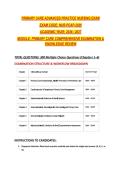
PRIMARY CARE ADVANCED PRACTICE NURSING EXAM
EXAM CODE: NUR-PCAP-2026
ACADEMIC YEAR:
MODULE: PRIMARY CARE COMPREHENSIVE EXAMINATION &
KNOWLEDGE REVIEW
TOTAL QUESTIONS: 300 Multiple Choice Questions (Chapters 1–6)
EXAMINATION STRUCTURE & WORKFLOW BREAKDOWN
Question Range
Q001 – Q050
Q051 – Q100
Q101 – Q150
Q151 – Q200
Q201 – Q250
Q251 – Q300
INSTRUCTIONS TO CANDIDATES:
1. Response Selection: Read each scenario carefully and select the single best answer (A, B, C, or
D).
, 2. Answer Recording: Ensure all answers are recorded accurately in the provided answer grid or
colored a bit differently same to the question.
3. Time Management: Allocate approximately 45–48 seconds per question to complete all 300
questions within the allotted time.
Chapter 1: Diagnostic Reasoning, E&M Coding & Practice Foundations
(Questions 1–50)
1. What defines diagnostic reasoning in advanced practice nursing?
• A) Memorizing disease protocols without reflection
• B) Reflective critical thinking that systematically tests hypotheses to determine if all
avenues have been explored based on evidence
• C) Ordering a comprehensive lab panel prior to taking a health history
• D) Accepting the initial differential diagnosis as definitive
2. Which component is categorized strictly as subjective patient data?
• A) Vital signs and physical exam findings
• B) History of Present Illness (HPI) and Review of Systems (ROS)
• C) Laboratory test results and diagnostic imaging
• D) Provider observations during physical inspection
3. What mnemonic is standard for obtaining a detailed breakdown of a Chief Complaint (CC)?
• A) SOAP
• B) SBAR
• C) OLDCART (Onset, Location, Duration, Characteristics, Aggravating, Relieving,
Treatment)
• D) CPT-ICD
4. Which code set provides standardized reporting for procedures and medical services
performed by clinicians?
, • A) ICD-10 codes
• B) CPT (Current Procedural Terminology) codes
• C) DRG classification
• D) LOINC codes
5. What is the primary purpose of ICD-10 codes in clinical practice?
• A) Establishing clinician payment fee schedules
• B) Providing diagnostic codes that justify the medical necessity of procedures
performed
• C) Standardizing nursing assessment taxonomies
• D) Tracking hospital bed occupancy
6. Sensitivity refers to the ability of a diagnostic test to correctly identify which population?
• A) Individuals without the disease
• B) Individuals who actually have the disease (true positive rate)
• C) Patients with false-positive results
• D) The general population regardless of status
7. Specificity measures which characteristic of a diagnostic test?
• A) The ability to correctly identify those WITHOUT the disease (true negative rate)
• B) The probability of false negatives
• C) The cost-effectiveness of the laboratory assay
• D) The rate of true positives in symptomatic patients
8. For billing purposes, a patient is classified as "New" if they have not received professional
services from the provider or same-specialty group within what timeframe?
• A) 1 year
• B) 2 years
• C) 3 years
• D) 5 years
, 9. Why must every CPT procedure code submitted on an insurance claim have a
corresponding diagnosis code?
• A) To satisfy state licensing requirements
• B) To establish medical necessity so the payer will reimburse the service
• C) To generate statistics for the WHO
• D) To satisfy pharmacy dispensing laws
10. When prioritizing a differential diagnosis for a patient presenting with acute chest pain,
which condition should be evaluated first?
• A) Gastroesophageal reflux disease (GERD)
• B) Costochondritis
• C) Acute Coronary Syndrome (ACS)
• D) Acute anxiety state
11. Which document serves as both a clinical communication tool and a medico-legal record
of care?
• A) Written History and Physical (H&P)
• B) Incident report
• C) Peer review summary
• D) Prior authorization request
12. What constitutes objective data during an encounter?
• A) Patient's statement of "feeling feverish"
• B) A documented temperature reading of 38.5°C taken in clinic
• C) Patient's self-reported pain score from yesterday
• D) Description of symptoms provided by a family member over the phone
13. High specificity in a test is most useful when you want to:
• A) Screen a large asymptomatic population
• B) Rule IN a diagnosis when the test result is positive
• C) Avoid false-positive screening tests
EXAM CODE: NUR-PCAP-2026
ACADEMIC YEAR:
MODULE: PRIMARY CARE COMPREHENSIVE EXAMINATION &
KNOWLEDGE REVIEW
TOTAL QUESTIONS: 300 Multiple Choice Questions (Chapters 1–6)
EXAMINATION STRUCTURE & WORKFLOW BREAKDOWN
Question Range
Q001 – Q050
Q051 – Q100
Q101 – Q150
Q151 – Q200
Q201 – Q250
Q251 – Q300
INSTRUCTIONS TO CANDIDATES:
1. Response Selection: Read each scenario carefully and select the single best answer (A, B, C, or
D).
, 2. Answer Recording: Ensure all answers are recorded accurately in the provided answer grid or
colored a bit differently same to the question.
3. Time Management: Allocate approximately 45–48 seconds per question to complete all 300
questions within the allotted time.
Chapter 1: Diagnostic Reasoning, E&M Coding & Practice Foundations
(Questions 1–50)
1. What defines diagnostic reasoning in advanced practice nursing?
• A) Memorizing disease protocols without reflection
• B) Reflective critical thinking that systematically tests hypotheses to determine if all
avenues have been explored based on evidence
• C) Ordering a comprehensive lab panel prior to taking a health history
• D) Accepting the initial differential diagnosis as definitive
2. Which component is categorized strictly as subjective patient data?
• A) Vital signs and physical exam findings
• B) History of Present Illness (HPI) and Review of Systems (ROS)
• C) Laboratory test results and diagnostic imaging
• D) Provider observations during physical inspection
3. What mnemonic is standard for obtaining a detailed breakdown of a Chief Complaint (CC)?
• A) SOAP
• B) SBAR
• C) OLDCART (Onset, Location, Duration, Characteristics, Aggravating, Relieving,
Treatment)
• D) CPT-ICD
4. Which code set provides standardized reporting for procedures and medical services
performed by clinicians?
, • A) ICD-10 codes
• B) CPT (Current Procedural Terminology) codes
• C) DRG classification
• D) LOINC codes
5. What is the primary purpose of ICD-10 codes in clinical practice?
• A) Establishing clinician payment fee schedules
• B) Providing diagnostic codes that justify the medical necessity of procedures
performed
• C) Standardizing nursing assessment taxonomies
• D) Tracking hospital bed occupancy
6. Sensitivity refers to the ability of a diagnostic test to correctly identify which population?
• A) Individuals without the disease
• B) Individuals who actually have the disease (true positive rate)
• C) Patients with false-positive results
• D) The general population regardless of status
7. Specificity measures which characteristic of a diagnostic test?
• A) The ability to correctly identify those WITHOUT the disease (true negative rate)
• B) The probability of false negatives
• C) The cost-effectiveness of the laboratory assay
• D) The rate of true positives in symptomatic patients
8. For billing purposes, a patient is classified as "New" if they have not received professional
services from the provider or same-specialty group within what timeframe?
• A) 1 year
• B) 2 years
• C) 3 years
• D) 5 years
, 9. Why must every CPT procedure code submitted on an insurance claim have a
corresponding diagnosis code?
• A) To satisfy state licensing requirements
• B) To establish medical necessity so the payer will reimburse the service
• C) To generate statistics for the WHO
• D) To satisfy pharmacy dispensing laws
10. When prioritizing a differential diagnosis for a patient presenting with acute chest pain,
which condition should be evaluated first?
• A) Gastroesophageal reflux disease (GERD)
• B) Costochondritis
• C) Acute Coronary Syndrome (ACS)
• D) Acute anxiety state
11. Which document serves as both a clinical communication tool and a medico-legal record
of care?
• A) Written History and Physical (H&P)
• B) Incident report
• C) Peer review summary
• D) Prior authorization request
12. What constitutes objective data during an encounter?
• A) Patient's statement of "feeling feverish"
• B) A documented temperature reading of 38.5°C taken in clinic
• C) Patient's self-reported pain score from yesterday
• D) Description of symptoms provided by a family member over the phone
13. High specificity in a test is most useful when you want to:
• A) Screen a large asymptomatic population
• B) Rule IN a diagnosis when the test result is positive
• C) Avoid false-positive screening tests


