
Chem 162 Final Exam (2).pdf~~~)@(&(*&#)))))))))))))))))))))))))))))))))#&*(*&(#*^@!!!!!#~@~##
Chem 162 Final Exam (2).pdf~~~)@(&(*&#)))))))))))))))))))))))))))))))))#&*(*&(#*^@!!!!!#~@~##
Chem 162 Final Exam (2).pdf~~~)@(&(*&#)))))))))))))))))))))))))))))))))#&*(*&(#*^@!!!!!#~@~##
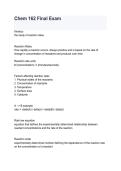
Chem 162 Final Exam
Kinetics
the study of reaction rates
Reaction Rates
How rapidly a reaction occurs. Always positive and is based on the rate of
change in concentration of reactants and products over time
Reaction rate units
M (concentration) / t (minutes/seconds)
Factors affecting reaction rates
1. Physical states of the reactants
2. Concentration of reactants
3. Temperature
4. Surface area
5. Catalysts
A --> B example
rate = -delta(A) / delta(t) = delta(B) / delta(t)
Rate law equation
equation that defines the experimentally determined relationship between
reactant concentrations and the rate of the reaction
Reaction order
experimentally determined number defining the dependence of the reaction rate
on the concentration of a reactant
Chem 162 Final Exam (2).pdf~~~)@(&(*&#)))))))))))))))))))))))))))))))))#&*(*&(#*^@!!!!!#~@~##
Chem 162 Final Exam (2).pdf~~~)@(&(*&#)))))))))))))))))))))))))))))))))#&*(*&(#*^@!!!!!#~@~##
Chem 162 Final Exam (2).pdf~~~)@(&(*&#)))))))))))))))))))))))))))))))))#&*(*&(#*^@!!!!!#~@~##
, Chem 162 Final Exam (2).pdf~~~)@(&(*&#)))))))))))))))))))))))))))))))))#&*(*&(#*^@!!!!!#~@~##
Chem 162 Final Exam (2).pdf~~~)@(&(*&#)))))))))))))))))))))))))))))))))#&*(*&(#*^@!!!!!#~@~##
Chem 162 Final Exam (2).pdf~~~)@(&(*&#)))))))))))))))))))))))))))))))))#&*(*&(#*^@!!!!!#~@~##
Overall reaction order
Sum of the exponents of the concentration terms in the rate law
Rate constant (k)
The proportionality constant that relates reaction rate to reactant (and product)
concentrations. Only depends on reactants
How to determine the rate law
1. Using the initial rate immediately after reactants are mixed
2. Using different tangent lines of a graph
3. Using all data at once to find integrated rate law
Integrated rate law
a mathematical expression that describes the change in concentration of a
reactant in a chemical reaction with time
Zero order reaction integrated rate law
[A]t = -kt + [A]0
First order reaction integrated rate law
ln[A]t = -kt + ln[A]0
Second order reaction integrated rate law
1/[A]t = kt + 1/[A]0
half-life
The time in the course of a chemical reaction during which the concentration of a
reactant decreases by half
Chem 162 Final Exam (2).pdf~~~)@(&(*&#)))))))))))))))))))))))))))))))))#&*(*&(#*^@!!!!!#~@~##
Chem 162 Final Exam (2).pdf~~~)@(&(*&#)))))))))))))))))))))))))))))))))#&*(*&(#*^@!!!!!#~@~##
Chem 162 Final Exam (2).pdf~~~)@(&(*&#)))))))))))))))))))))))))))))))))#&*(*&(#*^@!!!!!#~@~##
Chem 162 Final Exam (2).pdf~~~)@(&(*&#)))))))))))))))))))))))))))))))))#&*(*&(#*^@!!!!!#~@~##
Chem 162 Final Exam (2).pdf~~~)@(&(*&#)))))))))))))))))))))))))))))))))#&*(*&(#*^@!!!!!#~@~##
Chem 162 Final Exam
Kinetics
the study of reaction rates
Reaction Rates
How rapidly a reaction occurs. Always positive and is based on the rate of
change in concentration of reactants and products over time
Reaction rate units
M (concentration) / t (minutes/seconds)
Factors affecting reaction rates
1. Physical states of the reactants
2. Concentration of reactants
3. Temperature
4. Surface area
5. Catalysts
A --> B example
rate = -delta(A) / delta(t) = delta(B) / delta(t)
Rate law equation
equation that defines the experimentally determined relationship between
reactant concentrations and the rate of the reaction
Reaction order
experimentally determined number defining the dependence of the reaction rate
on the concentration of a reactant
Chem 162 Final Exam (2).pdf~~~)@(&(*&#)))))))))))))))))))))))))))))))))#&*(*&(#*^@!!!!!#~@~##
Chem 162 Final Exam (2).pdf~~~)@(&(*&#)))))))))))))))))))))))))))))))))#&*(*&(#*^@!!!!!#~@~##
Chem 162 Final Exam (2).pdf~~~)@(&(*&#)))))))))))))))))))))))))))))))))#&*(*&(#*^@!!!!!#~@~##
, Chem 162 Final Exam (2).pdf~~~)@(&(*&#)))))))))))))))))))))))))))))))))#&*(*&(#*^@!!!!!#~@~##
Chem 162 Final Exam (2).pdf~~~)@(&(*&#)))))))))))))))))))))))))))))))))#&*(*&(#*^@!!!!!#~@~##
Chem 162 Final Exam (2).pdf~~~)@(&(*&#)))))))))))))))))))))))))))))))))#&*(*&(#*^@!!!!!#~@~##
Overall reaction order
Sum of the exponents of the concentration terms in the rate law
Rate constant (k)
The proportionality constant that relates reaction rate to reactant (and product)
concentrations. Only depends on reactants
How to determine the rate law
1. Using the initial rate immediately after reactants are mixed
2. Using different tangent lines of a graph
3. Using all data at once to find integrated rate law
Integrated rate law
a mathematical expression that describes the change in concentration of a
reactant in a chemical reaction with time
Zero order reaction integrated rate law
[A]t = -kt + [A]0
First order reaction integrated rate law
ln[A]t = -kt + ln[A]0
Second order reaction integrated rate law
1/[A]t = kt + 1/[A]0
half-life
The time in the course of a chemical reaction during which the concentration of a
reactant decreases by half
Chem 162 Final Exam (2).pdf~~~)@(&(*&#)))))))))))))))))))))))))))))))))#&*(*&(#*^@!!!!!#~@~##
Chem 162 Final Exam (2).pdf~~~)@(&(*&#)))))))))))))))))))))))))))))))))#&*(*&(#*^@!!!!!#~@~##
Chem 162 Final Exam (2).pdf~~~)@(&(*&#)))))))))))))))))))))))))))))))))#&*(*&(#*^@!!!!!#~@~##


