

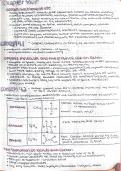
AP Biology & General Biology 101: Campbell Biology Chapter 4 Notes - Carbon and the Molecular Diversity of Life
This study guide covers Chapter 4: Carbon and the Molecular Diversity of Life from Campbell Biology (10th Edition). It explores the foundational role of carbon as the backbone of organic molecules due to its tetravalence and ability to form up to four covalent bonds. Key sections detail how carbon skeletons vary in length, branching, double bond position, and ring structure. The document thoroughly explains the three types of isomers—structural isomers, cis-trans isomers, and enantiomers—and provides visual breakdowns of the key functional groups (hydroxyl, carbonyl, carboxyl, amino, sulfhydryl, phosphate, and methyl) that determine the chemical reactivity and properties of biological molecules. Campbell Biology, Campbell Biology 10th Edition, Chapter 4, Carbon and the Molecular Diversity of Life, Organic Chemistry, Carbon Skeletons, Tetravalence, Hydrocarbons, Isomers, Structural Isomers, Cis Trans Isomers, Enantiomers, Functional Groups, Hydroxyl Group, Carbonyl Group, Carboxyl Group, Amino Group, Sulfhydryl Group, Phosphate Group, Methyl Group, ATP, Adenosine Triphosphate, Molecular Diversity, Macromolecules Prep, Organic Molecules, AP Biology, AP Bio Chapter 4, General Biology 1, Bio 101, College Biology, Biology Study Guide, Stuvia Biology Notes
Document information
- School year
- 3
- Uploaded on
- August 31, 2026
- Number of pages
- 5
- Written in
- 2026/2027
- Type
- Book review


