

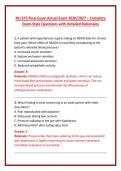
NU 673 Final Exam Actual Exam 2026/2027 – Complete
Exam-Style Questions with Detailed Rationales
1. A patient with hypertension reports taking an NSAID daily for chronic
knee pain. Which effect of NSAIDs is most likely contributing to the
patient's elevated blood pressure?
A. Increased insulin secretion
B. Sodium and water retention
C. Increased potassium excretion
D. Reduced sympathetic activity
Answer: B
Rationale: NSAIDs inhibit prostaglandin synthesis, which can reduce
renal blood flow and promote sodium and water retention. This can
increase blood pressure and diminish the effectiveness of
antihypertensive medications.
2. Which finding is most concerning in an adult patient with chest
discomfort?
A. Pain reproducible with palpation
B. Sharp pain lasting two seconds
C. Pressure radiating to the jaw with diaphoresis
D. Mild discomfort after eating spicy food
Answer: C
Rationale: Pressure-like chest pain radiating to the jaw and associated
with diaphoresis is highly concerning for acute coronary syndrome.
Immediate evaluation is warranted.
,3. A patient with type 2 diabetes has an A1C of 9.2%. What does this
result indicate?
A. Excellent glycemic control
B. Predominantly normal fasting glucose
C. Poor glycemic control over the preceding months
D. Acute hypoglycemia
Answer: C
Rationale: A1C reflects average glycemic exposure over approximately
the preceding 2–3 months. An A1C of 9.2% indicates inadequate
glycemic control.
4. Which lifestyle intervention generally provides the greatest benefit
for a patient with metabolic syndrome?
A. Increasing dietary sodium
B. Weight reduction and regular physical activity
C. Eliminating all dietary carbohydrates
D. Increasing saturated fat intake
Answer: B
Rationale: Weight reduction, physical activity, and dietary
improvement can improve insulin sensitivity, blood pressure,
triglycerides, and cardiovascular risk.
5. A patient taking an ACE inhibitor develops swelling of the lips and
tongue. What is the priority action?
A. Reassure the patient
B. Administer the next dose with food
C. Evaluate immediately for airway compromise
D. Recommend an antacid
,Answer: C
Rationale: Angioedema associated with ACE inhibitors can rapidly
compromise the airway and is a medical emergency. The medication
should be discontinued and urgent treatment initiated.
6. Which laboratory abnormality is most characteristic of primary
hypothyroidism?
A. Low TSH and high free T4
B. High TSH and low free T4
C. Low TSH and low free T4
D. High TSH and high free T4
Answer: B
Rationale: In primary hypothyroidism, the thyroid gland produces
insufficient thyroid hormone, resulting in elevated pituitary TSH and
decreased free T4.
7. Which symptom is most suggestive of hyperthyroidism?
A. Cold intolerance
B. Bradycardia
C. Weight gain
D. Heat intolerance and palpitations
Answer: D
Rationale: Hyperthyroidism commonly causes heat intolerance,
tachycardia/palpitations, anxiety, tremor, increased appetite, and
weight loss.
, 8. A patient presents with unilateral calf swelling and tenderness after
prolonged immobilization. What diagnosis should be considered first?
A. Osteoarthritis
B. Deep vein thrombosis
C. Cellulitis only
D. Peripheral neuropathy
Answer: B
Rationale: Unilateral swelling and tenderness following immobilization
are concerning for DVT. Prompt diagnostic evaluation is indicated
because pulmonary embolism is a potentially life-threatening
complication.
9. Which finding is most characteristic of iron-deficiency anemia?
A. Macrocytosis
B. Microcytosis and low ferritin
C. Elevated vitamin B12
D. Increased mean corpuscular volume
Answer: B
Rationale: Iron-deficiency anemia is typically microcytic and
hypochromic, with depleted iron stores reflected by low ferritin.
10. Which patient is at greatest risk for osteoporosis?
A. Young adult who exercises regularly
B. Postmenopausal adult with low body weight
C. Adult with adequate calcium intake and normal BMI
D. Adolescent athlete with no menstrual abnormalities
Exam-Style Questions with Detailed Rationales
1. A patient with hypertension reports taking an NSAID daily for chronic
knee pain. Which effect of NSAIDs is most likely contributing to the
patient's elevated blood pressure?
A. Increased insulin secretion
B. Sodium and water retention
C. Increased potassium excretion
D. Reduced sympathetic activity
Answer: B
Rationale: NSAIDs inhibit prostaglandin synthesis, which can reduce
renal blood flow and promote sodium and water retention. This can
increase blood pressure and diminish the effectiveness of
antihypertensive medications.
2. Which finding is most concerning in an adult patient with chest
discomfort?
A. Pain reproducible with palpation
B. Sharp pain lasting two seconds
C. Pressure radiating to the jaw with diaphoresis
D. Mild discomfort after eating spicy food
Answer: C
Rationale: Pressure-like chest pain radiating to the jaw and associated
with diaphoresis is highly concerning for acute coronary syndrome.
Immediate evaluation is warranted.
,3. A patient with type 2 diabetes has an A1C of 9.2%. What does this
result indicate?
A. Excellent glycemic control
B. Predominantly normal fasting glucose
C. Poor glycemic control over the preceding months
D. Acute hypoglycemia
Answer: C
Rationale: A1C reflects average glycemic exposure over approximately
the preceding 2–3 months. An A1C of 9.2% indicates inadequate
glycemic control.
4. Which lifestyle intervention generally provides the greatest benefit
for a patient with metabolic syndrome?
A. Increasing dietary sodium
B. Weight reduction and regular physical activity
C. Eliminating all dietary carbohydrates
D. Increasing saturated fat intake
Answer: B
Rationale: Weight reduction, physical activity, and dietary
improvement can improve insulin sensitivity, blood pressure,
triglycerides, and cardiovascular risk.
5. A patient taking an ACE inhibitor develops swelling of the lips and
tongue. What is the priority action?
A. Reassure the patient
B. Administer the next dose with food
C. Evaluate immediately for airway compromise
D. Recommend an antacid
,Answer: C
Rationale: Angioedema associated with ACE inhibitors can rapidly
compromise the airway and is a medical emergency. The medication
should be discontinued and urgent treatment initiated.
6. Which laboratory abnormality is most characteristic of primary
hypothyroidism?
A. Low TSH and high free T4
B. High TSH and low free T4
C. Low TSH and low free T4
D. High TSH and high free T4
Answer: B
Rationale: In primary hypothyroidism, the thyroid gland produces
insufficient thyroid hormone, resulting in elevated pituitary TSH and
decreased free T4.
7. Which symptom is most suggestive of hyperthyroidism?
A. Cold intolerance
B. Bradycardia
C. Weight gain
D. Heat intolerance and palpitations
Answer: D
Rationale: Hyperthyroidism commonly causes heat intolerance,
tachycardia/palpitations, anxiety, tremor, increased appetite, and
weight loss.
, 8. A patient presents with unilateral calf swelling and tenderness after
prolonged immobilization. What diagnosis should be considered first?
A. Osteoarthritis
B. Deep vein thrombosis
C. Cellulitis only
D. Peripheral neuropathy
Answer: B
Rationale: Unilateral swelling and tenderness following immobilization
are concerning for DVT. Prompt diagnostic evaluation is indicated
because pulmonary embolism is a potentially life-threatening
complication.
9. Which finding is most characteristic of iron-deficiency anemia?
A. Macrocytosis
B. Microcytosis and low ferritin
C. Elevated vitamin B12
D. Increased mean corpuscular volume
Answer: B
Rationale: Iron-deficiency anemia is typically microcytic and
hypochromic, with depleted iron stores reflected by low ferritin.
10. Which patient is at greatest risk for osteoporosis?
A. Young adult who exercises regularly
B. Postmenopausal adult with low body weight
C. Adult with adequate calcium intake and normal BMI
D. Adolescent athlete with no menstrual abnormalities


