Page 1 of 33
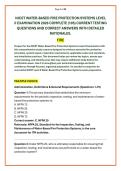
NICET WATER-BASED FIRE PROTECTION SYSTEMS LEVEL
II EXAMINATION 2026 COMPLETE (105) CURRENT TESTING
QUESTIONS AND CORRECT ANSWERS WITH DETAILED
RATIONALES.
FIRE
Prepare for the NICET Water-Based Fire Protection Systems Level II Examination with
this comprehensive study resource designed to reinforce essential fire protection
principles, system layout, inspection requirements, applicable codes and standards,
and installation practices. This document helps you review key topics, assess your
understanding, and identify areas that may require additional study before the
certification exam. Use it to strengthen your technical knowledge and build
confidence through focused, organized preparation. An excellent companion for
successful NICET Level II Water-Based Fire Protection Systems exam preparation.
MULTIPLE CHOICE.
Administration, Definitions & General Requirements (Questions 1–15)
Question 1: The primary standard that establishes the minimum
requirements for the periodic inspection, testing, and maintenance of water-
based fire protection systems is:
A. NFPA 13
B. NFPA 20
C. NFPA 25
D. NFPA 72
Correct answer: C. NFPA 25
Rationale: NFPA 25, Standard for the Inspection, Testing, and
Maintenance of Water-Based Fire Protection Systems, is the core
document for ITM activities .
Question 2: Under NFPA 25, who is ultimately responsible for ensuring that
inspection, testing, and maintenance are performed on a water-based fire
protection system?
, Page 2 of 33
A. The fire inspector
B. The property owner or designated representative
C. The installing contractor
D. The local Authority Having Jurisdiction (AHJ)
Correct answer: B. The property owner or designated representative
Rationale: NFPA 25 places the responsibility for system ITM on the
property owner or their designated representative .
Question 3: According to NFPA 25, a "deficiency" is best defined as:
A. A minor cosmetic issue
B. A condition that will not affect system performance
C. A condition that could impair the function of a fire protection system or its
components
D. Any deviation from the original design drawings
Correct answer: C. A condition that could impair the function of a fire
protection system or its components
Rationale: Deficiencies are conditions that could negatively impact
system performance and may require repair or replacement.
Question 4: The standard that covers the installation requirements for
sprinkler systems, including sprinkler types, spacing, and location, is:
A. NFPA 25
B. NFPA 13
C. NFPA 72
D. NFPA 291
Correct answer: B. NFPA 13
Rationale: NFPA 13, Standard for the Installation of Sprinkler Systems,
provides the requirements for the design and installation of fire sprinkler
systems .
Question 5: Which standard provides the requirements for the installation of
stationary fire pumps?
, Page 3 of 33
A. NFPA 25
B. NFPA 13
C. NFPA 20
D. NFPA 291
Correct answer: C. NFPA 20
Rationale: NFPA 20 is the Standard for the Installation of Stationary
Pumps for Fire Protection .
Question 6: The recommended practice for conducting fire flow tests and
marking fire hydrants is found in:
A. NFPA 13
B. NFPA 20
C. NFPA 25
D. NFPA 291
Correct answer: D. NFPA 291
Rationale: NFPA 291 provides guidance on fire flow testing and marking
hydrants .
Question 7: For the NICET Level II exam, which edition of NFPA 25 is the
primary reference?
A. 2019
B. 2022
C. 2023
D. 2026
Correct answer: C. 2023
Rationale: The NICET Level II Inspection and Testing exam covers NFPA 25
2023, along with 2022 editions of related standards .
Question 8: The "impairment coordinator" as defined in NFPA 25 is
responsible for:
A. Designing the system
B. Overseeing all ITM activities
, Page 4 of 33
C. Managing activities during a system impairment
D. Performing hydrostatic tests
Correct answer: C. Managing activities during a system impairment
Rationale: The impairment coordinator's role is to manage the process
when a system is taken out of service or impaired .
Question 9: According to NFPA 25, which of the following is NOT a listed
component requiring inspection, testing, or maintenance?
A. Sprinkler heads
B. Control valves
C. Fire department connections
D. HVAC ductwork
Correct answer: D. HVAC ductwork
Rationale: NFPA 25 covers water-based fire protection system
components; HVAC ductwork is outside its scope unless it interfaces with
fire/smoke dampers.
Question 10: The primary purpose of NFPA 25 is to establish:
A. Design criteria for new systems
B. Minimum requirements for periodic ITM
C. Installation methods for fire pumps
D. Testing procedures for fire alarms
Correct answer: B. Minimum requirements for periodic ITM
Rationale: The standard's purpose is to provide minimum requirements
for inspection, testing, and maintenance .
Question 11: Records of all inspections, tests, and maintenance must be
maintained by the property owner for a minimum period of:
A. 1 year
B. 3 years
C. 5 years
D. 10 years
NICET WATER-BASED FIRE PROTECTION SYSTEMS LEVEL
II EXAMINATION 2026 COMPLETE (105) CURRENT TESTING
QUESTIONS AND CORRECT ANSWERS WITH DETAILED
RATIONALES.
FIRE
Prepare for the NICET Water-Based Fire Protection Systems Level II Examination with
this comprehensive study resource designed to reinforce essential fire protection
principles, system layout, inspection requirements, applicable codes and standards,
and installation practices. This document helps you review key topics, assess your
understanding, and identify areas that may require additional study before the
certification exam. Use it to strengthen your technical knowledge and build
confidence through focused, organized preparation. An excellent companion for
successful NICET Level II Water-Based Fire Protection Systems exam preparation.
MULTIPLE CHOICE.
Administration, Definitions & General Requirements (Questions 1–15)
Question 1: The primary standard that establishes the minimum
requirements for the periodic inspection, testing, and maintenance of water-
based fire protection systems is:
A. NFPA 13
B. NFPA 20
C. NFPA 25
D. NFPA 72
Correct answer: C. NFPA 25
Rationale: NFPA 25, Standard for the Inspection, Testing, and
Maintenance of Water-Based Fire Protection Systems, is the core
document for ITM activities .
Question 2: Under NFPA 25, who is ultimately responsible for ensuring that
inspection, testing, and maintenance are performed on a water-based fire
protection system?
, Page 2 of 33
A. The fire inspector
B. The property owner or designated representative
C. The installing contractor
D. The local Authority Having Jurisdiction (AHJ)
Correct answer: B. The property owner or designated representative
Rationale: NFPA 25 places the responsibility for system ITM on the
property owner or their designated representative .
Question 3: According to NFPA 25, a "deficiency" is best defined as:
A. A minor cosmetic issue
B. A condition that will not affect system performance
C. A condition that could impair the function of a fire protection system or its
components
D. Any deviation from the original design drawings
Correct answer: C. A condition that could impair the function of a fire
protection system or its components
Rationale: Deficiencies are conditions that could negatively impact
system performance and may require repair or replacement.
Question 4: The standard that covers the installation requirements for
sprinkler systems, including sprinkler types, spacing, and location, is:
A. NFPA 25
B. NFPA 13
C. NFPA 72
D. NFPA 291
Correct answer: B. NFPA 13
Rationale: NFPA 13, Standard for the Installation of Sprinkler Systems,
provides the requirements for the design and installation of fire sprinkler
systems .
Question 5: Which standard provides the requirements for the installation of
stationary fire pumps?
, Page 3 of 33
A. NFPA 25
B. NFPA 13
C. NFPA 20
D. NFPA 291
Correct answer: C. NFPA 20
Rationale: NFPA 20 is the Standard for the Installation of Stationary
Pumps for Fire Protection .
Question 6: The recommended practice for conducting fire flow tests and
marking fire hydrants is found in:
A. NFPA 13
B. NFPA 20
C. NFPA 25
D. NFPA 291
Correct answer: D. NFPA 291
Rationale: NFPA 291 provides guidance on fire flow testing and marking
hydrants .
Question 7: For the NICET Level II exam, which edition of NFPA 25 is the
primary reference?
A. 2019
B. 2022
C. 2023
D. 2026
Correct answer: C. 2023
Rationale: The NICET Level II Inspection and Testing exam covers NFPA 25
2023, along with 2022 editions of related standards .
Question 8: The "impairment coordinator" as defined in NFPA 25 is
responsible for:
A. Designing the system
B. Overseeing all ITM activities
, Page 4 of 33
C. Managing activities during a system impairment
D. Performing hydrostatic tests
Correct answer: C. Managing activities during a system impairment
Rationale: The impairment coordinator's role is to manage the process
when a system is taken out of service or impaired .
Question 9: According to NFPA 25, which of the following is NOT a listed
component requiring inspection, testing, or maintenance?
A. Sprinkler heads
B. Control valves
C. Fire department connections
D. HVAC ductwork
Correct answer: D. HVAC ductwork
Rationale: NFPA 25 covers water-based fire protection system
components; HVAC ductwork is outside its scope unless it interfaces with
fire/smoke dampers.
Question 10: The primary purpose of NFPA 25 is to establish:
A. Design criteria for new systems
B. Minimum requirements for periodic ITM
C. Installation methods for fire pumps
D. Testing procedures for fire alarms
Correct answer: B. Minimum requirements for periodic ITM
Rationale: The standard's purpose is to provide minimum requirements
for inspection, testing, and maintenance .
Question 11: Records of all inspections, tests, and maintenance must be
maintained by the property owner for a minimum period of:
A. 1 year
B. 3 years
C. 5 years
D. 10 years