
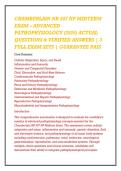
CHAMBERLAIN NR 507 NP MIDTERM
EXAM – ADVANCED
PATHOPHYSIOLOGY (2026) ACTUAL
QUESTIONS & VERIFIED ANSWERS | 3
FULL EXAM SETS | GUARANTEE PASS
Core Domains:
Cellular Adaptation, Injury, and Death
Inflammation and Immunity
Genetic and Congenital Disorders
Fluid, Electrolyte, and Acid-Base Balance
Cardiovascular Pathophysiology
Pulmonary Pathophysiology
Renal and Urinary Pathophysiology
Endocrine and Metabolic Pathophysiology
Neurological Pathophysiology
Gastrointestinal and Hepatic Pathophysiology
Reproductive Pathophysiology
Musculoskeletal and Integumentary Pathophysiology
Introduction
This comprehensive examination is designed to evaluate the candidate's
mastery of advanced pathophysiology concepts essential for the
Chamberlain NR 507 NP Midterm Exam. The assessment covers cellular
adaptation and injury, inflammation and immunity, genetic disorders, fluid
and electrolyte balance, and pathophysiology of all major body systems
including cardiovascular, pulmonary, renal, endocrine, neurological,
gastrointestinal, reproductive, and musculoskeletal systems. Through
multiple-choice questions and clinical scenarios, candidates will
demonstrate their ability to integrate pathophysiological principles,
,interpret clinical manifestations, and apply evidence-based reasoning to
complex patient presentations. Special emphasis is placed on clinical
reasoning, diagnostic accuracy, and the application of pathophysiology to
advanced nursing practice. This resource includes three full exam sets with
250 verified questions and detailed rationales to ensure comprehensive
preparation and guaranteed success.
EXAM SET 1: QUESTIONS 1-83
Question 1
A 55-year-old patient with long-standing hypertension develops an
enlarged left ventricle. This is an example of which type of cellular
adaptation?
A. Hyperplasia
B. Hypertrophy
C. Atrophy
D. Metaplasia
B. Hypertrophy
RATIONALE: Hypertrophy is an increase in cell size leading to organ
enlargement. Cardiac muscle cells cannot undergo hyperplasia
(increase in number), so they enlarge in response to increased
workload from hypertension. This is a compensatory mechanism that
initially helps maintain cardiac output but eventually becomes
maladaptive, leading to diastolic dysfunction.
Question 2
A patient who smokes has a change in the bronchial epithelium from
ciliated columnar to stratified squamous. This is an example of which
cellular adaptation?
,A. Hyperplasia
B. Hypertrophy
C. Atrophy
D. Metaplasia
D. Metaplasia
RATIONALE: Metaplasia is the reversible replacement of one
differentiated cell type with another. In smokers, chronic irritation
causes the bronchial epithelium to transform from ciliated columnar to
stratified squamous epithelium as a protective adaptation. The new
epithelium is more resistant to irritation but loses protective ciliary
function, increasing infection risk.
Question 3
What is the primary mechanism of cellular atrophy?
A. Increased protein synthesis
B. Decreased protein synthesis and increased autophagy
C. Cell division
D. Lipid accumulation
B. Decreased protein synthesis and increased autophagy
RATIONALE: Atrophy results from decreased protein synthesis and
increased autophagy (lysosomal degradation). It occurs in response to
disuse, denervation, or ischemia, leading to decreased ubiquitin-
proteasome and increased lysosomal degradation. Clinical correlation
includes muscle atrophy in immobilization or stroke.
Question 4
A 60-year-old smoker develops a change in the bronchial epithelium
from ciliated columnar to stratified squamous. What is the most
appropriate term for this change?
, A. Dysplasia
B. Hyperplasia
C. Metaplasia
D. Anaplasia
C. Metaplasia
RATIONALE: Metaplasia is the reversible replacement of one
differentiated cell type with another. This is an adaptive response to
chronic irritation from smoking. This change can progress to dysplasia
and carcinoma if the irritant persists.
Question 5
What is the hallmark of coagulative necrosis?
A. Liquefaction of tissue
B. Preserved cell outlines with hypereosinophilic cytoplasm
C. Caseous debris
D. Fat saponification
B. Preserved cell outlines with hypereosinophilic cytoplasm
RATIONALE: Coagulative necrosis is characterized by preserved
cell outlines with hypereosinophilic cytoplasm. It is seen in ischemic
injury except in the brain; protein denaturation preserves architecture.
This is classic in myocardial infarction.
Question 6
Which organelle is primarily responsible for ATP depletion in hypoxic
cell injury?
A. Nucleus
B. Mitochondria
EXAM – ADVANCED
PATHOPHYSIOLOGY (2026) ACTUAL
QUESTIONS & VERIFIED ANSWERS | 3
FULL EXAM SETS | GUARANTEE PASS
Core Domains:
Cellular Adaptation, Injury, and Death
Inflammation and Immunity
Genetic and Congenital Disorders
Fluid, Electrolyte, and Acid-Base Balance
Cardiovascular Pathophysiology
Pulmonary Pathophysiology
Renal and Urinary Pathophysiology
Endocrine and Metabolic Pathophysiology
Neurological Pathophysiology
Gastrointestinal and Hepatic Pathophysiology
Reproductive Pathophysiology
Musculoskeletal and Integumentary Pathophysiology
Introduction
This comprehensive examination is designed to evaluate the candidate's
mastery of advanced pathophysiology concepts essential for the
Chamberlain NR 507 NP Midterm Exam. The assessment covers cellular
adaptation and injury, inflammation and immunity, genetic disorders, fluid
and electrolyte balance, and pathophysiology of all major body systems
including cardiovascular, pulmonary, renal, endocrine, neurological,
gastrointestinal, reproductive, and musculoskeletal systems. Through
multiple-choice questions and clinical scenarios, candidates will
demonstrate their ability to integrate pathophysiological principles,
,interpret clinical manifestations, and apply evidence-based reasoning to
complex patient presentations. Special emphasis is placed on clinical
reasoning, diagnostic accuracy, and the application of pathophysiology to
advanced nursing practice. This resource includes three full exam sets with
250 verified questions and detailed rationales to ensure comprehensive
preparation and guaranteed success.
EXAM SET 1: QUESTIONS 1-83
Question 1
A 55-year-old patient with long-standing hypertension develops an
enlarged left ventricle. This is an example of which type of cellular
adaptation?
A. Hyperplasia
B. Hypertrophy
C. Atrophy
D. Metaplasia
B. Hypertrophy
RATIONALE: Hypertrophy is an increase in cell size leading to organ
enlargement. Cardiac muscle cells cannot undergo hyperplasia
(increase in number), so they enlarge in response to increased
workload from hypertension. This is a compensatory mechanism that
initially helps maintain cardiac output but eventually becomes
maladaptive, leading to diastolic dysfunction.
Question 2
A patient who smokes has a change in the bronchial epithelium from
ciliated columnar to stratified squamous. This is an example of which
cellular adaptation?
,A. Hyperplasia
B. Hypertrophy
C. Atrophy
D. Metaplasia
D. Metaplasia
RATIONALE: Metaplasia is the reversible replacement of one
differentiated cell type with another. In smokers, chronic irritation
causes the bronchial epithelium to transform from ciliated columnar to
stratified squamous epithelium as a protective adaptation. The new
epithelium is more resistant to irritation but loses protective ciliary
function, increasing infection risk.
Question 3
What is the primary mechanism of cellular atrophy?
A. Increased protein synthesis
B. Decreased protein synthesis and increased autophagy
C. Cell division
D. Lipid accumulation
B. Decreased protein synthesis and increased autophagy
RATIONALE: Atrophy results from decreased protein synthesis and
increased autophagy (lysosomal degradation). It occurs in response to
disuse, denervation, or ischemia, leading to decreased ubiquitin-
proteasome and increased lysosomal degradation. Clinical correlation
includes muscle atrophy in immobilization or stroke.
Question 4
A 60-year-old smoker develops a change in the bronchial epithelium
from ciliated columnar to stratified squamous. What is the most
appropriate term for this change?
, A. Dysplasia
B. Hyperplasia
C. Metaplasia
D. Anaplasia
C. Metaplasia
RATIONALE: Metaplasia is the reversible replacement of one
differentiated cell type with another. This is an adaptive response to
chronic irritation from smoking. This change can progress to dysplasia
and carcinoma if the irritant persists.
Question 5
What is the hallmark of coagulative necrosis?
A. Liquefaction of tissue
B. Preserved cell outlines with hypereosinophilic cytoplasm
C. Caseous debris
D. Fat saponification
B. Preserved cell outlines with hypereosinophilic cytoplasm
RATIONALE: Coagulative necrosis is characterized by preserved
cell outlines with hypereosinophilic cytoplasm. It is seen in ischemic
injury except in the brain; protein denaturation preserves architecture.
This is classic in myocardial infarction.
Question 6
Which organelle is primarily responsible for ATP depletion in hypoxic
cell injury?
A. Nucleus
B. Mitochondria


