

___________________________________________________________________
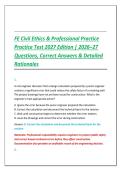
FE Civil Ethics & Professional Practice
Practice Test 2027 Edition | 2026–27
Questions, Correct Answers & Detailed
Rationales
1.
A civil engineer discovers that a design calculation prepared by a junior engineer
contains a significant error that could reduce the safety factor of a retaining wall.
The project drawings have not yet been issued for construction. What is the
engineer’s most appropriate action?
A. Ignore the error because the junior engineer prepared the calculation
B. Correct the calculation and document the technical basis for the revision
C. Wait until construction begins to determine whether the error matters
D. Issue the drawings and correct the error during construction
Answer: B. Correct the calculation and document the technical basis for the
revision
Rationale: Professional responsibility requires engineers to protect public safety
and correct known technical errors before they affect construction.
Documentation also provides an auditable record of the engineering decision.
2.
,An engineer is asked by an owner to approve structural modifications that the
engineer has not analyzed. The owner says the modifications are routine and
requests immediate approval. What should the engineer do?
A. Approve them because the contractor accepts responsibility
B. Approve them if they appear reasonable
C. Refuse approval until the modifications are adequately evaluated
D. Approve them and add a general disclaimer
Answer: C. Refuse approval until the modifications are adequately evaluated
Rationale: An engineer should only approve engineering work that has been
properly reviewed and is within the engineer’s competence. A disclaimer does
not substitute for appropriate technical analysis.
3.
A civil engineer receives confidential geotechnical data from a client. A competing
firm requests the data to prepare a proposal for another project. What should the
engineer do?
A. Release the data because it is technically useful
B. Release only the numerical portions
C. Release the data if the competing firm promises confidentiality
D. Obtain appropriate authorization before disclosing the information
Answer: D. Obtain appropriate authorization before disclosing the information
Rationale: Engineers generally have a professional obligation to protect
confidential information obtained through professional relationships unless
disclosure is authorized or otherwise legally required.
4.
An engineer discovers that a contractor is using a material that does not comply
with the project specifications. The contractor claims the substitution is cheaper
and will not affect performance. What is the best response?
,A. Allow the substitution without documentation
B. Accept the substitution because the contractor assumes the risk
C. Require appropriate review and approval before accepting the substitution
D. Ignore the substitution if construction progress is critical
Answer: C. Require appropriate review and approval before accepting the
substitution
Rationale: Material substitutions can affect safety, durability, code compliance,
and design assumptions. They should be evaluated through the established
project review and approval process.
5.
An engineer is offered an expensive gift by a contractor shortly before a major
contract award. What is the most appropriate action?
A. Accept it because the gift is personal
B. Accept it but disclose it after the award
C. Decline the gift because it could create an actual or perceived conflict of
interest
D. Accept it if no written agreement exists
Answer: C. Decline the gift because it could create an actual or perceived conflict
of interest
Rationale: Gifts from parties seeking favorable professional decisions can
compromise—or appear to compromise—engineering judgment and
impartiality.
6.
A civil engineer is asked to sign and seal drawings prepared entirely by another
engineer who is not under the signing engineer’s responsible charge. What should
the engineer do?
A. Sign them because another engineer prepared them
B. Sign them if the client requests it
, C. Sign them after performing sufficient review and assuming professional
responsibility
D. Sign them if the drawings appear technically correct
Answer: C. Sign them after performing sufficient review and assuming
professional responsibility
Rationale: Signing and sealing engineering documents represents professional
responsibility for the work. An engineer should not seal work without an
appropriate level of review and responsibility.
7.
Which situation most clearly represents a conflict of interest?
A. An engineer works on two unrelated projects
B. An engineer recommends a supplier in which the engineer has a financial
interest without disclosure
C. An engineer reviews a design prepared by a colleague
D. An engineer changes a calculation after peer review
Answer: B. An engineer recommends a supplier in which the engineer has a
financial interest without disclosure
Rationale: A private financial interest that could influence professional
judgment creates a conflict of interest, particularly when it is not disclosed to
affected parties.
8.
A municipality asks an engineer to evaluate bids for a construction project. One
bidder is the engineer’s longtime personal friend. What should the engineer do?
A. Automatically reject the bidder
B. Award the contract to the friend
C. Disclose the relationship and follow the applicable conflict-of-interest
procedures
D. Keep the relationship confidential
FE Civil Ethics & Professional Practice
Practice Test 2027 Edition | 2026–27
Questions, Correct Answers & Detailed
Rationales
1.
A civil engineer discovers that a design calculation prepared by a junior engineer
contains a significant error that could reduce the safety factor of a retaining wall.
The project drawings have not yet been issued for construction. What is the
engineer’s most appropriate action?
A. Ignore the error because the junior engineer prepared the calculation
B. Correct the calculation and document the technical basis for the revision
C. Wait until construction begins to determine whether the error matters
D. Issue the drawings and correct the error during construction
Answer: B. Correct the calculation and document the technical basis for the
revision
Rationale: Professional responsibility requires engineers to protect public safety
and correct known technical errors before they affect construction.
Documentation also provides an auditable record of the engineering decision.
2.
,An engineer is asked by an owner to approve structural modifications that the
engineer has not analyzed. The owner says the modifications are routine and
requests immediate approval. What should the engineer do?
A. Approve them because the contractor accepts responsibility
B. Approve them if they appear reasonable
C. Refuse approval until the modifications are adequately evaluated
D. Approve them and add a general disclaimer
Answer: C. Refuse approval until the modifications are adequately evaluated
Rationale: An engineer should only approve engineering work that has been
properly reviewed and is within the engineer’s competence. A disclaimer does
not substitute for appropriate technical analysis.
3.
A civil engineer receives confidential geotechnical data from a client. A competing
firm requests the data to prepare a proposal for another project. What should the
engineer do?
A. Release the data because it is technically useful
B. Release only the numerical portions
C. Release the data if the competing firm promises confidentiality
D. Obtain appropriate authorization before disclosing the information
Answer: D. Obtain appropriate authorization before disclosing the information
Rationale: Engineers generally have a professional obligation to protect
confidential information obtained through professional relationships unless
disclosure is authorized or otherwise legally required.
4.
An engineer discovers that a contractor is using a material that does not comply
with the project specifications. The contractor claims the substitution is cheaper
and will not affect performance. What is the best response?
,A. Allow the substitution without documentation
B. Accept the substitution because the contractor assumes the risk
C. Require appropriate review and approval before accepting the substitution
D. Ignore the substitution if construction progress is critical
Answer: C. Require appropriate review and approval before accepting the
substitution
Rationale: Material substitutions can affect safety, durability, code compliance,
and design assumptions. They should be evaluated through the established
project review and approval process.
5.
An engineer is offered an expensive gift by a contractor shortly before a major
contract award. What is the most appropriate action?
A. Accept it because the gift is personal
B. Accept it but disclose it after the award
C. Decline the gift because it could create an actual or perceived conflict of
interest
D. Accept it if no written agreement exists
Answer: C. Decline the gift because it could create an actual or perceived conflict
of interest
Rationale: Gifts from parties seeking favorable professional decisions can
compromise—or appear to compromise—engineering judgment and
impartiality.
6.
A civil engineer is asked to sign and seal drawings prepared entirely by another
engineer who is not under the signing engineer’s responsible charge. What should
the engineer do?
A. Sign them because another engineer prepared them
B. Sign them if the client requests it
, C. Sign them after performing sufficient review and assuming professional
responsibility
D. Sign them if the drawings appear technically correct
Answer: C. Sign them after performing sufficient review and assuming
professional responsibility
Rationale: Signing and sealing engineering documents represents professional
responsibility for the work. An engineer should not seal work without an
appropriate level of review and responsibility.
7.
Which situation most clearly represents a conflict of interest?
A. An engineer works on two unrelated projects
B. An engineer recommends a supplier in which the engineer has a financial
interest without disclosure
C. An engineer reviews a design prepared by a colleague
D. An engineer changes a calculation after peer review
Answer: B. An engineer recommends a supplier in which the engineer has a
financial interest without disclosure
Rationale: A private financial interest that could influence professional
judgment creates a conflict of interest, particularly when it is not disclosed to
affected parties.
8.
A municipality asks an engineer to evaluate bids for a construction project. One
bidder is the engineer’s longtime personal friend. What should the engineer do?
A. Automatically reject the bidder
B. Award the contract to the friend
C. Disclose the relationship and follow the applicable conflict-of-interest
procedures
D. Keep the relationship confidential


