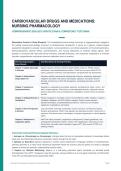
CARDIOVASCULAR DRUGS AND MEDICATIONS:
NURSING PHARMACOLOGY
COMPREHENSIVE 2026-2027 UPDATE EXAM & COMPETENCY TEST BANK
Educational Context & Study Blueprint: This standardized clinical testing instrument is programmatically mapped to
the verified nursing pharmacology curriculum of cardiovascular therapeutics. It serves as a rigorous, evidence-based
assessment designed to evaluate nursing students, nurse practitioners, and clinical educators on the pharmacokinetics,
pharmacodynamics, adverse effects, contraindications, and nursing implications of essential cardiac agents. Each
question is structured with high-yield clinical scenarios, plausible distractors, and exhaustive explanations to enhance
long-term comprehension and prevent common medication errors in practice.
Pharmacology Chapter / Key Mechanisms & Nursing Priorities
Exam Domain
Chapter 1: Cardiac Glycosides Digoxin (Lanoxin), amrinone, milrinone. Direct inhibition of Na+-K+ ATPase, calcium
& Inotropes sensitization, and phosphodiesterase inhibition. Critical focus on serum levels (0.5-2.0
ng/mL), potassium monitoring, visual disturbances, and apical heart rate assessments.
Chapter 2: Antiarrhythmic Lidocaine, quinidine, procainamide, disopyramide, bretylium, amiodarone, propranolol,
Drugs (Class I-IV) verapamil, and sotalol. Fast sodium, beta-receptor, potassium, and calcium channel
blockade. Critical focus on ECG (QT prolongation), hematologic dyscrasias, and ICU
monitoring.
Chapter 3: Vasoactive & Epinephrine, norepinephrine (Levophed), dopamine, and dobutamine. Alpha-1, beta-1, and
Sympathomimetics beta-2 receptor agonism. Critical focus on dose-dependent dynamics, peripheral extremity
perfusion assessment (color and temperature), compatibility, and fluid volume resuscitation
priorities.
Chapter 4: Antihypertensives & Nitrates (nitroglycerin, isosorbide), Calcium Channel Blockers (CCBs: nifedipine, verapamil,
Vasodilators nimodipine, felodipine), and ACE Inhibitors (captopril). Smooth muscle relaxation,
aldosterone blockade, and preload/afterload reduction. Critical focus on orthostatic
hypotension, hyperkalemia, and flushing.
Chapter 5: Renal Therapeutics Loop (furosemide, torsemide, bumetanide), Osmotic (mannitol), and Potassium-Sparing
& Diuretics Diuretics (spironolactone, PSDs). Fluid regulation and electrolyte excretion. Critical focus on
ototoxicity, fluid volume excess, sulfa allergies, and postural hypotension in volume-depleted
elderly.
Chapter 6: Antilipemics & HMG-CoA statins (lovastatin), sequestrants (cholestyramine), fibrates (gemfibrozil), and
Coagulation Agents anticoagulants/thrombolytics (heparin, warfarin, tPA, streptokinase). Critical focus on liver
function tests, fat-soluble vitamin absorption, heparin aPTT (60s), warfarin PT/INR, and
bleeding antidotes.
Commonly Confused Pharmacological Pathways:
1. Inotropic vs. Chronotropic vs. Dromotropic: Inotropic alters the force of myocardial contraction; chronotropic affects
heart rate; and dromotropic influences conduction velocity through the AV node.
2. Aphasia vs. Dysarthria: Aphasia represents a central, cortical impairment in language synthesis or comprehension,
whereas dysarthria is a motor-vocal mechanical impairment where the muscles used for speech are weak or damaged
(speech is slurred but semantic understanding remains intact).
3. Heparin vs. Warfarin Monitoring: Heparin is a fast-acting parenteral agent monitored via activated partial
thromboplastin time (aPTT; therapeutic range 60 seconds), whereas Warfarin is an oral agent monitored via Prothrombin
Time (PT) and International Normalized Ratio (INR).
Nursing Pharmacology Competency Assessment Series Page 1
,CARDIOVASCULAR DRUGS AND MEDICATIONS: NURSING PHARMACOLOGY 2026-2027 COMPREHENSIVE UPDATE EXAM
CHAPTER 1: CARDIAC GLYCOSIDES & INOTROPIC THERAPEUTICS
Question 1: Which of the following clients is at greatest risk for digitalis toxicity?
A. A 25-year-old client with congenital heart disease.
B. A 50-year-old client with CHF.
C. A 60-year-old client after myocardial infarction.
D. An 80-year-old client with CHF.
ANSWER ✔: D. An 80-year-old client with CHF.
Explanation: Extremely old clients are at greater risk for digitalis toxicity due to age-related declines in glomerular filtration rate
(GFR), reduced lean body mass, and lower volume of distribution. Remember that in clinical adversity, the very young and the
very old are always at the highest risk. Severe toxicity is life-threatening and may require digoxin-specific antibody fragments
(Digibind).
Question 2: Which of the following is a contraindication for digoxin administration?
A. Blood pressure of 140/90.
B. Heart rate above 80.
C. Heart rate below 60.
D. Respiratory rate above 20.
ANSWER ✔: C. Heart rate below 60.
Explanation: Before administering digoxin, the nurse must assess the apical heart rate for 1 full minute. The drug must be held
if the pulse is below 60 or above 120 beats per minute. Digoxin slows electrical conduction through the AV node via
vagomimetic effects, which can dangerously worsen bradycardia or lead to heart block if administered when the heart rate is
already low.
Question 3: The action of a medication is defined as 'inotropic' when it:
A. Decreases myocardial afterload.
B. Increases the clinical heart rate.
C. Increases the force of myocardial contraction.
D. Is used specifically to treat congestive heart failure.
ANSWER ✔: C. Increases the force of myocardial contraction.
Explanation: Inotropic drugs specifically alter the force or energy of muscular contractions. Positive inotropes, like digoxin,
increase the force of myocardial contraction by inhibiting the Na+-K+ ATPase pump, which indirectly increases intracellular
calcium levels. Chronotropic drugs affect heart rate, and dromotropic drugs affect conduction velocity.
Question 4: Which is the most appropriate action for the nurse to take before administering digoxin to a client?
A. Monitor potassium level.
B. Assess systemic blood pressure.
C. Evaluate urinary output.
D. Avoid giving with a thiazide diuretic.
ANSWER ✔: A. Monitor potassium level.
Explanation: Monitoring potassium is especially critical because hypokalemia (low potassium) potentiates digoxin toxicity.
Digoxin competes with potassium for binding sites on the Na+-K+ ATPase pump; when potassium levels are low, more digoxin
binds to the pump, which drastically increases the risk of toxicity. While assessing blood pressure and urine output reflect
overall CV status, they are not specific to digoxin safety.
Nursing Pharmacology Competency Assessment Series Page 2
, CARDIOVASCULAR DRUGS AND MEDICATIONS: NURSING PHARMACOLOGY 2026-2027 COMPREHENSIVE UPDATE EXAM
Question 5: The therapeutic drug level for digoxin is strictly classified as which of the following ranges?
A. 0.1-2.0 ng/mL
B. 1.0-2.0 ng/mL
C. 0.1-0.5 ng/mL
D. 0.5-2.0 ng/mL
ANSWER ✔: D. 0.5-2.0 ng/mL
Explanation: The established therapeutic serum range for digoxin is 0.5 to 2.0 ng/mL. Serum concentrations exceeding 2.0
ng/mL are highly associated with digitalis toxicity, although toxicity can occur at lower levels in patients with risk factors such as
advanced age, low body weight, or severe hypokalemia.
Question 6: A patient on digoxin therapy reports blurred vision and seeing yellow-green halos around lights.
These symptoms are a hallmark indication of:
A. A subtherapeutic digoxin level.
B. Digoxin toxicity.
C. An ocular allergic reaction to digoxin.
D. Corneal side effects unrelated to toxicity.
ANSWER ✔: B. Digoxin toxicity.
Explanation: Visual disturbances, particularly blurred vision, photopsia, and yellow-green tinted vision (xanthopsia) or halos
around lights, are classic central nervous system symptoms of digoxin toxicity. These ocular changes are directly caused by
digoxin poisoning the sodium-potassium ATPase pump in retinal cells.
Question 7: Amrinone (Inocor) is utilized for the short-term management of congestive heart failure (CHF) and
acts through which of the following physiological mechanisms?
A. Increasing stroke volume and heart rate.
B. Slowing ventricular rate and increasing cardiac output.
C. Vasodilating and increasing peripheral vascular resistance.
D. Increasing cardiac output and enhancing renal perfusion.
ANSWER ✔: A. Increasing stroke volume and heart rate.
Explanation: Amrinone (Inocor) is a phosphodiesterase inhibitor with positive inotropic and vasodilatory properties. It increases
stroke volume, ejection fraction, and heart rate, thereby improving cardiac output. It also relaxes vascular smooth muscle,
reducing systemic peripheral vascular resistance (preload and afterload).
Question 8: Before administering milrinone (Primacor) by continuous intravenous infusion to a client with CHF,
which nursing action is necessary?
A. Record the client's baseline serum sodium level.
B. Administer the loading dose rapidly over 15 minutes.
C. Assess overall cardiovascular status only.
D. Review the medication regimen to identify if the client is on IV furosemide (Lasix).
ANSWER ✔: D. Review the medication regimen to identify if the client is on IV furosemide (Lasix).
Explanation: Milrinone is chemically incompatible with furosemide (Lasix). If furosemide is injected into an IV line containing
milrinone, an immediate precipitate forms, obstructing the catheter and neutralizing both drugs. Since many CHF clients are
taking furosemide, verifying drug compatibility is a vital nursing safety action. Assessing cardiovascular status is necessary but
not specific to milrinone.
Nursing Pharmacology Competency Assessment Series Page 3
NURSING PHARMACOLOGY
COMPREHENSIVE 2026-2027 UPDATE EXAM & COMPETENCY TEST BANK
Educational Context & Study Blueprint: This standardized clinical testing instrument is programmatically mapped to
the verified nursing pharmacology curriculum of cardiovascular therapeutics. It serves as a rigorous, evidence-based
assessment designed to evaluate nursing students, nurse practitioners, and clinical educators on the pharmacokinetics,
pharmacodynamics, adverse effects, contraindications, and nursing implications of essential cardiac agents. Each
question is structured with high-yield clinical scenarios, plausible distractors, and exhaustive explanations to enhance
long-term comprehension and prevent common medication errors in practice.
Pharmacology Chapter / Key Mechanisms & Nursing Priorities
Exam Domain
Chapter 1: Cardiac Glycosides Digoxin (Lanoxin), amrinone, milrinone. Direct inhibition of Na+-K+ ATPase, calcium
& Inotropes sensitization, and phosphodiesterase inhibition. Critical focus on serum levels (0.5-2.0
ng/mL), potassium monitoring, visual disturbances, and apical heart rate assessments.
Chapter 2: Antiarrhythmic Lidocaine, quinidine, procainamide, disopyramide, bretylium, amiodarone, propranolol,
Drugs (Class I-IV) verapamil, and sotalol. Fast sodium, beta-receptor, potassium, and calcium channel
blockade. Critical focus on ECG (QT prolongation), hematologic dyscrasias, and ICU
monitoring.
Chapter 3: Vasoactive & Epinephrine, norepinephrine (Levophed), dopamine, and dobutamine. Alpha-1, beta-1, and
Sympathomimetics beta-2 receptor agonism. Critical focus on dose-dependent dynamics, peripheral extremity
perfusion assessment (color and temperature), compatibility, and fluid volume resuscitation
priorities.
Chapter 4: Antihypertensives & Nitrates (nitroglycerin, isosorbide), Calcium Channel Blockers (CCBs: nifedipine, verapamil,
Vasodilators nimodipine, felodipine), and ACE Inhibitors (captopril). Smooth muscle relaxation,
aldosterone blockade, and preload/afterload reduction. Critical focus on orthostatic
hypotension, hyperkalemia, and flushing.
Chapter 5: Renal Therapeutics Loop (furosemide, torsemide, bumetanide), Osmotic (mannitol), and Potassium-Sparing
& Diuretics Diuretics (spironolactone, PSDs). Fluid regulation and electrolyte excretion. Critical focus on
ototoxicity, fluid volume excess, sulfa allergies, and postural hypotension in volume-depleted
elderly.
Chapter 6: Antilipemics & HMG-CoA statins (lovastatin), sequestrants (cholestyramine), fibrates (gemfibrozil), and
Coagulation Agents anticoagulants/thrombolytics (heparin, warfarin, tPA, streptokinase). Critical focus on liver
function tests, fat-soluble vitamin absorption, heparin aPTT (60s), warfarin PT/INR, and
bleeding antidotes.
Commonly Confused Pharmacological Pathways:
1. Inotropic vs. Chronotropic vs. Dromotropic: Inotropic alters the force of myocardial contraction; chronotropic affects
heart rate; and dromotropic influences conduction velocity through the AV node.
2. Aphasia vs. Dysarthria: Aphasia represents a central, cortical impairment in language synthesis or comprehension,
whereas dysarthria is a motor-vocal mechanical impairment where the muscles used for speech are weak or damaged
(speech is slurred but semantic understanding remains intact).
3. Heparin vs. Warfarin Monitoring: Heparin is a fast-acting parenteral agent monitored via activated partial
thromboplastin time (aPTT; therapeutic range 60 seconds), whereas Warfarin is an oral agent monitored via Prothrombin
Time (PT) and International Normalized Ratio (INR).
Nursing Pharmacology Competency Assessment Series Page 1
,CARDIOVASCULAR DRUGS AND MEDICATIONS: NURSING PHARMACOLOGY 2026-2027 COMPREHENSIVE UPDATE EXAM
CHAPTER 1: CARDIAC GLYCOSIDES & INOTROPIC THERAPEUTICS
Question 1: Which of the following clients is at greatest risk for digitalis toxicity?
A. A 25-year-old client with congenital heart disease.
B. A 50-year-old client with CHF.
C. A 60-year-old client after myocardial infarction.
D. An 80-year-old client with CHF.
ANSWER ✔: D. An 80-year-old client with CHF.
Explanation: Extremely old clients are at greater risk for digitalis toxicity due to age-related declines in glomerular filtration rate
(GFR), reduced lean body mass, and lower volume of distribution. Remember that in clinical adversity, the very young and the
very old are always at the highest risk. Severe toxicity is life-threatening and may require digoxin-specific antibody fragments
(Digibind).
Question 2: Which of the following is a contraindication for digoxin administration?
A. Blood pressure of 140/90.
B. Heart rate above 80.
C. Heart rate below 60.
D. Respiratory rate above 20.
ANSWER ✔: C. Heart rate below 60.
Explanation: Before administering digoxin, the nurse must assess the apical heart rate for 1 full minute. The drug must be held
if the pulse is below 60 or above 120 beats per minute. Digoxin slows electrical conduction through the AV node via
vagomimetic effects, which can dangerously worsen bradycardia or lead to heart block if administered when the heart rate is
already low.
Question 3: The action of a medication is defined as 'inotropic' when it:
A. Decreases myocardial afterload.
B. Increases the clinical heart rate.
C. Increases the force of myocardial contraction.
D. Is used specifically to treat congestive heart failure.
ANSWER ✔: C. Increases the force of myocardial contraction.
Explanation: Inotropic drugs specifically alter the force or energy of muscular contractions. Positive inotropes, like digoxin,
increase the force of myocardial contraction by inhibiting the Na+-K+ ATPase pump, which indirectly increases intracellular
calcium levels. Chronotropic drugs affect heart rate, and dromotropic drugs affect conduction velocity.
Question 4: Which is the most appropriate action for the nurse to take before administering digoxin to a client?
A. Monitor potassium level.
B. Assess systemic blood pressure.
C. Evaluate urinary output.
D. Avoid giving with a thiazide diuretic.
ANSWER ✔: A. Monitor potassium level.
Explanation: Monitoring potassium is especially critical because hypokalemia (low potassium) potentiates digoxin toxicity.
Digoxin competes with potassium for binding sites on the Na+-K+ ATPase pump; when potassium levels are low, more digoxin
binds to the pump, which drastically increases the risk of toxicity. While assessing blood pressure and urine output reflect
overall CV status, they are not specific to digoxin safety.
Nursing Pharmacology Competency Assessment Series Page 2
, CARDIOVASCULAR DRUGS AND MEDICATIONS: NURSING PHARMACOLOGY 2026-2027 COMPREHENSIVE UPDATE EXAM
Question 5: The therapeutic drug level for digoxin is strictly classified as which of the following ranges?
A. 0.1-2.0 ng/mL
B. 1.0-2.0 ng/mL
C. 0.1-0.5 ng/mL
D. 0.5-2.0 ng/mL
ANSWER ✔: D. 0.5-2.0 ng/mL
Explanation: The established therapeutic serum range for digoxin is 0.5 to 2.0 ng/mL. Serum concentrations exceeding 2.0
ng/mL are highly associated with digitalis toxicity, although toxicity can occur at lower levels in patients with risk factors such as
advanced age, low body weight, or severe hypokalemia.
Question 6: A patient on digoxin therapy reports blurred vision and seeing yellow-green halos around lights.
These symptoms are a hallmark indication of:
A. A subtherapeutic digoxin level.
B. Digoxin toxicity.
C. An ocular allergic reaction to digoxin.
D. Corneal side effects unrelated to toxicity.
ANSWER ✔: B. Digoxin toxicity.
Explanation: Visual disturbances, particularly blurred vision, photopsia, and yellow-green tinted vision (xanthopsia) or halos
around lights, are classic central nervous system symptoms of digoxin toxicity. These ocular changes are directly caused by
digoxin poisoning the sodium-potassium ATPase pump in retinal cells.
Question 7: Amrinone (Inocor) is utilized for the short-term management of congestive heart failure (CHF) and
acts through which of the following physiological mechanisms?
A. Increasing stroke volume and heart rate.
B. Slowing ventricular rate and increasing cardiac output.
C. Vasodilating and increasing peripheral vascular resistance.
D. Increasing cardiac output and enhancing renal perfusion.
ANSWER ✔: A. Increasing stroke volume and heart rate.
Explanation: Amrinone (Inocor) is a phosphodiesterase inhibitor with positive inotropic and vasodilatory properties. It increases
stroke volume, ejection fraction, and heart rate, thereby improving cardiac output. It also relaxes vascular smooth muscle,
reducing systemic peripheral vascular resistance (preload and afterload).
Question 8: Before administering milrinone (Primacor) by continuous intravenous infusion to a client with CHF,
which nursing action is necessary?
A. Record the client's baseline serum sodium level.
B. Administer the loading dose rapidly over 15 minutes.
C. Assess overall cardiovascular status only.
D. Review the medication regimen to identify if the client is on IV furosemide (Lasix).
ANSWER ✔: D. Review the medication regimen to identify if the client is on IV furosemide (Lasix).
Explanation: Milrinone is chemically incompatible with furosemide (Lasix). If furosemide is injected into an IV line containing
milrinone, an immediate precipitate forms, obstructing the catheter and neutralizing both drugs. Since many CHF clients are
taking furosemide, verifying drug compatibility is a vital nursing safety action. Assessing cardiovascular status is necessary but
not specific to milrinone.
Nursing Pharmacology Competency Assessment Series Page 3