

Relias Dysrhythmia Basic B Exam 2026/2027 | 35 Questions | A+ Guaranteed 100% Verified | Cardiac Rhythm Interpretation
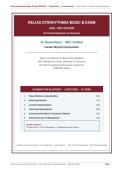
RELIAS DYSRHYTHMIA BASIC B EXAM
EDITION
35 Verified Questions and Answers
A+ Guaranteed | 100% Verified
Cardiac Rhythm Interpretation
Aligned with Relias Dysrhythmia Testing Standards,
AHA Guidelines for Cardiac Monitoring, and Advanced
Basic Electrocardiogram Interpretation Competencies
(2026/2027 Edition)
EXAMINATION BLUEPRINT - 6 SECTIONS - 35 ITEMS
1. Sinus Rhythms & Abnormalities 6Q
2. Atrial Dysrhythmias 7Q
3. Junctional Dysrhythmias 5Q
4. Ventricular Dysrhythmias 8Q
5. Atrioventricular Blocks & Conduction Defects 5Q
6. Clinical Scenarios & Management 4Q
Special Inclusions:
10 rhythm strip ID | 8 ACLS management | 5 distinguishing similar rhythms
Cognitive Levels: 20% Recall | 50% Application | 30% Analysis Style: 75% Scenario-based | 25% Direct Knowledge
Relias Dysrhythmia Testing Standards | AHA Guidelines for Cardiac Monitoring | 2026/2027 Edition Page 1
, Relias Dysrhythmia Basic B Exam 2026/2027 | 35 Questions | A+ Guaranteed 100% Verified | Cardiac Rhythm Interpretation
Normal sinus rhythm | Bradycardia |
Section 1: Sinus Rhythms & Abnormalities Tachycardia | Sinus arrhythmia |
Sinus pause - 6 Questions
Q1: A 32-year-old marathon runner presents for a routine physical. The cardiac monitor shows a regular
rhythm at a rate of 48 beats per minute with a normal P wave preceding each QRS complex, a PR interval of
0.16 seconds, and a QRS width of 0.08 seconds. The patient is asymptomatic. Which rhythm is most consistent
with this finding, and what is the appropriate interpretation?
A. Sinus bradycardia in an athlete is a normal physiologic adaptation and generally requires no treatment
when asymptomatic. *[CORRECT]*
B. Junctional escape rhythm requiring atropine administration immediately.
C. Sinus arrest requiring permanent pacemaker placement.
D. First-degree AV block requiring cardiology consultation within the hour.
Correct Answer: A
Rationale: A regular rhythm at 48 bpm with a normal P wave before every QRS, normal PR interval (0.12-0.20 sec), and narrow
QRS (< 0.12 sec) defines sinus bradycardia. In trained athletes, increased vagal tone produces a resting bradycardia that is
physiologic and asymptomatic, requiring no intervention per Relias methodology and AHA monitoring standards. Options B, C, and D
misidentify the rhythm: junctional escape lacks a normal P wave, sinus arrest shows absent P waves, and first-degree AV block
requires a prolonged PR interval (> 0.20 sec).
Q2: A patient on the telemetry unit has a cardiac rhythm showing a regular rate of 130, normal P waves
before each QRS, a PR interval of 0.14 seconds, and a QRS width of 0.10 seconds. The patient reports anxiety
and mild palpitations. Which rhythm is identified, and what is the most likely physiologic cause?
A. Atrial flutter with 2:1 conduction, requiring rate control.
B. Sinus tachycardia, often caused by sympathetic stimulation such as anxiety, fever, hypovolemia, or pain.
*[CORRECT]*
C. Supraventricular tachycardia requiring vagal maneuvers.
D. Atrial fibrillation with rapid ventricular response, requiring anticoagulation.
Correct Answer: B
Rationale: A regular rhythm at 130 bpm with a normal P wave preceding every QRS, normal PR (0.12-0.20 sec), and narrow QRS
identifies sinus tachycardia. Common causes include sympathetic stimulation such as anxiety, fever, hypovolemia, pain, hypoxia,
exercise, or stimulants. Per Relias methodology, treatment is directed at the underlying cause, not the rhythm itself. Options B, C, and
D misidentify the rhythm: atrial flutter shows sawtooth waves, SVT shows no discernible P waves, and atrial fibrillation shows absent
P waves with an irregular rhythm.
Relias Dysrhythmia Testing Standards | AHA Guidelines for Cardiac Monitoring | 2026/2027 Edition Page 2
RELIAS DYSRHYTHMIA BASIC B EXAM
EDITION
35 Verified Questions and Answers
A+ Guaranteed | 100% Verified
Cardiac Rhythm Interpretation
Aligned with Relias Dysrhythmia Testing Standards,
AHA Guidelines for Cardiac Monitoring, and Advanced
Basic Electrocardiogram Interpretation Competencies
(2026/2027 Edition)
EXAMINATION BLUEPRINT - 6 SECTIONS - 35 ITEMS
1. Sinus Rhythms & Abnormalities 6Q
2. Atrial Dysrhythmias 7Q
3. Junctional Dysrhythmias 5Q
4. Ventricular Dysrhythmias 8Q
5. Atrioventricular Blocks & Conduction Defects 5Q
6. Clinical Scenarios & Management 4Q
Special Inclusions:
10 rhythm strip ID | 8 ACLS management | 5 distinguishing similar rhythms
Cognitive Levels: 20% Recall | 50% Application | 30% Analysis Style: 75% Scenario-based | 25% Direct Knowledge
Relias Dysrhythmia Testing Standards | AHA Guidelines for Cardiac Monitoring | 2026/2027 Edition Page 1
, Relias Dysrhythmia Basic B Exam 2026/2027 | 35 Questions | A+ Guaranteed 100% Verified | Cardiac Rhythm Interpretation
Normal sinus rhythm | Bradycardia |
Section 1: Sinus Rhythms & Abnormalities Tachycardia | Sinus arrhythmia |
Sinus pause - 6 Questions
Q1: A 32-year-old marathon runner presents for a routine physical. The cardiac monitor shows a regular
rhythm at a rate of 48 beats per minute with a normal P wave preceding each QRS complex, a PR interval of
0.16 seconds, and a QRS width of 0.08 seconds. The patient is asymptomatic. Which rhythm is most consistent
with this finding, and what is the appropriate interpretation?
A. Sinus bradycardia in an athlete is a normal physiologic adaptation and generally requires no treatment
when asymptomatic. *[CORRECT]*
B. Junctional escape rhythm requiring atropine administration immediately.
C. Sinus arrest requiring permanent pacemaker placement.
D. First-degree AV block requiring cardiology consultation within the hour.
Correct Answer: A
Rationale: A regular rhythm at 48 bpm with a normal P wave before every QRS, normal PR interval (0.12-0.20 sec), and narrow
QRS (< 0.12 sec) defines sinus bradycardia. In trained athletes, increased vagal tone produces a resting bradycardia that is
physiologic and asymptomatic, requiring no intervention per Relias methodology and AHA monitoring standards. Options B, C, and D
misidentify the rhythm: junctional escape lacks a normal P wave, sinus arrest shows absent P waves, and first-degree AV block
requires a prolonged PR interval (> 0.20 sec).
Q2: A patient on the telemetry unit has a cardiac rhythm showing a regular rate of 130, normal P waves
before each QRS, a PR interval of 0.14 seconds, and a QRS width of 0.10 seconds. The patient reports anxiety
and mild palpitations. Which rhythm is identified, and what is the most likely physiologic cause?
A. Atrial flutter with 2:1 conduction, requiring rate control.
B. Sinus tachycardia, often caused by sympathetic stimulation such as anxiety, fever, hypovolemia, or pain.
*[CORRECT]*
C. Supraventricular tachycardia requiring vagal maneuvers.
D. Atrial fibrillation with rapid ventricular response, requiring anticoagulation.
Correct Answer: B
Rationale: A regular rhythm at 130 bpm with a normal P wave preceding every QRS, normal PR (0.12-0.20 sec), and narrow QRS
identifies sinus tachycardia. Common causes include sympathetic stimulation such as anxiety, fever, hypovolemia, pain, hypoxia,
exercise, or stimulants. Per Relias methodology, treatment is directed at the underlying cause, not the rhythm itself. Options B, C, and
D misidentify the rhythm: atrial flutter shows sawtooth waves, SVT shows no discernible P waves, and atrial fibrillation shows absent
P waves with an irregular rhythm.
Relias Dysrhythmia Testing Standards | AHA Guidelines for Cardiac Monitoring | 2026/2027 Edition Page 2


