

NHA CCMA ADMINISTRATIVE ASSISTING
Study online at https://quizlet.com/_9cvaaw
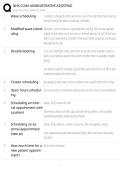
1. Wave scheduling 3 patients scheduled at the same time, see in the order that they arrive (so
one pt arriving late does not disrupt schedule)
2. Modified wave sched- Allocates 2 pts to arrive at a specified time and the 3rd to arrive approxi-
uling mately 30 min later, or pts are seen in intervals during 1st half of the hour
with no pts seen during 2nd half of the hour; timely sequence continuous
throughout the day
3. Double-booking 2 pts are scheduled at the same time to see the same provider; used to
work in a pt with an acute illness when no other time is available; creates
delays
can also be used to schedule 2 pts for the same time slot in an office with
multiple providers for short visits
4. Cluster scheduling grouping pts who have similar conditions into specific time slots or days
5. Open hours schedul- pts arrive at their convenience and are seen on first-come, first-served basis
ing
6. Scheduling an inter- Name, DOB, reason for visit
nal appointment with
a patient Determine amount of time, day and time the pt prefers, and consider
availability/provider preferences/pt habits
7. Scheduling an ex- Name, DOB, address, contact, insurance, SSN, emergency contact
ternal appointment
(new pt) Give registration packet with medical history form and notice of privacy
practices
8. How much time for a 30 minutes minimum
new patient appoint-
ment?
, NHA CCMA ADMINISTRATIVE ASSISTING
Study online at https://quizlet.com/_9cvaaw
9. What should you tell They have the option to wait or reschedule
a patient if there is a
delay?
10. Notice of Privacy A notification by providers required by the HIPAA Privacy Rule that provides
Practices an understandable explanation of patients' rights with respect to their
personal health information and the privacy practices of their providers
11. How long should a No more than 15 minutes
patient wait in the
waiting room?
12. Steps for filing med- 1. Conditioning (group related papers together, rmv clips/staples, attach-
ical records ing smaller papers to larger sheets, fixing damaged records)
2. Releasing (marking form to be filed)
3. Indexing and coding (determining where to place the original record in
the file and whether it needs to be cross-referenced in another section)
4. Sorting (ordering papers in filing structure)
5. Storing and filing (securing documents permanently to ensure they don't
become misplaced)
13. Alphabetic filing Last name, first name, middle initial
Traditional system most widely used
14. Numeric filing Arranging files by a numbered order
Combined with color coding and used for larger health centers/hospitals
Saves time, additional confidentiality, unlimited expansion
15. Subject filing Either an alphabetic or alphanumeric code is assigned to general corre-
spondence
, NHA CCMA ADMINISTRATIVE ASSISTING
Study online at https://quizlet.com/_9cvaaw
16. Shingling filing New report laid on top of older report
17. How long to keep a 10 years
Medicare or Medicaid
patient record
18. Source-oriented Patient file organized according to the source of information/who supplied
medical record the data
(SOMR)
Lab, radiology
19. SOAP subjective, objective, assessment, plan
20. CHEDDAR chief complaint, history, examination, details, drugs/dosages, assessment,
return visit information or referral
21. Computerized physi- Electronic medical record system function that allows providers to digitally
cian order entry order lab and radiology testing, treatments, referrals, Rx
(CPOE)
Increased use due to HITECH act
22. Primary forms of Photo ID (driver's license) and insurance cards
identification
Collected at beginning of the visit
23. Information needed Name, DOB, policy number, SSN
to verify insurance
24. Copay A specified sum of money based on the patient's insurance policy benefits
due at the time of service
25. Coinsurance The amount a policyholder is financially responsible for according to insur-
ance policies provisions (i.e. 80:20)
26. Deductibles
Study online at https://quizlet.com/_9cvaaw
1. Wave scheduling 3 patients scheduled at the same time, see in the order that they arrive (so
one pt arriving late does not disrupt schedule)
2. Modified wave sched- Allocates 2 pts to arrive at a specified time and the 3rd to arrive approxi-
uling mately 30 min later, or pts are seen in intervals during 1st half of the hour
with no pts seen during 2nd half of the hour; timely sequence continuous
throughout the day
3. Double-booking 2 pts are scheduled at the same time to see the same provider; used to
work in a pt with an acute illness when no other time is available; creates
delays
can also be used to schedule 2 pts for the same time slot in an office with
multiple providers for short visits
4. Cluster scheduling grouping pts who have similar conditions into specific time slots or days
5. Open hours schedul- pts arrive at their convenience and are seen on first-come, first-served basis
ing
6. Scheduling an inter- Name, DOB, reason for visit
nal appointment with
a patient Determine amount of time, day and time the pt prefers, and consider
availability/provider preferences/pt habits
7. Scheduling an ex- Name, DOB, address, contact, insurance, SSN, emergency contact
ternal appointment
(new pt) Give registration packet with medical history form and notice of privacy
practices
8. How much time for a 30 minutes minimum
new patient appoint-
ment?
, NHA CCMA ADMINISTRATIVE ASSISTING
Study online at https://quizlet.com/_9cvaaw
9. What should you tell They have the option to wait or reschedule
a patient if there is a
delay?
10. Notice of Privacy A notification by providers required by the HIPAA Privacy Rule that provides
Practices an understandable explanation of patients' rights with respect to their
personal health information and the privacy practices of their providers
11. How long should a No more than 15 minutes
patient wait in the
waiting room?
12. Steps for filing med- 1. Conditioning (group related papers together, rmv clips/staples, attach-
ical records ing smaller papers to larger sheets, fixing damaged records)
2. Releasing (marking form to be filed)
3. Indexing and coding (determining where to place the original record in
the file and whether it needs to be cross-referenced in another section)
4. Sorting (ordering papers in filing structure)
5. Storing and filing (securing documents permanently to ensure they don't
become misplaced)
13. Alphabetic filing Last name, first name, middle initial
Traditional system most widely used
14. Numeric filing Arranging files by a numbered order
Combined with color coding and used for larger health centers/hospitals
Saves time, additional confidentiality, unlimited expansion
15. Subject filing Either an alphabetic or alphanumeric code is assigned to general corre-
spondence
, NHA CCMA ADMINISTRATIVE ASSISTING
Study online at https://quizlet.com/_9cvaaw
16. Shingling filing New report laid on top of older report
17. How long to keep a 10 years
Medicare or Medicaid
patient record
18. Source-oriented Patient file organized according to the source of information/who supplied
medical record the data
(SOMR)
Lab, radiology
19. SOAP subjective, objective, assessment, plan
20. CHEDDAR chief complaint, history, examination, details, drugs/dosages, assessment,
return visit information or referral
21. Computerized physi- Electronic medical record system function that allows providers to digitally
cian order entry order lab and radiology testing, treatments, referrals, Rx
(CPOE)
Increased use due to HITECH act
22. Primary forms of Photo ID (driver's license) and insurance cards
identification
Collected at beginning of the visit
23. Information needed Name, DOB, policy number, SSN
to verify insurance
24. Copay A specified sum of money based on the patient's insurance policy benefits
due at the time of service
25. Coinsurance The amount a policyholder is financially responsible for according to insur-
ance policies provisions (i.e. 80:20)
26. Deductibles


