NURSING PHARMACOLOGY EXAM SERIES
GASTROINTESTINAL DRUGS & MEDICATIONS
Comprehensive Practice Questions, Detailed Answers, and Clinical Explanations
2026-2027 Update Exam
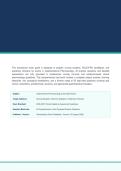
This educational study guide is designed to prepare nursing students, NCLEX-RN candidates, and
practicing clinicians for exams in Gastrointestinal Pharmacology. All practice questions and detailed
explanations are fully grounded in professional nursing curricula and evidence-based clinical
pharmacology guidelines. This comprehensive test bank includes a complete subject analysis, learning
objectives, key conceptual breakdowns, and a diverse range of 50 high-yield questions covering acid
control, antiemetics, antidiarrheals, laxatives, and specialized gastrointestinal therapies.
Subject: Gastrointestinal Pharmacology & Nursing Practice
Target Audience: Nursing Students, NCLEX Candidates, Healthcare Clinicians
Exam Standard: 2026-2027 Clinical Update & Assessment Guidelines
Question Bank size: 50 Comprehensive, Peer-Reviewed Practice Questions
Publisher / Version: Generated by Gemini Notebook • Version 2.0 (August 2026)
,GASTROINTESTINAL PHARMACOLOGY STUDY GUIDE 2026-2027 UPDATE EXAM
GASTROINTESTINAL PHARMACOLOGY STUDY GUIDE
Subject Overview & Learning Architecture
Gastrointestinal (GI) pharmacology is a cornerstone of nursing practice. Nurses regularly manage clients
requiring acid suppression, antiemetics, motility agents, bowel habit modulators, and specialized pancreas or
inflammatory therapies. Safe administration requires a deep understanding of drug mechanisms, specific
administration protocols, critical contraindications, and potential toxicities.
Core Learning Objectives
By studying this comprehensive test bank, learners will be equipped to:
• Analyze Acid-Controlling Therapies: Contrast H2 blockers, proton pump inhibitors, antacids, and mucosal
protectants regarding administration timing and interaction risks.
• Determine Safe Prokinetic Protocols: Identify appropriate candidates for metoclopramide, recognizing
contraindications and extrapyramidal risk profiles.
• Optimize Bowel habit Pharmacotherapy: Categorize laxatives (bulk-forming, osmotic, saline, lubricants,
stimulants) and explain the physiological mechanisms and adverse effects of chronic use.
• Master Specialty GI Therapeutics: Apply clinical nursing concepts to the administration of pancrelipase,
sulfasalazine, infliximab, and lactulose in complex disease states.
Commonly Confused Clinical Concepts
1. Bulk-Forming vs. Osmotic Laxatives: Bulk-forming laxatives (e.g., psyllium, polycarbophil) absorb and
retain fluid within the bowel to create bulk and soften stool, whereas osmotic laxatives (e.g., polyethylene glycol,
sodium phosphate) use an osmotic gradient to draw water into the intestinal lumen.
2. Cimetidine vs. Other H2 Blockers: Cimetidine stands out for its high risk of drug-drug interactions due to
CYP450 inhibition, and its tendency to cross the blood-brain barrier (causing agitation and delirium in geriatrics)
and increase prolactin levels (causing gynecomastia or impotence), side effects not shared by newer agents
like ranitidine.
3. Gastrointestinal Stimulants Contraindications: While prokinetics like metoclopramide are ideal for
chemotherapy vomiting or diabetic gastroparesis, they are strictly contraindicated in bowel obstructions,
perforations, or hemorrhages where stimulated motility could lead to rupture or severe bleeding.
Page 2 of 28
, GASTROINTESTINAL PHARMACOLOGY STUDY GUIDE 2026-2027 UPDATE EXAM
COMPREHENSIVE PRACTICE EXAM & ASSESSMENT
50 Practice Questions with Rationales & Explanations
This exam is carefully structured to test critical thinking, drug safety, and physiological reasoning. Each
question is formatted to simulate clinical examinations (such as the NCLEX-RN and course finals) with a
question, four distractor choices, the correct answer, and an extensive clinical rationale.
Question 1: The nurse is giving instructions to a client receiving cholestyramine (Prevalite). Which
statement made by the client indicates a need for further teaching?
A. "This medication will help lower my cholesterol."
B. "I will continue taking my multivitamins."
C. "I will sip the cholestyramine powder for a long time for faster absorption."
D. "I will include a high fiber rich food in my diet."
ANSWER ■: C. "I will sip the cholestyramine powder for a long time for faster absorption."
Explanation: Sipping the cholestyramine powder slowly or keeping it in the mouth for an extended period can cause
severe tooth discoloration or tooth decay. Regular brushing of teeth is highly recommended. Cholestyramine is a bile acid
sequestrant that helps the body remove bile acids, thereby lowering blood cholesterol (Option A). Because it can
decrease the absorption of certain vitamins like vitamin K and folate, continuing a multivitamin regimen is appropriate
(Option B). A high-fiber diet is strongly advised to prevent constipation, which is a common side effect of bile acid
sequestrants (Option D).
Page 3 of 28
GASTROINTESTINAL DRUGS & MEDICATIONS
Comprehensive Practice Questions, Detailed Answers, and Clinical Explanations
2026-2027 Update Exam
This educational study guide is designed to prepare nursing students, NCLEX-RN candidates, and
practicing clinicians for exams in Gastrointestinal Pharmacology. All practice questions and detailed
explanations are fully grounded in professional nursing curricula and evidence-based clinical
pharmacology guidelines. This comprehensive test bank includes a complete subject analysis, learning
objectives, key conceptual breakdowns, and a diverse range of 50 high-yield questions covering acid
control, antiemetics, antidiarrheals, laxatives, and specialized gastrointestinal therapies.
Subject: Gastrointestinal Pharmacology & Nursing Practice
Target Audience: Nursing Students, NCLEX Candidates, Healthcare Clinicians
Exam Standard: 2026-2027 Clinical Update & Assessment Guidelines
Question Bank size: 50 Comprehensive, Peer-Reviewed Practice Questions
Publisher / Version: Generated by Gemini Notebook • Version 2.0 (August 2026)
,GASTROINTESTINAL PHARMACOLOGY STUDY GUIDE 2026-2027 UPDATE EXAM
GASTROINTESTINAL PHARMACOLOGY STUDY GUIDE
Subject Overview & Learning Architecture
Gastrointestinal (GI) pharmacology is a cornerstone of nursing practice. Nurses regularly manage clients
requiring acid suppression, antiemetics, motility agents, bowel habit modulators, and specialized pancreas or
inflammatory therapies. Safe administration requires a deep understanding of drug mechanisms, specific
administration protocols, critical contraindications, and potential toxicities.
Core Learning Objectives
By studying this comprehensive test bank, learners will be equipped to:
• Analyze Acid-Controlling Therapies: Contrast H2 blockers, proton pump inhibitors, antacids, and mucosal
protectants regarding administration timing and interaction risks.
• Determine Safe Prokinetic Protocols: Identify appropriate candidates for metoclopramide, recognizing
contraindications and extrapyramidal risk profiles.
• Optimize Bowel habit Pharmacotherapy: Categorize laxatives (bulk-forming, osmotic, saline, lubricants,
stimulants) and explain the physiological mechanisms and adverse effects of chronic use.
• Master Specialty GI Therapeutics: Apply clinical nursing concepts to the administration of pancrelipase,
sulfasalazine, infliximab, and lactulose in complex disease states.
Commonly Confused Clinical Concepts
1. Bulk-Forming vs. Osmotic Laxatives: Bulk-forming laxatives (e.g., psyllium, polycarbophil) absorb and
retain fluid within the bowel to create bulk and soften stool, whereas osmotic laxatives (e.g., polyethylene glycol,
sodium phosphate) use an osmotic gradient to draw water into the intestinal lumen.
2. Cimetidine vs. Other H2 Blockers: Cimetidine stands out for its high risk of drug-drug interactions due to
CYP450 inhibition, and its tendency to cross the blood-brain barrier (causing agitation and delirium in geriatrics)
and increase prolactin levels (causing gynecomastia or impotence), side effects not shared by newer agents
like ranitidine.
3. Gastrointestinal Stimulants Contraindications: While prokinetics like metoclopramide are ideal for
chemotherapy vomiting or diabetic gastroparesis, they are strictly contraindicated in bowel obstructions,
perforations, or hemorrhages where stimulated motility could lead to rupture or severe bleeding.
Page 2 of 28
, GASTROINTESTINAL PHARMACOLOGY STUDY GUIDE 2026-2027 UPDATE EXAM
COMPREHENSIVE PRACTICE EXAM & ASSESSMENT
50 Practice Questions with Rationales & Explanations
This exam is carefully structured to test critical thinking, drug safety, and physiological reasoning. Each
question is formatted to simulate clinical examinations (such as the NCLEX-RN and course finals) with a
question, four distractor choices, the correct answer, and an extensive clinical rationale.
Question 1: The nurse is giving instructions to a client receiving cholestyramine (Prevalite). Which
statement made by the client indicates a need for further teaching?
A. "This medication will help lower my cholesterol."
B. "I will continue taking my multivitamins."
C. "I will sip the cholestyramine powder for a long time for faster absorption."
D. "I will include a high fiber rich food in my diet."
ANSWER ■: C. "I will sip the cholestyramine powder for a long time for faster absorption."
Explanation: Sipping the cholestyramine powder slowly or keeping it in the mouth for an extended period can cause
severe tooth discoloration or tooth decay. Regular brushing of teeth is highly recommended. Cholestyramine is a bile acid
sequestrant that helps the body remove bile acids, thereby lowering blood cholesterol (Option A). Because it can
decrease the absorption of certain vitamins like vitamin K and folate, continuing a multivitamin regimen is appropriate
(Option B). A high-fiber diet is strongly advised to prevent constipation, which is a common side effect of bile acid
sequestrants (Option D).
Page 3 of 28