

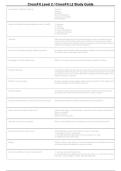
CrossFit Level 2 / CrossFit L2 Study Guide
Foundations of Effective Training Teaching
seeing
correcting
group management
presence and attitude
demonstration
Name the 6 different capacity abilities to coach Crossfit? 1- teaching
2- seeing
3- correcting
4- group management
5- peesence & attitude
6- demonstration
Teaching Effectively articulate and instruct the mechanics of each movement, focus on
major points of performance before more subtle and nuanced ones, change
instruction based on the athletes needs and capacity and teach athletes how to
improve poor positions and movement patterns.
Why are the 6 different capacity abilities important? An effective trainer has the ability to safeguard health and improve performance
for a client beyond what they could do alone
Knowledge in fitness related areas Ability to accurately convey as much knowledge as possible to others.
Describe Teaching The ability to effectively articulate and instruct the mechanics of each movement,
including the ability to focus on major points of performance before more subtle
or nuanced ones. It also includes the ability to change instruction based on the
athletes needs and capacity.
Effective Communication Be able to change communication style to meet the capacity of the student and
change strategies until the athlete succeeds.
Describe Seeing The ability to discern good from poor movement mechanics and identity both
gross and subtle faults whether the athlete is in motion or static
Assess the effectiveness of teaching and communication Determining whether an athlete meets performance expectations.
Name where static faults usually occur? Usually brief pauses, usually starting, receiving or finish positions for example:
Set up on deadlift
Bottom of squat
Easier to see an assess
Teaching as much as neccessary Reduce and simplify body of knowledge to one or two most critical points.
Name where dynamic faults occur? Often high speed which makes difficult to see, for example:
1- pressing to early on push press
2- not reaching full hip extension in the drive phase of a clean
3- initiating the squat with knees
Seeing Ability to discern good from poor movement mechanics and identify both gross
and subtle faults with athletes in motion and static.
Name some effective ways of 'seeing' faults? 1- use slow mo app/ internet video
2- methodically survey athletes for one fault at a time I.e. in. Push jerk: first hip
extension, second weight in heels, third pressing early
, CrossFit Level 2 / CrossFit L2 Study Guide
Describe 'Correcting' The ability to facilitate better mechanics for an athlete using visual, verbal and/or
tactile cues. This includes the ability to triage (priorities) faults in order of
importance, which requires an understanding of how multiple faults are related.
Static Faults When the athlete is not moving, even briefly. In the starting, receiving and
finishing positions.
Dynamic Faults When the athlete is moving between static positions.
What trainer's abilities does correcting hinge on? 1- use successful cues
2- know multiple corrections for each fault
3- triage faulty movement
4- balance criticism with praise
Most useful dynamic view A profile view offset by 45 degrees
Name the 3 step process for developing short, specific 1- identify the fault
and actionable cues? 2- identify what is out of place (name the body part)
3- give direction to the body part
Difficulty seeing dynamic faults increases when Athlete moves quickly and faults become subtler
Name some strategies for corrective cues? 1- verbal - speaking
2- visual - showing
3- tactile - touching
Methods to develop ability to see faults Study film
Survey athletes for only one fault at a time
Explain 'triaging' faults? Assigning urgency to multiple faults in most to least importance, greater
importance is assigned to faults that have the highest risk for injutyfor example:
loss of neutral spine on back squat is greater risk than on air squat however
depth would be more important on a air squat over loss of neutral spine due to
being unloaded an developing range of movement.
Correcting Ability to facilitate better mechanics for an athlete using visual, verbal or tactile
cues. Ability to triage faults. Understanding of how multiple faults are related.
Describe 'group management' The ability to organise and manage, both at micro level (within class) and at the
macro gym level. This includes managing time well; organisation of space the
space, equipment, and participation for optimal flow and experience; planning
ahead.
Correcting mechanics results in Increased performance gains and decreased risk of injury.
What is controlling the group? Ensuing everyone moves at the same amount of reps during warmup an skills
work. This allows the trainer to systematically and selectively observe all
individuals - ensuring no bias coaching
Abilities for correcting Use successful cues
Know multiple corrections for each fault
Triage faulty movement
Balance critique with praise.
, CrossFit Level 2 / CrossFit L2 Study Guide
Describe 'presence & attitude'? The ability to create a positive and engaging learning environment, showing
empathy for athletes and creating rapport.
Describe 'demonstration'? The ability to provide athletes with an accurate visual example of movement at
hand. A trainer may do this by using themselves as a example or someone with
good mechanics. This requires a strong awareness of ones own movement
mechanics. It's also leading by example.
Cues Direction to help an athlete execute perfect mechanics.
Good Cue Any cue that results in improved movement mechanics
Name some visual aids when demonstrating? 1- highlight points of performance
2- show range-of-movement
3- explain movement corrections
Cues do not Perfectly describe the mechanics of the movement
What's is chasing virtuosity in coaching? Doing the common uncommonly well - chase excellence
Cues should be Short
Specific
Actionable
All 9 movement themes are categorised with similar 1- midline stabilisation
positions an movement patterns, name these 8 themes: 2- core-to-extremity movement
3- balance about the frontal plane
4- posterior-chain engagement
5- sound hip function
6- active shoulders
7- full range of motion about a joint
8- effective stance and/or grip
Actionable cue Gives a single task for the athlete to complete
What are the benefits of the 9 movement theme Improved performance
categories? Minimise risk of injury
Best mechanical an muscular alignment
Confirming safety - efficacy - efficiency simultaneously
Fault Identification - Bad Cue Pointing out the fault, does not tell the athlete how to fix it
Describe 'Midline Stabilisation'? Maintaining a stable - normal S-curve of spine when dynamic or loaded.
Known as: 'core strength' through engaging the abdominals, int/ext obliques and
erector spinae creating a belt of muscle around the vertebrae's
Cue language Simple and easily understood by anyone
Foundations of Effective Training Teaching
seeing
correcting
group management
presence and attitude
demonstration
Name the 6 different capacity abilities to coach Crossfit? 1- teaching
2- seeing
3- correcting
4- group management
5- peesence & attitude
6- demonstration
Teaching Effectively articulate and instruct the mechanics of each movement, focus on
major points of performance before more subtle and nuanced ones, change
instruction based on the athletes needs and capacity and teach athletes how to
improve poor positions and movement patterns.
Why are the 6 different capacity abilities important? An effective trainer has the ability to safeguard health and improve performance
for a client beyond what they could do alone
Knowledge in fitness related areas Ability to accurately convey as much knowledge as possible to others.
Describe Teaching The ability to effectively articulate and instruct the mechanics of each movement,
including the ability to focus on major points of performance before more subtle
or nuanced ones. It also includes the ability to change instruction based on the
athletes needs and capacity.
Effective Communication Be able to change communication style to meet the capacity of the student and
change strategies until the athlete succeeds.
Describe Seeing The ability to discern good from poor movement mechanics and identity both
gross and subtle faults whether the athlete is in motion or static
Assess the effectiveness of teaching and communication Determining whether an athlete meets performance expectations.
Name where static faults usually occur? Usually brief pauses, usually starting, receiving or finish positions for example:
Set up on deadlift
Bottom of squat
Easier to see an assess
Teaching as much as neccessary Reduce and simplify body of knowledge to one or two most critical points.
Name where dynamic faults occur? Often high speed which makes difficult to see, for example:
1- pressing to early on push press
2- not reaching full hip extension in the drive phase of a clean
3- initiating the squat with knees
Seeing Ability to discern good from poor movement mechanics and identify both gross
and subtle faults with athletes in motion and static.
Name some effective ways of 'seeing' faults? 1- use slow mo app/ internet video
2- methodically survey athletes for one fault at a time I.e. in. Push jerk: first hip
extension, second weight in heels, third pressing early
, CrossFit Level 2 / CrossFit L2 Study Guide
Describe 'Correcting' The ability to facilitate better mechanics for an athlete using visual, verbal and/or
tactile cues. This includes the ability to triage (priorities) faults in order of
importance, which requires an understanding of how multiple faults are related.
Static Faults When the athlete is not moving, even briefly. In the starting, receiving and
finishing positions.
Dynamic Faults When the athlete is moving between static positions.
What trainer's abilities does correcting hinge on? 1- use successful cues
2- know multiple corrections for each fault
3- triage faulty movement
4- balance criticism with praise
Most useful dynamic view A profile view offset by 45 degrees
Name the 3 step process for developing short, specific 1- identify the fault
and actionable cues? 2- identify what is out of place (name the body part)
3- give direction to the body part
Difficulty seeing dynamic faults increases when Athlete moves quickly and faults become subtler
Name some strategies for corrective cues? 1- verbal - speaking
2- visual - showing
3- tactile - touching
Methods to develop ability to see faults Study film
Survey athletes for only one fault at a time
Explain 'triaging' faults? Assigning urgency to multiple faults in most to least importance, greater
importance is assigned to faults that have the highest risk for injutyfor example:
loss of neutral spine on back squat is greater risk than on air squat however
depth would be more important on a air squat over loss of neutral spine due to
being unloaded an developing range of movement.
Correcting Ability to facilitate better mechanics for an athlete using visual, verbal or tactile
cues. Ability to triage faults. Understanding of how multiple faults are related.
Describe 'group management' The ability to organise and manage, both at micro level (within class) and at the
macro gym level. This includes managing time well; organisation of space the
space, equipment, and participation for optimal flow and experience; planning
ahead.
Correcting mechanics results in Increased performance gains and decreased risk of injury.
What is controlling the group? Ensuing everyone moves at the same amount of reps during warmup an skills
work. This allows the trainer to systematically and selectively observe all
individuals - ensuring no bias coaching
Abilities for correcting Use successful cues
Know multiple corrections for each fault
Triage faulty movement
Balance critique with praise.
, CrossFit Level 2 / CrossFit L2 Study Guide
Describe 'presence & attitude'? The ability to create a positive and engaging learning environment, showing
empathy for athletes and creating rapport.
Describe 'demonstration'? The ability to provide athletes with an accurate visual example of movement at
hand. A trainer may do this by using themselves as a example or someone with
good mechanics. This requires a strong awareness of ones own movement
mechanics. It's also leading by example.
Cues Direction to help an athlete execute perfect mechanics.
Good Cue Any cue that results in improved movement mechanics
Name some visual aids when demonstrating? 1- highlight points of performance
2- show range-of-movement
3- explain movement corrections
Cues do not Perfectly describe the mechanics of the movement
What's is chasing virtuosity in coaching? Doing the common uncommonly well - chase excellence
Cues should be Short
Specific
Actionable
All 9 movement themes are categorised with similar 1- midline stabilisation
positions an movement patterns, name these 8 themes: 2- core-to-extremity movement
3- balance about the frontal plane
4- posterior-chain engagement
5- sound hip function
6- active shoulders
7- full range of motion about a joint
8- effective stance and/or grip
Actionable cue Gives a single task for the athlete to complete
What are the benefits of the 9 movement theme Improved performance
categories? Minimise risk of injury
Best mechanical an muscular alignment
Confirming safety - efficacy - efficiency simultaneously
Fault Identification - Bad Cue Pointing out the fault, does not tell the athlete how to fix it
Describe 'Midline Stabilisation'? Maintaining a stable - normal S-curve of spine when dynamic or loaded.
Known as: 'core strength' through engaging the abdominals, int/ext obliques and
erector spinae creating a belt of muscle around the vertebrae's
Cue language Simple and easily understood by anyone


