

CH 102 Spring 2026 – Discussion Worksheet 3 Name: ________________________________________
1. The equilibrium vapor pressure of water at 32 oC is 0.0476 bar. A glass of water is sealed in a container filled with air
at 32 oC. After the water comes to equilibrium with the air in the container, the total pressure is 1.00 bar and there is
500. g of liquid water in the glass. The volume of air in the container is 1.00 L.
a. What is the equilibrium water vapor pressure at this point? What is the partial pressure of H2O(𝑔) in the
container at this point? How do you know?
b. Would your answer in (a) have changed if the total pressure were 0.50 bar? What does the total pressure tell us?
c. A 0.564 mole sample of ethylene glycol (C2H6O2) is dissolved in a fresh 500. g of pure water at the same
conditions described above. Without doing any calculations: what will dissolving the ethylene glycol in the water
do to the water vapor pressure in the container?
d. Calculate the equilibrium water vapor pressure in the container after the ethylene glycol is dissolved. Calculate
change in the mass of the liquid water after it has returned to equilibrium.
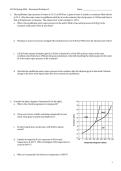
2. Consider the phase diagram of compound X (to the right).
a. What is the critical temperature of compound X?
b. If you were to have a bottle containing compound X in your
closet, what phase would it most likely be in?
c. At what temperature and pressure will all three phases
coexist?
d. A bottle of compound X is at a pressure of 45 atm and
temperature of 100 °C. What will happen if the temperature is
raised to 400 °C?
e. Why can’t compound X be boiled at a temperature of 200°C?
1
1. The equilibrium vapor pressure of water at 32 oC is 0.0476 bar. A glass of water is sealed in a container filled with air
at 32 oC. After the water comes to equilibrium with the air in the container, the total pressure is 1.00 bar and there is
500. g of liquid water in the glass. The volume of air in the container is 1.00 L.
a. What is the equilibrium water vapor pressure at this point? What is the partial pressure of H2O(𝑔) in the
container at this point? How do you know?
b. Would your answer in (a) have changed if the total pressure were 0.50 bar? What does the total pressure tell us?
c. A 0.564 mole sample of ethylene glycol (C2H6O2) is dissolved in a fresh 500. g of pure water at the same
conditions described above. Without doing any calculations: what will dissolving the ethylene glycol in the water
do to the water vapor pressure in the container?
d. Calculate the equilibrium water vapor pressure in the container after the ethylene glycol is dissolved. Calculate
change in the mass of the liquid water after it has returned to equilibrium.
2. Consider the phase diagram of compound X (to the right).
a. What is the critical temperature of compound X?
b. If you were to have a bottle containing compound X in your
closet, what phase would it most likely be in?
c. At what temperature and pressure will all three phases
coexist?
d. A bottle of compound X is at a pressure of 45 atm and
temperature of 100 °C. What will happen if the temperature is
raised to 400 °C?
e. Why can’t compound X be boiled at a temperature of 200°C?
1


