
1000 Flashcards NAVLE Exam
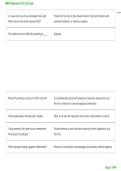
A 3-year-old cow shows decreased milk yield. Production records, as they reveal trends in herd performance and
Which record should be reviewed first? potential metabolic or infectious disease.
The medical term for difficulty breathing is ______. Dyspnea
What is the primary purpose of SOAP records? To systematically document Subjective, Objective, Assessment, and
Plan for continuity of care and legal documentation.
Tachycardia always indicates pain. Explain. False. It can also be caused by stress, fever, hypovolemia, or shock.
A dog presents with pale mucous membranes. Possible anemia or poor perfusion requiring further diagnostics (e.g.,
What does this indicate? PCV/TS).
What cytologic finding suggests inflammation? Presence of neutrophils, macrophages, and possibly infectious agents.
Page 1 of 94
,1000 Flashcards NAVLE Exam
Define "pathognomonic sign." A sign specifically characteristic of a particular disease.
A horse shows ataxia. Which system-specific exam Neurological examination to localize lesion.
is prioritized?
Elevated ALT primarily indicates ______ damage in Hepatocellular
small animals.
What is "differential diagnosis"? A list of possible diseases ranked by likelihood based on clinical
findings.
A cat has hyperthyroidism. Which lab finding Elevated serum T4 levels.
supports this?
All cytology samples require staining before True. Staining enhances cellular detail for evaluation.
interpretation.
Page 2 of 94
,1000 Flashcards NAVLE Exam
What behavior indicates pain in prey species? Decreased movement, hiding, reduced appetite, and subtle behavioral
changes.
What is the purpose of necropsy? To determine cause of death and evaluate disease processes
postmortem.
A dog ingests chocolate. What toxin is involved? Theobromine, causing CNS and cardiac effects.
Define "icterus." Yellow discoloration due to elevated bilirubin levels.
A herd shows decreased fertility. Which records Reproductive and breeding records.
are most useful?
Increased BUN and creatinine indicate ______ Renal
dysfunction.
What imaging modality is best for soft tissue Ultrasound or MRI (MRI best for CNS).
contrast?
Normal radiographs rule out all disease. False. Functional or early disease may not appear radiographically.
Page 3 of 94
, 1000 Flashcards NAVLE Exam
What does a left shift indicate in CBC? Increased immature neutrophils suggesting active inflammation.
A dog with vomiting and diarrhea—what toxin Food toxins, medications, or environmental toxins.
exposure is possible?
Define "auscultation." Listening to internal body sounds using a stethoscope.
What is the first step in a physical exam? Observation before handling.
The normal temperature range in dogs is 101-102.5°F
approximately ______°F.
What does hyperkalemia indicate in blocked cats? Urinary obstruction leading to electrolyte imbalance.
Behavioral changes always indicate neurological False. Can be metabolic, toxic, or environmental.
disease.
What is the purpose of herd health analysis? To identify trends and prevent disease at population level.
A horse has colic. What is the priority? Assess severity and determine medical vs surgical intervention.
Page 4 of 94
A 3-year-old cow shows decreased milk yield. Production records, as they reveal trends in herd performance and
Which record should be reviewed first? potential metabolic or infectious disease.
The medical term for difficulty breathing is ______. Dyspnea
What is the primary purpose of SOAP records? To systematically document Subjective, Objective, Assessment, and
Plan for continuity of care and legal documentation.
Tachycardia always indicates pain. Explain. False. It can also be caused by stress, fever, hypovolemia, or shock.
A dog presents with pale mucous membranes. Possible anemia or poor perfusion requiring further diagnostics (e.g.,
What does this indicate? PCV/TS).
What cytologic finding suggests inflammation? Presence of neutrophils, macrophages, and possibly infectious agents.
Page 1 of 94
,1000 Flashcards NAVLE Exam
Define "pathognomonic sign." A sign specifically characteristic of a particular disease.
A horse shows ataxia. Which system-specific exam Neurological examination to localize lesion.
is prioritized?
Elevated ALT primarily indicates ______ damage in Hepatocellular
small animals.
What is "differential diagnosis"? A list of possible diseases ranked by likelihood based on clinical
findings.
A cat has hyperthyroidism. Which lab finding Elevated serum T4 levels.
supports this?
All cytology samples require staining before True. Staining enhances cellular detail for evaluation.
interpretation.
Page 2 of 94
,1000 Flashcards NAVLE Exam
What behavior indicates pain in prey species? Decreased movement, hiding, reduced appetite, and subtle behavioral
changes.
What is the purpose of necropsy? To determine cause of death and evaluate disease processes
postmortem.
A dog ingests chocolate. What toxin is involved? Theobromine, causing CNS and cardiac effects.
Define "icterus." Yellow discoloration due to elevated bilirubin levels.
A herd shows decreased fertility. Which records Reproductive and breeding records.
are most useful?
Increased BUN and creatinine indicate ______ Renal
dysfunction.
What imaging modality is best for soft tissue Ultrasound or MRI (MRI best for CNS).
contrast?
Normal radiographs rule out all disease. False. Functional or early disease may not appear radiographically.
Page 3 of 94
, 1000 Flashcards NAVLE Exam
What does a left shift indicate in CBC? Increased immature neutrophils suggesting active inflammation.
A dog with vomiting and diarrhea—what toxin Food toxins, medications, or environmental toxins.
exposure is possible?
Define "auscultation." Listening to internal body sounds using a stethoscope.
What is the first step in a physical exam? Observation before handling.
The normal temperature range in dogs is 101-102.5°F
approximately ______°F.
What does hyperkalemia indicate in blocked cats? Urinary obstruction leading to electrolyte imbalance.
Behavioral changes always indicate neurological False. Can be metabolic, toxic, or environmental.
disease.
What is the purpose of herd health analysis? To identify trends and prevent disease at population level.
A horse has colic. What is the priority? Assess severity and determine medical vs surgical intervention.
Page 4 of 94


