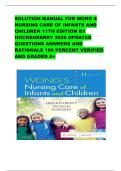
SOLUTION MANUAL FOR WONG S
NURSING CARE OF INFANTS AND
CHILDREN 11TH EDITION BY
HOCKENBERRY 2026 UPDATED
QUESTIONS ANSWERS AND
RATIONALE 100 PERCENT VERIFIED
AND GRADED A+
,Table of Contents (Corrected — 34 Chapters, Listed in Order)
1. Chapter 01: Perspectives of Pediatric Nursing
2. Chapter 02: Social, Cultural, Religious, and Family
Influences on Child Health Promotion
3. Chapter 03: Hereditary Influences on Health Promotion of
the Child and Family
4. Chapter 04: Communication, Physical, and Developmental
Assessment of the Child and Family
5. Chapter 05: Pain Assessment and Management in Children
6. Chapter 06: Childhood Communicable and Infectious
Diseases
7. Chapter 07: Health Promotion of the Newborn and Family
8. Chapter 08: Health Problems of the Newborn
9. Chapter 09: The High-Risk Newborn and Family
10. Chapter 10: Health Promotion of the Infant and Family
11. Chapter 11: Health Problems of the Infant
12. Chapter 12: Health Promotion of the Toddler and Family
13. Chapter 13: Health Promotion of the Preschooler and Family
14. Chapter 14: Health Problems of Early Childhood
15. Chapter 15: Health Promotion of the School-Age Child and
Family
16. Chapter 16: Health Problems of the School-Age Child
17. Chapter 17: Health Promotion of the Adolescent and Family
18. Chapter 18: Health Problems of the Adolescent
19. Chapter 19: Family-Centered Care of the Child with Chronic
Illness or Disability
20. Chapter 20: Family-Centered Palliative Care
21. Chapter 21: Impact of Cognitive or Sensory Impairment on
the Child and Family
22. Chapter 22: Family-Centered Care of the Child During
Illness and Hospitalization
,23. Chapter 23: Pediatric Nursing Interventions and Skills
24. Chapter 24: The Child with Fluid and Electrolyte Imbalance
25. Chapter 25: The Child with Renal Dysfunction
26. Chapter 26: The Child with Gastrointestinal Dysfunction
27. Chapter 27: The Child with Respiratory Dysfunction
28. Chapter 28: The Child with Cardiovascular Dysfunction
29. Chapter 29: The Child with Hematologic or Immunologic
Dysfunction
30. Chapter 30: The Child with Cancer
31. Chapter 31: The Child with Cerebral Dysfunction
32. Chapter 32: The Child with Endocrine
Dysfunction
33. Chapter 33: The Child with Integumentary
Dysfunction
34. Chapter 34: The Child with Musculoskeletal or Articular
Dysfunction
CHAPTER 1: PERSPECTIVES OF PEDIATRIC NURSING
This chapter introduces pediatric nursing, emphasizing
family-centered care, evidence-based practice, and health
promotion across childhood. It explores the roles of nurses
in supporting children and families through health
promotion, illness prevention, and management of acute
and chronic conditions. The chapter highlights the
importance of advocacy, cultural competence,
, developmental assessment, and interprofessional
collaboration in delivering high-quality pediatric care.
1. A nurse is providing care to a hospitalized child. Which
action best demonstrates family-centered care?
A. Making all care decisions without family input
B. Including the family as partners in care decisions
C. Limiting family presence during procedures
D. Following hospital policies regardless of family
preferences
Correct Answer: B
Rationale: Family-centered care recognizes the family as
partners in care and involves them in decision-making.
2. A nurse is caring for a child from a culture that values
natural remedies. The nurse's best action is to:
A. Discourage the use of natural remedies
NURSING CARE OF INFANTS AND
CHILDREN 11TH EDITION BY
HOCKENBERRY 2026 UPDATED
QUESTIONS ANSWERS AND
RATIONALE 100 PERCENT VERIFIED
AND GRADED A+
,Table of Contents (Corrected — 34 Chapters, Listed in Order)
1. Chapter 01: Perspectives of Pediatric Nursing
2. Chapter 02: Social, Cultural, Religious, and Family
Influences on Child Health Promotion
3. Chapter 03: Hereditary Influences on Health Promotion of
the Child and Family
4. Chapter 04: Communication, Physical, and Developmental
Assessment of the Child and Family
5. Chapter 05: Pain Assessment and Management in Children
6. Chapter 06: Childhood Communicable and Infectious
Diseases
7. Chapter 07: Health Promotion of the Newborn and Family
8. Chapter 08: Health Problems of the Newborn
9. Chapter 09: The High-Risk Newborn and Family
10. Chapter 10: Health Promotion of the Infant and Family
11. Chapter 11: Health Problems of the Infant
12. Chapter 12: Health Promotion of the Toddler and Family
13. Chapter 13: Health Promotion of the Preschooler and Family
14. Chapter 14: Health Problems of Early Childhood
15. Chapter 15: Health Promotion of the School-Age Child and
Family
16. Chapter 16: Health Problems of the School-Age Child
17. Chapter 17: Health Promotion of the Adolescent and Family
18. Chapter 18: Health Problems of the Adolescent
19. Chapter 19: Family-Centered Care of the Child with Chronic
Illness or Disability
20. Chapter 20: Family-Centered Palliative Care
21. Chapter 21: Impact of Cognitive or Sensory Impairment on
the Child and Family
22. Chapter 22: Family-Centered Care of the Child During
Illness and Hospitalization
,23. Chapter 23: Pediatric Nursing Interventions and Skills
24. Chapter 24: The Child with Fluid and Electrolyte Imbalance
25. Chapter 25: The Child with Renal Dysfunction
26. Chapter 26: The Child with Gastrointestinal Dysfunction
27. Chapter 27: The Child with Respiratory Dysfunction
28. Chapter 28: The Child with Cardiovascular Dysfunction
29. Chapter 29: The Child with Hematologic or Immunologic
Dysfunction
30. Chapter 30: The Child with Cancer
31. Chapter 31: The Child with Cerebral Dysfunction
32. Chapter 32: The Child with Endocrine
Dysfunction
33. Chapter 33: The Child with Integumentary
Dysfunction
34. Chapter 34: The Child with Musculoskeletal or Articular
Dysfunction
CHAPTER 1: PERSPECTIVES OF PEDIATRIC NURSING
This chapter introduces pediatric nursing, emphasizing
family-centered care, evidence-based practice, and health
promotion across childhood. It explores the roles of nurses
in supporting children and families through health
promotion, illness prevention, and management of acute
and chronic conditions. The chapter highlights the
importance of advocacy, cultural competence,
, developmental assessment, and interprofessional
collaboration in delivering high-quality pediatric care.
1. A nurse is providing care to a hospitalized child. Which
action best demonstrates family-centered care?
A. Making all care decisions without family input
B. Including the family as partners in care decisions
C. Limiting family presence during procedures
D. Following hospital policies regardless of family
preferences
Correct Answer: B
Rationale: Family-centered care recognizes the family as
partners in care and involves them in decision-making.
2. A nurse is caring for a child from a culture that values
natural remedies. The nurse's best action is to:
A. Discourage the use of natural remedies