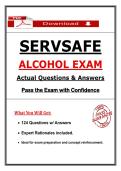
SERVSAFE
ALCOHOL EXAM
Actual Questions & Answers
Pass the Exam with Confidence
What You Will Get:
• 124 Questions w/ Answers
• Expert Rationales included.
• Ideal for exam preparation and concept reinforcement.
,1. State or municipal liquor authorities can issue citations for
A. drunk driving
B. serving a pregnant woman
C. serving alcohol to a minor
D. fighting in the establishment
Correct Answer: C. serving alcohol to a minor
Rationale: Serving alcohol to a minor directly violates alcohol-sale and service
regulations enforced by state or municipal liquor authorities.
Why the Other Choices Are Wrong:
• A. drunk driving: Drunk-driving enforcement is normally handled by police
and the criminal-justice system.
• B. serving a pregnant woman: Pregnancy alone is not identified in the
source as an alcohol-service violation.
• D. fighting in the establishment: A fight may require management or
police intervention, but it is not the direct liquor-code violation targeted by
this question.
2. Which is a role of the liquor authority?
A. issue liquor licenses
B. initiate law suits against drunk drivers
C. issue citations to minors for presenting fake IDs
D. initiate criminal charges against establishments who serve minors
Correct Answer: A. issue liquor licenses
Rationale: Liquor authorities regulate the sale and service of alcohol by issuing,
renewing, suspending, and revoking liquor licenses.
Why the Other Choices Are Wrong:
• B. initiate law suits against drunk drivers: Civil lawsuits are normally
brought by injured parties through the courts.
, • C. issue citations to minors for presenting fake IDs: Fake-ID
enforcement may involve police or another law-enforcement agency.
• D. initiate criminal charges against establishments who serve minors:
Criminal charges are handled through law enforcement and prosecutors.
The liquor authority’s direct role is regulatory.
3. Which is a criminal violation related to the sale and service of alcohol?
A. serving alcohol to a minor
B. failing to fill out an incident report
C. firing a server who over-served a guest
D. refusing to serve a guest who arrived intoxicated
Correct Answer: A. serving alcohol to a minor
Rationale: Selling or serving alcohol to an underage person is a criminal alcohol-
law violation.
Why the Other Choices Are Wrong:
• B. failing to fill out an incident report: This may violate company policy,
but it is not the criminal sale-or-service violation targeted by the question.
• C. firing a server who over-served a guest: This is an employment
action.
• D. refusing to serve a guest who arrived intoxicated: Refusing service
is the appropriate protective action.
4. Which situation best describes dram shop liability?
A. a manager is fined for allowing the sale of drugs on the premises
B. a server is fined by the liquor authority for serving alcohol to a minor
C. a bartender is given jail time for serving a guest who appeared intoxicated
D. a person sues the bartender who served the intoxicated guest who injured
him:
Correct Answer: D. a person sues the bartender who served the intoxicated
guest who injured him:
, Rationale: Dram shop liability involves a civil claim by an injured third party
against the establishment or person who furnished alcohol to the intoxicated
guest.
Why the Other Choices Are Wrong:
• A: Describes a drug-related regulatory or criminal consequence.
• B: Describes an administrative or criminal alcohol-code penalty.
• C: Describes a criminal consequence rather than a civil lawsuit for
damages.
5. Which is a possible consequence for violating the liquor code?
A. jail time
B. probation
C. misdemeanor
D. liquor - license suspension
Correct Answer: D. liquor - license suspension
Rationale: Suspension of a liquor license is a direct administrative consequence
that a liquor authority can impose on a licensed establishment.
Why the Other Choices Are Not the Best Answer:
• A. jail time: May follow certain criminal violations but is not the licensing
sanction targeted here.
• B. probation: May follow a criminal proceeding but is not the specific
administrative action emphasized.
• C. misdemeanor: A misdemeanor is a classification of an offense rather
than a punishment itself.
6. T/F You may be charged with a crime simply for serving a guest who
appears to be intoxicated.
Correct Answer: True
ALCOHOL EXAM
Actual Questions & Answers
Pass the Exam with Confidence
What You Will Get:
• 124 Questions w/ Answers
• Expert Rationales included.
• Ideal for exam preparation and concept reinforcement.
,1. State or municipal liquor authorities can issue citations for
A. drunk driving
B. serving a pregnant woman
C. serving alcohol to a minor
D. fighting in the establishment
Correct Answer: C. serving alcohol to a minor
Rationale: Serving alcohol to a minor directly violates alcohol-sale and service
regulations enforced by state or municipal liquor authorities.
Why the Other Choices Are Wrong:
• A. drunk driving: Drunk-driving enforcement is normally handled by police
and the criminal-justice system.
• B. serving a pregnant woman: Pregnancy alone is not identified in the
source as an alcohol-service violation.
• D. fighting in the establishment: A fight may require management or
police intervention, but it is not the direct liquor-code violation targeted by
this question.
2. Which is a role of the liquor authority?
A. issue liquor licenses
B. initiate law suits against drunk drivers
C. issue citations to minors for presenting fake IDs
D. initiate criminal charges against establishments who serve minors
Correct Answer: A. issue liquor licenses
Rationale: Liquor authorities regulate the sale and service of alcohol by issuing,
renewing, suspending, and revoking liquor licenses.
Why the Other Choices Are Wrong:
• B. initiate law suits against drunk drivers: Civil lawsuits are normally
brought by injured parties through the courts.
, • C. issue citations to minors for presenting fake IDs: Fake-ID
enforcement may involve police or another law-enforcement agency.
• D. initiate criminal charges against establishments who serve minors:
Criminal charges are handled through law enforcement and prosecutors.
The liquor authority’s direct role is regulatory.
3. Which is a criminal violation related to the sale and service of alcohol?
A. serving alcohol to a minor
B. failing to fill out an incident report
C. firing a server who over-served a guest
D. refusing to serve a guest who arrived intoxicated
Correct Answer: A. serving alcohol to a minor
Rationale: Selling or serving alcohol to an underage person is a criminal alcohol-
law violation.
Why the Other Choices Are Wrong:
• B. failing to fill out an incident report: This may violate company policy,
but it is not the criminal sale-or-service violation targeted by the question.
• C. firing a server who over-served a guest: This is an employment
action.
• D. refusing to serve a guest who arrived intoxicated: Refusing service
is the appropriate protective action.
4. Which situation best describes dram shop liability?
A. a manager is fined for allowing the sale of drugs on the premises
B. a server is fined by the liquor authority for serving alcohol to a minor
C. a bartender is given jail time for serving a guest who appeared intoxicated
D. a person sues the bartender who served the intoxicated guest who injured
him:
Correct Answer: D. a person sues the bartender who served the intoxicated
guest who injured him:
, Rationale: Dram shop liability involves a civil claim by an injured third party
against the establishment or person who furnished alcohol to the intoxicated
guest.
Why the Other Choices Are Wrong:
• A: Describes a drug-related regulatory or criminal consequence.
• B: Describes an administrative or criminal alcohol-code penalty.
• C: Describes a criminal consequence rather than a civil lawsuit for
damages.
5. Which is a possible consequence for violating the liquor code?
A. jail time
B. probation
C. misdemeanor
D. liquor - license suspension
Correct Answer: D. liquor - license suspension
Rationale: Suspension of a liquor license is a direct administrative consequence
that a liquor authority can impose on a licensed establishment.
Why the Other Choices Are Not the Best Answer:
• A. jail time: May follow certain criminal violations but is not the licensing
sanction targeted here.
• B. probation: May follow a criminal proceeding but is not the specific
administrative action emphasized.
• C. misdemeanor: A misdemeanor is a classification of an offense rather
than a punishment itself.
6. T/F You may be charged with a crime simply for serving a guest who
appears to be intoxicated.
Correct Answer: True