NUR170 Exam 2 Study Guide Neuro, Resp, & Sensory Disorders Overview
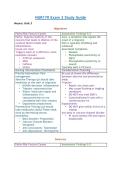
NUR170 Exam 2 Study Guide
Neuro: Unit 3
Migraines
Patho/Risk Factors/Causes Assessment Findings-S/S
Patho- Hyperexcitability of the Aura- a sensation that signals the
neurons that leads to dilation of the onset of a migraine
cerebral blood vessels and Pain is typically throbbing and
inflammation. unilateral
Cause-not clear Associated Symptoms-
Triggers (each pt is different, some • Nausea
examples include)- • Photophobia (sensitivity to
• Artificial sweeteners light)
• MSG • Phonophobia (sensitivity to
• Caffeine sound)
• Stress Typically lasts 4-72 hours
Nursing Interventions/Treatments Considerations/Teaching
Priority Intervention- Pain Be sure pt knows the difference
management between abortive and preventative
Abortive Therapy (pt should take meds.
mediation at the start of migraine) Triptans-
• NSAIDs-decrease inflammation • Report any chest pain
• Triptans- vasoconstriction • May cause flushing or tingling
• Ditans- block pain signal and sensations
inflammation w/o • DO NOT mix with SSRI’s
vasoconstriction so are • Contraindicated in pts with a
considered safe than triptans cardiovascular hx
• Ergotamine preparations Ergotamines-
Preventative Therapy (pt should • DO NOT give within 24 hrs of a
take medication daily)-These meds triptan
work by decreasing neuron Any beta or calcium-channel blocker
excitability • Pt must monitor HR and report
• Beta-blockers- Propranolol bradycardia
• Calcium Channel Blockers-
Verapamil
• Anti-convulsants- Topiramate
• Anti-depressants- Nortriptyline
Seizures
Patho/Risk Factors/Causes Assessment Findings-S/S
NUR170 Exam 2 Study Guide Neuro, Resp, & Sensory Disorders Overview
,NUR170 Exam 2 Study Guide Neuro, Resp, & Sensory Disorders Overview
Patho- Excessive, uncontrolled firing Types of Seizures:
of brain neurons Generalized:
Epilepsy- Repeated, unprovoked Tonic-clonic- stiffening of the
seizure activity muscles followed by jerking
Causes- • May experience incontinence
HTN or become cyanotic
Injury to the brain such as: • For up to 1 hr after, pt may be
• Trauma, stroke, or tumor confused, lethargic (postictal)
Electrolyte Imbalances: • Duration of 2-5 min
• Low sodium, low magnesium Myoclonic- jerking of one or more
Alcohol withdrawal extremity. Duration of a few
seconds.
Atonic- sudden loss of muscle tone
• High risk of injury
• May experience confusion
after
• Duration of a few seconds
Partial:
Complex-partial-
• Causes meaningless,
repetitive motor activities
called automatisms (example:
wandering)
• Patient’s LOC “blackout”-
appears awake
• Duration of 1-3 min
• Often mistaken for dementia
in older adults
Simple-partial- unpleasant
sensations, feeling of déjà vu,
unilateral jerking movement, or
change in HR
• Remains conscious throughout
seizure
• Often has aura prior
Diagnosed with EEG
EMERGENCY:
Status Epilepticus- seizure lasting
longer than 5 min or multiple
seizures within 30 min
Nursing Interventions/Treatments Considerations/Teaching
Seizure prevention: AED Considerations:
Antiepileptic drugs (AED’s)- • Check drug levels as ordered
• Phenytoin b/c AED’s must be within a
• Valproic Acid therapeutic range to be
• Carbamazepine effective
NUR170 Exam 2 Study Guide Neuro, Resp, & Sensory Disorders Overview
, NUR170 Exam 2 Study Guide Neuro, Resp, & Sensory Disorders Overview
Seizure Management: • Educate about taking AED’s as
• Stop acute seizures with prescribed
Diazepam or Lorazepam • Monitor liver enzymes and
“Benzos break seizures” WBC counts
Status Epilepticus: • Educate about need for
• Priority is airway/breathing frequent oral care due to risk
• Start normal saline IV of gingival hyperplasia
• Give IV diazepam/lorazepam Seizure Precautions:
After seizure- a loading dose of • Suction & O2 at bedside
Phenytoin to prevent additional • Insert saline lock (IV site)
seizures Other Teaching:
• Wear a medical alert bracelet
• Be sure a family member
knows how to help during
seizure
• AVOID ALCOHOL
Parkinson’s
Patho/Risk Factors/Causes Assessment Findings-S/S
Patho- neurodegenerative disease Core symptoms:
that results from a lack of dopamine • Bradykinesia “slow”
in the brain • Rigidity “stiff”
Dopamine Responsibilities: • Stooped posture “stooped”
1. Controlling muscle movement • Shuffling gait
by inhibiting the excitatory • Tremors w/ rest
effects of acetylcholine (check Symptoms usually start w/ a
and balances). Without unilateral arm tremor
dopamine, the muscles are Associated symptoms:
constantly excited. • Dysphagia
2. Assist w/ sympathetic nervous • Trouble chewing
system response. • Trouble speaking
3. Mood stabilization • Mask-like face
More common in older male adults. Autonomic symptoms:
• Orthostatic hypotension
Mood symptoms:
• Depression, anxiety
• Dementia or hallucination may
occur in late stages
Nursing Interventions/Treatments Considerations/Teaching
NUR170 Exam 2 Study Guide Neuro, Resp, & Sensory Disorders Overview
NUR170 Exam 2 Study Guide
Neuro: Unit 3
Migraines
Patho/Risk Factors/Causes Assessment Findings-S/S
Patho- Hyperexcitability of the Aura- a sensation that signals the
neurons that leads to dilation of the onset of a migraine
cerebral blood vessels and Pain is typically throbbing and
inflammation. unilateral
Cause-not clear Associated Symptoms-
Triggers (each pt is different, some • Nausea
examples include)- • Photophobia (sensitivity to
• Artificial sweeteners light)
• MSG • Phonophobia (sensitivity to
• Caffeine sound)
• Stress Typically lasts 4-72 hours
Nursing Interventions/Treatments Considerations/Teaching
Priority Intervention- Pain Be sure pt knows the difference
management between abortive and preventative
Abortive Therapy (pt should take meds.
mediation at the start of migraine) Triptans-
• NSAIDs-decrease inflammation • Report any chest pain
• Triptans- vasoconstriction • May cause flushing or tingling
• Ditans- block pain signal and sensations
inflammation w/o • DO NOT mix with SSRI’s
vasoconstriction so are • Contraindicated in pts with a
considered safe than triptans cardiovascular hx
• Ergotamine preparations Ergotamines-
Preventative Therapy (pt should • DO NOT give within 24 hrs of a
take medication daily)-These meds triptan
work by decreasing neuron Any beta or calcium-channel blocker
excitability • Pt must monitor HR and report
• Beta-blockers- Propranolol bradycardia
• Calcium Channel Blockers-
Verapamil
• Anti-convulsants- Topiramate
• Anti-depressants- Nortriptyline
Seizures
Patho/Risk Factors/Causes Assessment Findings-S/S
NUR170 Exam 2 Study Guide Neuro, Resp, & Sensory Disorders Overview
,NUR170 Exam 2 Study Guide Neuro, Resp, & Sensory Disorders Overview
Patho- Excessive, uncontrolled firing Types of Seizures:
of brain neurons Generalized:
Epilepsy- Repeated, unprovoked Tonic-clonic- stiffening of the
seizure activity muscles followed by jerking
Causes- • May experience incontinence
HTN or become cyanotic
Injury to the brain such as: • For up to 1 hr after, pt may be
• Trauma, stroke, or tumor confused, lethargic (postictal)
Electrolyte Imbalances: • Duration of 2-5 min
• Low sodium, low magnesium Myoclonic- jerking of one or more
Alcohol withdrawal extremity. Duration of a few
seconds.
Atonic- sudden loss of muscle tone
• High risk of injury
• May experience confusion
after
• Duration of a few seconds
Partial:
Complex-partial-
• Causes meaningless,
repetitive motor activities
called automatisms (example:
wandering)
• Patient’s LOC “blackout”-
appears awake
• Duration of 1-3 min
• Often mistaken for dementia
in older adults
Simple-partial- unpleasant
sensations, feeling of déjà vu,
unilateral jerking movement, or
change in HR
• Remains conscious throughout
seizure
• Often has aura prior
Diagnosed with EEG
EMERGENCY:
Status Epilepticus- seizure lasting
longer than 5 min or multiple
seizures within 30 min
Nursing Interventions/Treatments Considerations/Teaching
Seizure prevention: AED Considerations:
Antiepileptic drugs (AED’s)- • Check drug levels as ordered
• Phenytoin b/c AED’s must be within a
• Valproic Acid therapeutic range to be
• Carbamazepine effective
NUR170 Exam 2 Study Guide Neuro, Resp, & Sensory Disorders Overview
, NUR170 Exam 2 Study Guide Neuro, Resp, & Sensory Disorders Overview
Seizure Management: • Educate about taking AED’s as
• Stop acute seizures with prescribed
Diazepam or Lorazepam • Monitor liver enzymes and
“Benzos break seizures” WBC counts
Status Epilepticus: • Educate about need for
• Priority is airway/breathing frequent oral care due to risk
• Start normal saline IV of gingival hyperplasia
• Give IV diazepam/lorazepam Seizure Precautions:
After seizure- a loading dose of • Suction & O2 at bedside
Phenytoin to prevent additional • Insert saline lock (IV site)
seizures Other Teaching:
• Wear a medical alert bracelet
• Be sure a family member
knows how to help during
seizure
• AVOID ALCOHOL
Parkinson’s
Patho/Risk Factors/Causes Assessment Findings-S/S
Patho- neurodegenerative disease Core symptoms:
that results from a lack of dopamine • Bradykinesia “slow”
in the brain • Rigidity “stiff”
Dopamine Responsibilities: • Stooped posture “stooped”
1. Controlling muscle movement • Shuffling gait
by inhibiting the excitatory • Tremors w/ rest
effects of acetylcholine (check Symptoms usually start w/ a
and balances). Without unilateral arm tremor
dopamine, the muscles are Associated symptoms:
constantly excited. • Dysphagia
2. Assist w/ sympathetic nervous • Trouble chewing
system response. • Trouble speaking
3. Mood stabilization • Mask-like face
More common in older male adults. Autonomic symptoms:
• Orthostatic hypotension
Mood symptoms:
• Depression, anxiety
• Dementia or hallucination may
occur in late stages
Nursing Interventions/Treatments Considerations/Teaching
NUR170 Exam 2 Study Guide Neuro, Resp, & Sensory Disorders Overview