

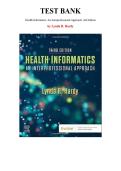
TEST BANK
Health Informatics: An Interprofessional Approach, 3rd Edition
by Lynda R. Hardy
SC
O
R
EG
U
ID
ES
, TABLE OF CONTENT
SECTION 1 Fundamental Knowledge in Health Informatics
1. An Introduction to Health Informatics
2. Theoretical Frameworks
3. Health Systems and Information Flow
4. Informatics-Related Standards and Standard Setting
5. Evaluation of Health Information Systems—Purposes, Theories, and Methods
SECTION 2 Health Information Systems and Applications
6. Technical Infrastructure
7. The Electronic Health Record and Precision Care
SC
8. Administrative Applications in Healthcare
9. Community Health Systems
10. Public Health Informatics
SECTION 3 Decision-Making and the Digitally Engaged Patient
11. Evidence-Based Informatics
O
12. Clinical Decision Support
13. The Evolving ePatient
14. Digital Health: Managing Health and Wellness
15. Personal Health Records
R
16. Social Media Tools for Health Informatics
SECTION 4 Lifecycle Management
EG
17. Project Management Principles
18. Strategic Planning and Information System Selection
19. Contract Negotiations and Software Licensing
20. Implementing and Upgrading an Information System
21. Downtime and Disaster Recovery for Health Information Systems
U
SECTION 5 Usability, Analytics, and Education
22. Improving the User Experience for Health Information Technology
23. Data Science and Analytics in Healthcare
ID
24. Safety and Quality Initiatives in Health Informatics
25. Informatics in the Curriculum
26. Distance Education—A New Frontier
ES
SECTION 6 Data Governance, Legal, and Regulatory Issues
27. Legal Issues, Federal Regulations, and Accreditation
28. Privacy and Security
29. MACRA and Interoperability
30. Health Policy and Health Informatics
31. Health Information Technology Governance
SECTION 7 Global and Future Perspectives in Health Informatics
32. Global Health Informatics
33. Informatics and the Future of Healthcare
, lOMoAR cPSD| 11700591
FULL TEST BANK FOR
Health Informatics: An Interprofessional Approach 3rd Edition
Authors: Ramona Nelson, Nancy Staggers, PhD, RN, FAAN
Chapter 1: Introduction: The Evolution of Health Informatics
Test Bank
MULTIPLE CHOICE
SNC
All Chapters Included
1. The historical roots of computer science can be traced to:
a. language development, especially English.
b. mathematics and engineering.
c. library science.
UO
d. medicine and nursing. All Answers Included
ANS: B
The historical roots of computer science can be traced back
RR
to mathematics and engineering. The historical roots of
information science began in library science. Language
development andmedicine and nursing are not the roots of
computer science.
SEE
DIF: Cognitive Level: Understand REF: p. 3
GT
2. The historical roots of information science can be traced
to:
a. language development, especially English.
b. mathematics and engineering.
UE
c. library science.
d. medicine and nursing.
IDS
ANS: C
The historical roots of information science began in library science. The historical roots of
computer science can be traced back to mathematics and engineering. Language development
and medicine and nursing are not the roots of information science.
ETS
DIF: Cognitive Level: Understand REF: pp. 3-4
3. The first book to include the term nursing informatics in the title was written in the:
a. 1960s.
b. 1970s.
c. 1980s.
d. 1990s.
ANS: C
The first book to include the term nursing informatics in the title was published in 1988.
DIF: Cognitive Level: Remember REF: p. 6
4. As knowledge develops and expands within a discipline, which information source will include
, the oldest but best organized representation of that knowledge?
a. Conference presentations
b. Conference proceedings
c. Journal articles
d. Books
ANS: D
The information source that includes the oldest but best organized representation of knowledge
is books.
DIF: Cognitive Level: Apply REF: p. 5
SNC
5. Which technical development created a tension between centralized and decentralized computer
management in healthcare?
a. The development of punch cards
b. The elimination of punch cards
c. The development of the mainframe computer
UO
d. The development of the personal computer
ANS: D
The development of the personal computer created tension between centralized and
RR
decentralized computer management in healthcare. The other responses highlight aspects of
decentralized computer management.
SEE
DIF: Cognitive Level: Apply REF: p. 3
6. Which of the following is not a member organization but rather a group of organizations?
a. AMIA
GT
b. HIMSS
c. AHIMA
d. ANI
UE
ANS: D
The Alliance for Nursing Informatics (ANI) is an organization of organizations. This is not a
member group. AMIA, HIMSS, and AHIMA are all member groups.
IDS
DIF: Cognitive Level: Remember REF: p. 7
7. Which statement concerning educational programs in health informatics is correct?
ETS
a. All health informatics programs are offered at the graduate level.
b. Informatics programs offered by medical schools always require students to have
earned an MD for admission.
c. All health informatics programs are located within health-related departments or
schools such as nursing, medicine, or pharmacy.
d. Health informatics programs range from certificate programs offered at the
community college level to post-doctoral programs offered at major research
institutions.
ANS: D
The correct response is health informatics programs range from certificate programs offered at
the community college level to post-doctoral programs offered at major research institutions.
Not all informatics programs require an MD, are at the graduate level, or are located within
schools of health sciences.
DIF: Cognitive Level: Apply REF: pp. 9-10
Health Informatics: An Interprofessional Approach, 3rd Edition
by Lynda R. Hardy
SC
O
R
EG
U
ID
ES
, TABLE OF CONTENT
SECTION 1 Fundamental Knowledge in Health Informatics
1. An Introduction to Health Informatics
2. Theoretical Frameworks
3. Health Systems and Information Flow
4. Informatics-Related Standards and Standard Setting
5. Evaluation of Health Information Systems—Purposes, Theories, and Methods
SECTION 2 Health Information Systems and Applications
6. Technical Infrastructure
7. The Electronic Health Record and Precision Care
SC
8. Administrative Applications in Healthcare
9. Community Health Systems
10. Public Health Informatics
SECTION 3 Decision-Making and the Digitally Engaged Patient
11. Evidence-Based Informatics
O
12. Clinical Decision Support
13. The Evolving ePatient
14. Digital Health: Managing Health and Wellness
15. Personal Health Records
R
16. Social Media Tools for Health Informatics
SECTION 4 Lifecycle Management
EG
17. Project Management Principles
18. Strategic Planning and Information System Selection
19. Contract Negotiations and Software Licensing
20. Implementing and Upgrading an Information System
21. Downtime and Disaster Recovery for Health Information Systems
U
SECTION 5 Usability, Analytics, and Education
22. Improving the User Experience for Health Information Technology
23. Data Science and Analytics in Healthcare
ID
24. Safety and Quality Initiatives in Health Informatics
25. Informatics in the Curriculum
26. Distance Education—A New Frontier
ES
SECTION 6 Data Governance, Legal, and Regulatory Issues
27. Legal Issues, Federal Regulations, and Accreditation
28. Privacy and Security
29. MACRA and Interoperability
30. Health Policy and Health Informatics
31. Health Information Technology Governance
SECTION 7 Global and Future Perspectives in Health Informatics
32. Global Health Informatics
33. Informatics and the Future of Healthcare
, lOMoAR cPSD| 11700591
FULL TEST BANK FOR
Health Informatics: An Interprofessional Approach 3rd Edition
Authors: Ramona Nelson, Nancy Staggers, PhD, RN, FAAN
Chapter 1: Introduction: The Evolution of Health Informatics
Test Bank
MULTIPLE CHOICE
SNC
All Chapters Included
1. The historical roots of computer science can be traced to:
a. language development, especially English.
b. mathematics and engineering.
c. library science.
UO
d. medicine and nursing. All Answers Included
ANS: B
The historical roots of computer science can be traced back
RR
to mathematics and engineering. The historical roots of
information science began in library science. Language
development andmedicine and nursing are not the roots of
computer science.
SEE
DIF: Cognitive Level: Understand REF: p. 3
GT
2. The historical roots of information science can be traced
to:
a. language development, especially English.
b. mathematics and engineering.
UE
c. library science.
d. medicine and nursing.
IDS
ANS: C
The historical roots of information science began in library science. The historical roots of
computer science can be traced back to mathematics and engineering. Language development
and medicine and nursing are not the roots of information science.
ETS
DIF: Cognitive Level: Understand REF: pp. 3-4
3. The first book to include the term nursing informatics in the title was written in the:
a. 1960s.
b. 1970s.
c. 1980s.
d. 1990s.
ANS: C
The first book to include the term nursing informatics in the title was published in 1988.
DIF: Cognitive Level: Remember REF: p. 6
4. As knowledge develops and expands within a discipline, which information source will include
, the oldest but best organized representation of that knowledge?
a. Conference presentations
b. Conference proceedings
c. Journal articles
d. Books
ANS: D
The information source that includes the oldest but best organized representation of knowledge
is books.
DIF: Cognitive Level: Apply REF: p. 5
SNC
5. Which technical development created a tension between centralized and decentralized computer
management in healthcare?
a. The development of punch cards
b. The elimination of punch cards
c. The development of the mainframe computer
UO
d. The development of the personal computer
ANS: D
The development of the personal computer created tension between centralized and
RR
decentralized computer management in healthcare. The other responses highlight aspects of
decentralized computer management.
SEE
DIF: Cognitive Level: Apply REF: p. 3
6. Which of the following is not a member organization but rather a group of organizations?
a. AMIA
GT
b. HIMSS
c. AHIMA
d. ANI
UE
ANS: D
The Alliance for Nursing Informatics (ANI) is an organization of organizations. This is not a
member group. AMIA, HIMSS, and AHIMA are all member groups.
IDS
DIF: Cognitive Level: Remember REF: p. 7
7. Which statement concerning educational programs in health informatics is correct?
ETS
a. All health informatics programs are offered at the graduate level.
b. Informatics programs offered by medical schools always require students to have
earned an MD for admission.
c. All health informatics programs are located within health-related departments or
schools such as nursing, medicine, or pharmacy.
d. Health informatics programs range from certificate programs offered at the
community college level to post-doctoral programs offered at major research
institutions.
ANS: D
The correct response is health informatics programs range from certificate programs offered at
the community college level to post-doctoral programs offered at major research institutions.
Not all informatics programs require an MD, are at the graduate level, or are located within
schools of health sciences.
DIF: Cognitive Level: Apply REF: pp. 9-10


