

Written by students who passed Immediately available after payment Read online or as PDF Wrong document? Swap it for free 4.6 TrustPilot
logo-home
Document preview thumbnail
Preview 1 out of 4 pages
Exam (elaborations)

NURS 231 Pathophysiology Exam 7 2026/2027 | 25+ Questions & Answers | GI Disorders, GERD, PUD, IBS, IBD, Liver, Cirrhosis, Gallstones & Jaundice | Portage Learning

Document preview thumbnail
Preview 1 out of 4 pages

This NURS 231 Pathophysiology Exam 7 Questions and Answers 2026/2027 is a focused 4-page exam-preparation resource containing 25+ questions with answers covering high-yield gastrointestinal and hepatobiliary pathophysiology. The document reviews normal gastrointestinal structure and function alongside disease processes involving the stomach, intestines, liver, and biliary system. Major tested areas include gastroesophageal reflux disease (GERD), irritable bowel syndrome (IBS), peptic ulcer disease (PUD), ulcerative colitis, Crohn disease, diarrhea, constipation, cirrhosis, gallstone disease, cholelithiasis, and different forms of jaundice. The gastrointestinal-disorder questions provide concentrated review of GERD, IBS, and peptic ulcer disease. GERD material addresses treatment considerations and identifies caffeinated beverages as an exception to appropriate reflux management in the source. IBS questions emphasize warning signs requiring further investigation, including blood in the stool, weight loss, and anemia. Peptic ulcer disease coverage identifies aspirin therapy, H. pylori infection, stress, and NSAID use as risk factors and discusses the clinical consideration that cardiovascular benefits of aspirin may sometimes outweigh ulcer-related risk. A key portion compares ulcerative colitis and Crohn disease, helping students distinguish two major forms of inflammatory bowel disease. The document associates fistulas and perianal abscesses more strongly with Crohn disease, while bloody diarrhea is presented as more characteristic of ulcerative colitis. These comparison questions are especially useful for reviewing commonly tested differences between UC and Crohn disease for NURS 231 Exam 7. The resource also tests core gastrointestinal anatomy, physiology, motility, and absorption. Students review the pyloric sphincter as the structure controlling the movement of stomach contents into the small intestine, absorption as movement of nutrients and other materials from the GI tract into the internal environment, and the peritoneum as the body's largest serous membrane. Additional questions cover slow-wave regulation by the enteric nervous system, parasympathetic innervation through the vagus nerve (cranial nerve X), gastric retention, peristalsis, and haustral churning. Another high-value section focuses on diarrhea and constipation pathophysiology and management concepts. The document states that antibiotics should not be used for every type of diarrhea and reviews several medication categories associated with constipation, including narcotics, anticholinergics, calcium-channel blockers, diuretics, calcium and iron supplements, and aluminum-containing antacids. This material connects gastrointestinal motility with medication-related alterations in bowel function. The liver, cirrhosis, gallstone, and jaundice questions form another major Exam 7 topic cluster. Students review the liver's unique dual blood supply, differentiate hepatic functions from pancreatic endocrine functions, and examine clinical manifestations of cirrhosis. The document identifies liver biopsy as its most specific and sensitive diagnostic test for cirrhosis and uses thrombocytosis as the exception when reviewing expected manifestations. Hepatobiliary questions further distinguish the pathophysiology of jaundice according to the location of dysfunction. Cholelithiasis is classified as a cause of posthepatic jaundice, whereas liver injury caused by conditions such as cirrhosis, hepatitis, or cancer is classified as intrahepatic jaundice in the document. Gallstone formation and associated risk factors are also included, making biliary disease an important search and study topic for this Exam 7 resource. Relevant students: NURS 231 students, Portage Learning students, Pathophysiology students, nursing students, BSN students, ADN students, RN students, LPN students, LVN students, pre-nursing students, health science students, gastrointestinal pathophysiology students, students preparing for Pathophysiology Exam 7 Source accuracy note: The uploaded document explicitly identifies the course as NURS 231, the subject as Pathophysiology, the assessment as Exam 7, and the academic period as 2026/2027. The filename and cover identify Portage, but the four-page document does not provide a textbook, journal article, DOI, or formal APA bibliography. Therefore, no unsupported academic reference has been fabricated. Keywords: NURS 231 Exam 7, NURS 231 Pathophysiology, NURS 231 Pathophysiology Exam 7, NURS 231 Exam 7 2026, NURS 231 Exam 7 2026/2027, NURS 231 questions and answers, NURS 231 study guide, Portage Pathophysiology Exam 7, Portage Learning Pathophysiology, Pathophysiology Exam 7, gastrointestinal pathophysiology, GI disorders, gastroesophageal reflux disease, GERD, irritable bowel syndrome, IBS, peptic ulcer disease, PUD, H pylori, inflammatory bowel disease, IBD, ulcerative colitis, Crohn disease, Crohn vs ulcerative colitis, gastrointestinal absorption, pyloric sphincter, peritoneum, enteric nervous system, vagus nerve, peristalsis, haustral churning, gastric retention, diarrhea pathophysiology, constipation medications, liver pathophysiology, liver dual blood supply, cirrhosis, cirrhosis diagnosis, liver biopsy, gallstones, gallstone formation, cholelithiasis, jaundice, posthepatic jaundice, intrahepatic jaundice, hepatobiliary disorders, nursing pathophysiology exam

Content preview

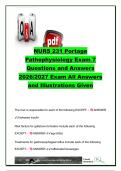
NURS 231 Portage
Pathophysiology Exam 7
Questions and Answers
2026/2027 Exam All Answers
and Illustrations Given


The liver is responsible for each of the following EXCEPT: - ANSWER

✔✔releases insulin


Risk factors for gallstone formation include each of the following

EXCEPT: - ANSWER ✔✔age (60s)


Treatments for gastroesophageal reflux include each of the following

EXCEPT: - ANSWER ✔✔caffeinated beverages

Document information

Uploaded on
August 26, 2026
Number of pages
4
Written in
2026/2027
Type
Exam (elaborations)
Contains
Questions & answers
$18.99

Wrong document? Swap it for free Within 14 days of purchase and before downloading, you can choose a different document. You can simply spend the amount again.
Written by students who passed
Immediately available after payment
Read online or as PDF

Seller avatar
Reputation scores are based on the amount of documents a seller has sold for a fee and the reviews they have received for those documents. There are three levels: Bronze, Silver and Gold. The better the reputation, the more your can rely on the quality of the sellers work.
JOSHCLAY
3.5
(83)
Sold
390
Followers
16
Items
20497
Last sold
1 day ago


Why students choose Stuvia

Created by fellow students, verified by reviews

Quality you can trust: written by students who passed their tests and reviewed by others who've used these notes.

Didn't get what you expected? Choose another document

No worries! You can instantly pick a different document that better fits what you're looking for.

Pay as you like, start learning right away

No subscription, no commitments. Pay the way you're used to via credit card and download your PDF document instantly.

Student with book image

“Bought, downloaded, and aced it. It really can be that simple.”

Alisha Student

Working on your references?

Create accurate citations in APA, MLA and Harvard with our free citation generator.

Working on your references?

Frequently asked questions

