
• Wrong document? Swap it for free
  • Written by students who passed
  • Immediately available after payment
  • Read online or as PDF
Sell
Where do you study
Your language
Document preview thumbnail
Preview 4 out of 368 pages
Exam (elaborations)

CURRENT Medical Diagnosis & Treatment 2026 Test Bank | 700+ Q&A for USMLE & Clinical Mastery

Document preview thumbnail
Preview 4 out of 368 pages

Prepare for the USMLE, shelf exams, and clinical rotations with the most comprehensive and up-to-date question bank available for the 65th Edition of CURRENT Medical Diagnosis & Treatment (CMDT) 2026. This isn't just a collection of questions; it's a powerful study tool designed to solidify your understanding of core medical principles and advanced clinical practice. Test Bank for CURRENT Medical Diagnosis & Treatment 2026/2027, 65th Edition By Maxine A. Papadakis , Michael W. Rabow| Comprehensive Review of 700+ Questions with Verified Answers with Clinical Rationale________________________________________ TABLE OF CONTENTS Chapter Title Question Numbers 1 Disease Prevention & Health Promotion 1–15 2 Common Symptoms 16–30 3 Preoperative Evaluation & Perioperative Management 31–45 4 Geriatric Disorders 46–60 5 Palliative Care & Pain Management 61–75 6 Dermatologic Disorders 76–95 7 Disorders of the Eyes & Lids 96–110 8 Otolaryngology Disorders 111–125 9 Pulmonary Disorders 126–150 10 Coronary Artery Disease, Valvular Disease, & Other Key Topics in Cardiology 151–175 11 Heart Failure & Cardiomyopathy 176–195 12 Disorders of Cardiac Rhythm 196–215 13 Systemic Hypertension 216–235 14 Blood Vessel & Lymphatic Disorders 236–250 15 Blood Disorders 251–270 16 Disorders of Hemostasis, Thrombosis, & Antithrombotic Therapy 271–285 17 Gastrointestinal Disorders 286–310 18 Liver, Biliary Tract, & Pancreas Disorders 311–335 19 Breast Disorders 336–345 20 Women's Health Issues 346–360 21 Gynecologic Disorders 361–375 22 Obstetrics & Obstetric Disorders 376–395 23 Rheumatologic, Immunologic, & Allergic Disorders 396–420 24 Electrolyte & Acid-Base Disorders 421–440 25 Kidney Disease 441–460 26 Urologic Disorders 461–475 27 Nervous System Disorders 476–500 28 Psychiatric Disorders 501–520 29 Disorders of the Pituitary, Thyroid, & Adrenal Glands 521–545 30 Disorders of Parathyroid Glands & Bone Metabolism 546–560 31 Male Hypogonadism & Gynecomastia, Hirsutism & Virilization 561–575 32 Diabetes Mellitus & Hypoglycemia 576–600 33 Lipid Disorders 601–615 34 Nutrition, Nutritional Disorders & Obesity 616–630 35 Common Problems in Infectious Diseases & Antimicrobial Therapy 631–645 36 HIV Infection & AIDS 646–660 37 Viral & Rickettsial Infections 661–675 38 Bacterial & Chlamydial Infections 676–695 39 Spirochetal Infections 696–700 SECTION 1: DISEASE PREVENTION & HEALTH PROMOTION (Questions 1–15) 1. A 55-year-old man with a 30 pack-year smoking history presents for a routine visit. He quit smoking 2 years ago. According to USPSTF guidelines, which screening test is recommended for this patient? A) Annual chest radiograph B) Low-dose CT chest annually for 3 years C) Low-dose CT chest annually until age 80 D) No screening is indicated Correct Answer: B Rationale: The USPSTF recommends annual lung cancer screening with low-dose CT for adults aged 50–80 years who have a 20 pack-year smoking history and currently smoke or have quit within the past 15 years. This patient meets all criteria (age 55, 30 pack-year history, quit 2 years ago). Screening should be discontinued once a person has not smoked for 15 years or develops a health problem that substantially limits life expectancy. Annual screening is recommended for 3 years, with subsequent shared decision-making. DIF: Moderate | KEY: Lung cancer screening, USPSTF guidelines, smoking cessation | MSC: Prevention ________________________________________ 2. A 65-year-old woman with hypertension and diabetes has a blood pressure of 138/86 mmHg. According to current guidelines, what is the most appropriate next step in management? A) Reassure and schedule annual follow-up B) Initiate lifestyle modifications only C) Initiate antihypertensive medication D) Refer to cardiology for further evaluation Correct Answer: C Rationale: For patients with hypertension and diabetes, the blood pressure target is 130/80 mmHg. This patient's BP of 138/86 mmHg is above target. While lifestyle modifications are important, pharmacologic therapy should be initiated when BP remains elevated despite lifestyle measures or when BP is significantly above target. The presence of diabetes further increases cardiovascular risk, making prompt blood pressure control essential. DIF: Moderate | KEY: Hypertension, Diabetes, Blood pressure targets | MSC: Cardiovascular ________________________________________ 3. A 52-year-old man with no known cardiovascular disease asks about aspirin for primary prevention. He has hypertension controlled on medication and a 10-year ASCVD risk of 12%. Which of the following is the most appropriate recommendation? A) Start aspirin 81 mg daily B) Start aspirin 325 mg daily C) Do not start aspirin D) Start aspirin only if he develops diabetes Correct Answer: C Rationale: Current guidelines recommend against routine aspirin use for primary prevention in adults 60 years and recommend individualized decision-making for adults 40–59 years with 10% 10-year CVD risk. However, aspirin is associated with increased bleeding risk, and the net benefit is modest. For this patient, shared decision-making is recommended, but routine aspirin is no longer broadly advised. The most appropriate approach is to discuss risks and benefits and optimize other risk factors. DIF: Moderate | KEY: Aspirin, Primary prevention, Cardiovascular risk | MSC: Prevention 4. A 31-year-old woman at 22 weeks' gestation received Tdap 8 years ago. Which immunization recommendation is appropriate? A) Administer Tdap this pregnancy at 27–36 weeks B) No Tdap needed—prior dose within 10 years is protective C) Give Td booster now; defer Tdap until postpartum D) Give Tdap only if household contacts have pertussis Correct Answer: A Rationale: CMDT emphasizes that Tdap is recommended during each pregnancy, ideally at 27–36 weeks' gestation, regardless of prior immunization history. This maternal immunization strategy optimizes passive antibody transfer to the neonate to protect against pertussis in early infancy. DIF: Easy | KEY: Tdap, Pregnancy immunization, Pertussis prevention | MSC: Obstetrics ________________________________________ 5. A 67-year-old woman with no prior pneumococcal vaccination presents for her annual visit. Which pneumococcal vaccination strategy is recommended? A) PCV13 followed by PPSV23 one year later B) PCV20 alone (one dose) or PCV15 followed by PPSV23 C) No vaccination needed at this age D) PCV13 only Correct Answer: B Rationale: ACIP recommends that adults aged ≥65 years receive either a single dose of PCV20 OR PCV15 followed by PPSV23. This updated recommendation reflects the broader serotype coverage of newer conjugate vaccines and simplifies the vaccination schedule for older adults. DIF: Easy | KEY: Pneumococcal vaccination, ACIP guidelines, Older adults | MSC: Prevention

Content preview

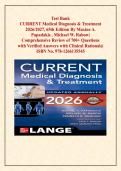
Test Bank
CURRENT Medical Diagnosis & Treatment
2026/2027, 65th Edition By Maxine A.
Papadakis , Michael W. Rabow|
Comprehensive Review of 700+ Questions
with Verified Answers with Clinical Rationale|
ISBN No. 978-1266135545

,Test Bank for CURRENT Medical Diagnosis & Treatment 2026/2027, 65th
Edition By Maxine A. Papadakis , Michael W. Rabow| Comprehensive Review
of 700+ Questions with Verified Answers with Clinical Rationale


TABLE OF CONTENTS

Question
Chapter Title
Numbers

1 Disease Prevention & Health Promotion 1–15

2 Common Symptoms 16–30

3 Preoperative Evaluation & Perioperative Management 31–45

4 Geriatric Disorders 46–60

5 Palliative Care & Pain Management 61–75

6 Dermatologic Disorders 76–95

7 Disorders of the Eyes & Lids 96–110

8 Otolaryngology Disorders 111–125

9 Pulmonary Disorders 126–150

Coronary Artery Disease, Valvular Disease, & Other Key
10 151–175
Topics in Cardiology

11 Heart Failure & Cardiomyopathy 176–195

12 Disorders of Cardiac Rhythm 196–215

13 Systemic Hypertension 216–235

14 Blood Vessel & Lymphatic Disorders 236–250

15 Blood Disorders 251–270

, Question
Chapter Title
Numbers

Disorders of Hemostasis, Thrombosis, & Antithrombotic
16 271–285
Therapy

17 Gastrointestinal Disorders 286–310

18 Liver, Biliary Tract, & Pancreas Disorders 311–335

19 Breast Disorders 336–345

20 Women's Health Issues 346–360

21 Gynecologic Disorders 361–375

22 Obstetrics & Obstetric Disorders 376–395

23 Rheumatologic, Immunologic, & Allergic Disorders 396–420

24 Electrolyte & Acid-Base Disorders 421–440

25 Kidney Disease 441–460

26 Urologic Disorders 461–475

27 Nervous System Disorders 476–500

28 Psychiatric Disorders 501–520

29 Disorders of the Pituitary, Thyroid, & Adrenal Glands 521–545

30 Disorders of Parathyroid Glands & Bone Metabolism 546–560

Male Hypogonadism & Gynecomastia, Hirsutism &
31 561–575
Virilization

32 Diabetes Mellitus & Hypoglycemia 576–600

33 Lipid Disorders 601–615

, Question
Chapter Title
Numbers

34 Nutrition, Nutritional Disorders & Obesity 616–630

Common Problems in Infectious Diseases & Antimicrobial
35 631–645
Therapy

36 HIV Infection & AIDS 646–660

37 Viral & Rickettsial Infections 661–675

38 Bacterial & Chlamydial Infections 676–695

39 Spirochetal Infections 696–700

Connected book
 image
Maxine A. Papadakis, Michael W Rabow, Kenneth R McQuaid, Paul L Nadler, Erika Leemann Price Current Medical Diagnosis & Treatment 2026
Publisher: 2025 ISBN: 9781266135545 Edition: Unknown

Document information

Uploaded on
August 26, 2026
Number of pages
368
Written in
2026/2027
Type
Exam (elaborations)
Contains
Questions & answers
$15.49

Wrong document? Swap it for free Within 14 days of purchase and before downloading, you can choose a different document. You can simply spend the amount again.
Written by students who passed
Immediately available after payment
Read online or as PDF

Seller avatar
Reputation scores are based on the amount of documents a seller has sold for a fee and the reviews they have received for those documents. There are three levels: Bronze, Silver and Gold. The better the reputation, the more your can rely on the quality of the sellers work.
TutorGeoff
3.9
(16)
Sold
85
Followers
2
Items
916
Last sold
14 hours ago


Why students choose Stuvia

Created by fellow students, verified by reviews

Quality you can trust: written by students who passed their tests and reviewed by others who've used these notes.

Didn't get what you expected? Choose another document

No worries! You can instantly pick a different document that better fits what you're looking for.

Pay as you like, start learning right away

No subscription, no commitments. Pay the way you're used to via credit card and download your PDF document instantly.

Student with book image

“Bought, downloaded, and aced it. It really can be that simple.”

Alisha Student

Working on your references?

Create accurate citations in APA, MLA and Harvard with our free citation generator.

Working on your references?

Frequently asked questions
