

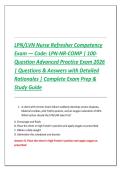
LPN/LVN Nurse Refresher Competency
Exam — Code: LPN-NR-COMP | 100-
Question Advanced Practice Exam 2026
| Questions & Answers with Detailed
Rationales | Complete Exam Prep &
Study Guide
1. A client with chronic heart failure suddenly develops severe dyspnea,
bilateral crackles, pink frothy sputum, and an oxygen saturation of 82%.
Which action should the LPN/LVN take first?
A. Encourage oral fluids
B. Place the client in high-Fowler's position and apply oxygen as prescribed
C. Obtain a daily weight
D. Administer the scheduled oral diuretic
Answer: B. Place the client in high-Fowler's position and apply oxygen as
prescribed
,Rationale: Acute pulmonary edema threatens oxygenation immediately.
Positioning upright improves lung expansion, while supplemental oxygen
supports oxygenation. Oral medications and routine assessments should not
delay stabilization.
2. A client receiving digoxin has an apical pulse of 54/min and reports nausea
and seeing yellow-green halos around lights. What is the priority action?
A. Administer the medication with food
B. Recheck the pulse in 30 minutes
C. Hold the digoxin and notify the RN/provider
D. Encourage potassium-rich foods
Answer: C. Hold the digoxin and notify the RN/provider
Rationale: Bradycardia, gastrointestinal symptoms, and visual disturbances are
classic findings associated with digoxin toxicity. The medication should be
withheld and the client promptly evaluated.
3. A client with diabetes is awake, diaphoretic, shaky, and confused. The
blood glucose is 48 mg/dL. What should the nurse do first?
A. Administer long-acting insulin
B. Give 15 g of rapid-acting carbohydrate
C. Administer glucagon IM immediately
D. Give a high-protein meal
Answer: B. Give 15 g of rapid-acting carbohydrate
Rationale: A conscious client who can safely swallow should receive
approximately 15 g of rapid-acting carbohydrate, followed by reassessment of
glucose. Glucagon is generally reserved for severe hypoglycemia when oral
intake is unsafe.
4. A postoperative client suddenly reports pleuritic chest pain and severe
shortness of breath. The heart rate is 124/min and oxygen saturation is
84%. Which complication should the nurse suspect?
,A. Atelectasis
B. Pulmonary embolism
C. Hypoglycemia
D. Fluid overload
Answer: B. Pulmonary embolism
Rationale: Sudden dyspnea, pleuritic chest pain, tachycardia, and hypoxemia
after surgery are highly concerning for pulmonary embolism and require
immediate intervention and escalation.
5. A client taking warfarin has an INR of 5.8 and reports bleeding gums. Which
action is most appropriate?
A. Administer the next dose early
B. Hold warfarin and notify the RN/provider
C. Encourage increased vitamin K supplements without an order
D. Administer aspirin
Answer: B. Hold warfarin and notify the RN/provider
Rationale: A markedly elevated INR with active bleeding indicates increased
hemorrhage risk. The medication should be held and the prescribing team
notified for further management.
6. A client with COPD is receiving oxygen. Which finding requires the most
immediate attention?
A. Oxygen saturation of 90% consistent with the prescribed target
B. Respiratory rate of 18/min
C. Increasing somnolence with shallow respirations
D. Mild chronic productive cough
Answer: C. Increasing somnolence with shallow respirations
Rationale: New somnolence and hypoventilation may indicate worsening
respiratory failure and carbon dioxide retention. The nurse should immediately
assess airway, breathing, and oxygenation and escalate care.
, 7. A client receiving IV potassium chloride reports burning at the IV site. The
site is swollen and cool. What should the nurse do?
A. Increase the infusion rate
B. Apply pressure and continue the infusion
C. Stop the infusion and assess the IV site
D. Flush the IV rapidly
Answer: C. Stop the infusion and assess the IV site
Rationale: Potassium chloride is highly irritating and can cause serious tissue
injury if infiltration or extravasation occurs. The infusion should be stopped and
the IV assessed according to facility protocol.
8. A client with a new tracheostomy has noisy respirations and visible
secretions obstructing the airway. What is the priority intervention?
A. Offer oral fluids
B. Suction the tracheostomy using appropriate sterile technique
C. Place the client flat
D. Remove the tracheostomy tube
Answer: B. Suction the tracheostomy using appropriate sterile technique
Rationale: Audible secretions and respiratory obstruction indicate the need to
clear the airway. Suctioning should be performed using the appropriate
technique and institutional protocol.
9. A client with chronic kidney disease has potassium 6.7 mEq/L. Which
finding is most concerning?
A. Muscle weakness
B. Peaked T waves on ECG
C. Increased thirst
D. Mild peripheral edema
Answer: B. Peaked T waves on ECG
Exam — Code: LPN-NR-COMP | 100-
Question Advanced Practice Exam 2026
| Questions & Answers with Detailed
Rationales | Complete Exam Prep &
Study Guide
1. A client with chronic heart failure suddenly develops severe dyspnea,
bilateral crackles, pink frothy sputum, and an oxygen saturation of 82%.
Which action should the LPN/LVN take first?
A. Encourage oral fluids
B. Place the client in high-Fowler's position and apply oxygen as prescribed
C. Obtain a daily weight
D. Administer the scheduled oral diuretic
Answer: B. Place the client in high-Fowler's position and apply oxygen as
prescribed
,Rationale: Acute pulmonary edema threatens oxygenation immediately.
Positioning upright improves lung expansion, while supplemental oxygen
supports oxygenation. Oral medications and routine assessments should not
delay stabilization.
2. A client receiving digoxin has an apical pulse of 54/min and reports nausea
and seeing yellow-green halos around lights. What is the priority action?
A. Administer the medication with food
B. Recheck the pulse in 30 minutes
C. Hold the digoxin and notify the RN/provider
D. Encourage potassium-rich foods
Answer: C. Hold the digoxin and notify the RN/provider
Rationale: Bradycardia, gastrointestinal symptoms, and visual disturbances are
classic findings associated with digoxin toxicity. The medication should be
withheld and the client promptly evaluated.
3. A client with diabetes is awake, diaphoretic, shaky, and confused. The
blood glucose is 48 mg/dL. What should the nurse do first?
A. Administer long-acting insulin
B. Give 15 g of rapid-acting carbohydrate
C. Administer glucagon IM immediately
D. Give a high-protein meal
Answer: B. Give 15 g of rapid-acting carbohydrate
Rationale: A conscious client who can safely swallow should receive
approximately 15 g of rapid-acting carbohydrate, followed by reassessment of
glucose. Glucagon is generally reserved for severe hypoglycemia when oral
intake is unsafe.
4. A postoperative client suddenly reports pleuritic chest pain and severe
shortness of breath. The heart rate is 124/min and oxygen saturation is
84%. Which complication should the nurse suspect?
,A. Atelectasis
B. Pulmonary embolism
C. Hypoglycemia
D. Fluid overload
Answer: B. Pulmonary embolism
Rationale: Sudden dyspnea, pleuritic chest pain, tachycardia, and hypoxemia
after surgery are highly concerning for pulmonary embolism and require
immediate intervention and escalation.
5. A client taking warfarin has an INR of 5.8 and reports bleeding gums. Which
action is most appropriate?
A. Administer the next dose early
B. Hold warfarin and notify the RN/provider
C. Encourage increased vitamin K supplements without an order
D. Administer aspirin
Answer: B. Hold warfarin and notify the RN/provider
Rationale: A markedly elevated INR with active bleeding indicates increased
hemorrhage risk. The medication should be held and the prescribing team
notified for further management.
6. A client with COPD is receiving oxygen. Which finding requires the most
immediate attention?
A. Oxygen saturation of 90% consistent with the prescribed target
B. Respiratory rate of 18/min
C. Increasing somnolence with shallow respirations
D. Mild chronic productive cough
Answer: C. Increasing somnolence with shallow respirations
Rationale: New somnolence and hypoventilation may indicate worsening
respiratory failure and carbon dioxide retention. The nurse should immediately
assess airway, breathing, and oxygenation and escalate care.
, 7. A client receiving IV potassium chloride reports burning at the IV site. The
site is swollen and cool. What should the nurse do?
A. Increase the infusion rate
B. Apply pressure and continue the infusion
C. Stop the infusion and assess the IV site
D. Flush the IV rapidly
Answer: C. Stop the infusion and assess the IV site
Rationale: Potassium chloride is highly irritating and can cause serious tissue
injury if infiltration or extravasation occurs. The infusion should be stopped and
the IV assessed according to facility protocol.
8. A client with a new tracheostomy has noisy respirations and visible
secretions obstructing the airway. What is the priority intervention?
A. Offer oral fluids
B. Suction the tracheostomy using appropriate sterile technique
C. Place the client flat
D. Remove the tracheostomy tube
Answer: B. Suction the tracheostomy using appropriate sterile technique
Rationale: Audible secretions and respiratory obstruction indicate the need to
clear the airway. Suctioning should be performed using the appropriate
technique and institutional protocol.
9. A client with chronic kidney disease has potassium 6.7 mEq/L. Which
finding is most concerning?
A. Muscle weakness
B. Peaked T waves on ECG
C. Increased thirst
D. Mild peripheral edema
Answer: B. Peaked T waves on ECG


