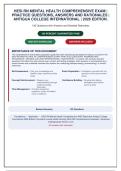
HESI RN MENTAL HEALTH COMPREHENSIVE EXAM |
PRACTICE QUESTIONS, ANSWERS AND RATIONALES |
ANTIGUA COLLEGE INTERNATIONAL | 2026 EDITION.
130 Questions with Answers and Detailed Rationales
100 PERCENT GUARANTEED PASS
INSTANT DOWNLOAD ANSWERS INCLUDED
IMPORTANCE OF THIS DOCUMENT
This comprehensive examination preparation guide has been meticulously developed to help you succeed in the
HESI RN MENTAL HEALTH COMPREHENSIVE EXAM | PRACTICE QUESTIONS, ANSWERS AND
RATIONALES | ANTIGUA COLLEGE INTERNATIONAL | 2026 EDITION.. It contains 130 carefully selected
questions that reflect the most current exam content and testing strategies. Each question is accompanied by a
correct answer and a detailed rationale that explains the underlying pathophysiology, pharmacology, or clinical
reasoning.
Self-Assessment – Test your knowledge and Exam Preparation – Familiarize yourself with the
identify areas requiring further question format and content
study areas
Concept Reinforcement – Deepen your Confidence Building – Develop test-taking
understanding through strategies and reduce
evidence-based exam anxiety
rationales
Time Management – Practice answering
questions under simulated
exam conditions
Review Summary 130 Questions
Foundations - Application - HESI RN Mental Health Comprehensive AND Rationales Antigua College
International 2026 Edition Psychiatric-mental Health Nursing HESI RN Comprehensive Graduate / Advanced
Undergraduate Senior Level
All answers with rationales
,Table of Contents
Content Area Questions Key Topics
Foundations OF Psychiatric 1-22 Disorder, Intervention, Finding, Schizophrenia, History
Mental Health Nursing
Therapeutic Communication 23-44 Disorder, Nursing, Intervention, Appropriate, Finding
AND THE Nurse-client
Relationship
Legal AND Ethical Issues IN 45-66 Disorder, Nursing, Intervention, Prescribed, Indicates
Mental Health Nursing
Psychopharmacology AND 67-88 Disorder, Finding, Prescribed, Indicates, Intervention
Medication Management
Anxiety 89-110 Disorder, Nursing, Laboratory, Finding, Treatment
Obsessive-compulsive AND
Related Disorders
Trauma AND Stressor-related 111-130 Disorder, Intervention, Prescribed, Indicates, Nursing
Disorders
TOTAL 130 All questions include answers and detailed rationales
,Section A - Foundations OF Psychiatric Mental Health
Nursing
Q1.
A patient with schizophrenia who has been stabilized on clozapine for 6 months presents
with new-onset sialorrhea, fever, and tremor. The nurse reviews the medication record and
notes the patient recently began taking fluvoxamine for comorbid obsessive-compulsive
symptoms. Which pathophysiological mechanism best explains this presentation?
A. Clozapine-induced agranulocytosis B. Fluvoxamine inhibition of CYP1A2
leading to systemic infection and fever causing elevated clozapine levels and
toxicity
C. Serotonin syndrome from additive D. Neuroleptic malignant syndrome
serotonergic effects of both medications triggered by the addition of fluvoxamine
Correct: B - Fluvoxamine inhibition of CYP1A2 causing elevated clozapine levels and
toxicity
Rationale:Fluvoxamine is a potent CYP1A2 inhibitor, and clozapine is primarily metabolized
by CYP1A2. Co-administration significantly increases clozapine serum levels, leading to
dose-related toxicity (sialorrhea, fever, tremor). Agranulocytosis typically presents with
infection but not isolated sialorrhea/tremor. Serotonin syndrome is less likely with clozapine's
weak serotonergic activity, and NMS is associated with rapid dose changes of antipsychotics,
not the addition of an SSRI.
Q2.
During a community health screening, a nurse identifies a pattern of repeated emergency
department visits for vague somatic complaints, yet extensive workups reveal no organic
cause. The patient describes a long history of unstable relationships and intense fear of
abandonment. Which cluster of personality disorders best characterizes this
presentation?
A. Cluster A (paranoid, schizoid, B. Cluster B (antisocial, borderline,
schizotypal) histrionic, narcissistic)
C. Cluster C (avoidant, dependent, D. No personality disorder; this is
obsessive-compulsive) malingering for secondary gain
Correct: B - Cluster B (antisocial, borderline, histrionic, narcissistic)
Rationale:Somatic symptom presentation, unstable relationships, and fear of abandonment
are hallmark features of borderline personality disorder, which belongs to Cluster B. Cluster A
involves odd/eccentric behavior; Cluster C involves anxious/fearful patterns. Malingering
requires conscious motivation, which is not evident here.
Page 3
, Section A - Foundations OF Psychiatric Mental Health Nursing
Q3.
A nurse is caring for a patient who is exhibiting signs of severe alcohol withdrawal. The
provider orders a benzodiazepine protocol. Which pharmacokinetic principle most
informs the nurse's selection of a long-acting benzodiazepine (e.g., diazepam) versus a
short-acting one (e.g., lorazepam) in this context?
A. Long-acting agents provide a smoother B. Short-acting agents are preferred due to
withdrawal course due to self-tapering lower risk of respiratory depression
effects
C. Long-acting agents have a faster onset ofD. Short-acting agents are less likely to
action for rapid symptom control accumulate in patients with hepatic
impairment
Correct: A - Long-acting agents provide a smoother withdrawal course due to
self-tapering effects
Rationale:Long-acting benzodiazepines (e.g., diazepam) have active metabolites with long
half-lives, producing a self-tapering effect that reduces withdrawal symptom fluctuations and
seizure risk. Short-acting agents require more frequent dosing and may cause rebound
symptoms. Onset of action is not directly related to duration. While hepatic impairment may
favor short-acting agents, the primary rationale for long-acting is smoother withdrawal.
Q4.
A patient with a history of trauma presents with flashbacks, hypervigilance, and
avoidance. The nurse is planning care using a trauma-informed approach. Which nursing
intervention best exemplifies the core principle of 'safety' in trauma-informed care?
A. Conducting a thorough risk assessment B. Encouraging the patient to discuss
and collaborating with the patient to create a traumatic memories in detail during the first
safety plan session
C. Using physical restraints if the patient D. Referring the patient to a support group
becomes emotionally dysregulated immediately without individual assessment
Correct: A - Conducting a thorough risk assessment and collaborating with the patient to
create a safety plan
Rationale:Trauma-informed care prioritizes physical and emotional safety, which is
operationalized through collaborative risk assessment and safety planning. Encouraging
detailed disclosure prematurely can retraumatize. Restraints are only a last resort and may
retraumatize. Referral without assessment does not ensure safety.
Q5.
A patient is prescribed lithium carbonate. The nurse reviews the medication
administration record and notes the patient also takes an NSAID for chronic pain. Which
laboratory finding would most warrant immediate nursing action?
Page 4
PRACTICE QUESTIONS, ANSWERS AND RATIONALES |
ANTIGUA COLLEGE INTERNATIONAL | 2026 EDITION.
130 Questions with Answers and Detailed Rationales
100 PERCENT GUARANTEED PASS
INSTANT DOWNLOAD ANSWERS INCLUDED
IMPORTANCE OF THIS DOCUMENT
This comprehensive examination preparation guide has been meticulously developed to help you succeed in the
HESI RN MENTAL HEALTH COMPREHENSIVE EXAM | PRACTICE QUESTIONS, ANSWERS AND
RATIONALES | ANTIGUA COLLEGE INTERNATIONAL | 2026 EDITION.. It contains 130 carefully selected
questions that reflect the most current exam content and testing strategies. Each question is accompanied by a
correct answer and a detailed rationale that explains the underlying pathophysiology, pharmacology, or clinical
reasoning.
Self-Assessment – Test your knowledge and Exam Preparation – Familiarize yourself with the
identify areas requiring further question format and content
study areas
Concept Reinforcement – Deepen your Confidence Building – Develop test-taking
understanding through strategies and reduce
evidence-based exam anxiety
rationales
Time Management – Practice answering
questions under simulated
exam conditions
Review Summary 130 Questions
Foundations - Application - HESI RN Mental Health Comprehensive AND Rationales Antigua College
International 2026 Edition Psychiatric-mental Health Nursing HESI RN Comprehensive Graduate / Advanced
Undergraduate Senior Level
All answers with rationales
,Table of Contents
Content Area Questions Key Topics
Foundations OF Psychiatric 1-22 Disorder, Intervention, Finding, Schizophrenia, History
Mental Health Nursing
Therapeutic Communication 23-44 Disorder, Nursing, Intervention, Appropriate, Finding
AND THE Nurse-client
Relationship
Legal AND Ethical Issues IN 45-66 Disorder, Nursing, Intervention, Prescribed, Indicates
Mental Health Nursing
Psychopharmacology AND 67-88 Disorder, Finding, Prescribed, Indicates, Intervention
Medication Management
Anxiety 89-110 Disorder, Nursing, Laboratory, Finding, Treatment
Obsessive-compulsive AND
Related Disorders
Trauma AND Stressor-related 111-130 Disorder, Intervention, Prescribed, Indicates, Nursing
Disorders
TOTAL 130 All questions include answers and detailed rationales
,Section A - Foundations OF Psychiatric Mental Health
Nursing
Q1.
A patient with schizophrenia who has been stabilized on clozapine for 6 months presents
with new-onset sialorrhea, fever, and tremor. The nurse reviews the medication record and
notes the patient recently began taking fluvoxamine for comorbid obsessive-compulsive
symptoms. Which pathophysiological mechanism best explains this presentation?
A. Clozapine-induced agranulocytosis B. Fluvoxamine inhibition of CYP1A2
leading to systemic infection and fever causing elevated clozapine levels and
toxicity
C. Serotonin syndrome from additive D. Neuroleptic malignant syndrome
serotonergic effects of both medications triggered by the addition of fluvoxamine
Correct: B - Fluvoxamine inhibition of CYP1A2 causing elevated clozapine levels and
toxicity
Rationale:Fluvoxamine is a potent CYP1A2 inhibitor, and clozapine is primarily metabolized
by CYP1A2. Co-administration significantly increases clozapine serum levels, leading to
dose-related toxicity (sialorrhea, fever, tremor). Agranulocytosis typically presents with
infection but not isolated sialorrhea/tremor. Serotonin syndrome is less likely with clozapine's
weak serotonergic activity, and NMS is associated with rapid dose changes of antipsychotics,
not the addition of an SSRI.
Q2.
During a community health screening, a nurse identifies a pattern of repeated emergency
department visits for vague somatic complaints, yet extensive workups reveal no organic
cause. The patient describes a long history of unstable relationships and intense fear of
abandonment. Which cluster of personality disorders best characterizes this
presentation?
A. Cluster A (paranoid, schizoid, B. Cluster B (antisocial, borderline,
schizotypal) histrionic, narcissistic)
C. Cluster C (avoidant, dependent, D. No personality disorder; this is
obsessive-compulsive) malingering for secondary gain
Correct: B - Cluster B (antisocial, borderline, histrionic, narcissistic)
Rationale:Somatic symptom presentation, unstable relationships, and fear of abandonment
are hallmark features of borderline personality disorder, which belongs to Cluster B. Cluster A
involves odd/eccentric behavior; Cluster C involves anxious/fearful patterns. Malingering
requires conscious motivation, which is not evident here.
Page 3
, Section A - Foundations OF Psychiatric Mental Health Nursing
Q3.
A nurse is caring for a patient who is exhibiting signs of severe alcohol withdrawal. The
provider orders a benzodiazepine protocol. Which pharmacokinetic principle most
informs the nurse's selection of a long-acting benzodiazepine (e.g., diazepam) versus a
short-acting one (e.g., lorazepam) in this context?
A. Long-acting agents provide a smoother B. Short-acting agents are preferred due to
withdrawal course due to self-tapering lower risk of respiratory depression
effects
C. Long-acting agents have a faster onset ofD. Short-acting agents are less likely to
action for rapid symptom control accumulate in patients with hepatic
impairment
Correct: A - Long-acting agents provide a smoother withdrawal course due to
self-tapering effects
Rationale:Long-acting benzodiazepines (e.g., diazepam) have active metabolites with long
half-lives, producing a self-tapering effect that reduces withdrawal symptom fluctuations and
seizure risk. Short-acting agents require more frequent dosing and may cause rebound
symptoms. Onset of action is not directly related to duration. While hepatic impairment may
favor short-acting agents, the primary rationale for long-acting is smoother withdrawal.
Q4.
A patient with a history of trauma presents with flashbacks, hypervigilance, and
avoidance. The nurse is planning care using a trauma-informed approach. Which nursing
intervention best exemplifies the core principle of 'safety' in trauma-informed care?
A. Conducting a thorough risk assessment B. Encouraging the patient to discuss
and collaborating with the patient to create a traumatic memories in detail during the first
safety plan session
C. Using physical restraints if the patient D. Referring the patient to a support group
becomes emotionally dysregulated immediately without individual assessment
Correct: A - Conducting a thorough risk assessment and collaborating with the patient to
create a safety plan
Rationale:Trauma-informed care prioritizes physical and emotional safety, which is
operationalized through collaborative risk assessment and safety planning. Encouraging
detailed disclosure prematurely can retraumatize. Restraints are only a last resort and may
retraumatize. Referral without assessment does not ensure safety.
Q5.
A patient is prescribed lithium carbonate. The nurse reviews the medication
administration record and notes the patient also takes an NSAID for chronic pain. Which
laboratory finding would most warrant immediate nursing action?
Page 4