
Path 370 Quiz 8 (CH. 44, 45, 47, 51, 52)
Path 370 Quiz 8 (CH. 44, 45, 47, 51, 52)
Study online at https://quizlet.com/_dj0ctb
1. The most common type of os- A. hematogenous.
teomyelitis is
Hematogenous osteomyelitis is the most com-
A. hematogenous. mon type of osteomyelitis. Contiguous focus os-
B. contiguous focus. teomyelitis is not the most common type. Brodie
C. Brodie abscess. abscess is when an infection becomes enclosed
D. direct invasion. by fibrotic tissue. Osteomyelitis may be caused by
a direct invasion of organisms into the bone, but
this is not the most common cause.
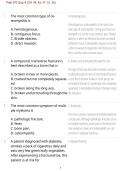
2. A compound, transverse fracture is D. broken and protruding through the skin.
best described as a bone that is
The type of fracture described is broken and pro-
A. broken in two or more pieces. truding through the skin. A comminuted fracture
B. cracked but not completely separat- is one that is broken in two or more pieces. An
ed. incomplete fracture is cracked but not completely
C. broken along the long axis. separated. A longitudinal fracture is broken along
D. broken and protruding through the the long axis.
skin.
3. The most common symptom of multi- C. bone pain.
ple myeloma is
The most common symptom of multiple myeloma
A. pathologic fracture. is bone pain. Although pathologic fractures occur
B. fever. in multiple myeloma, bone pain is the most com-
C. bone pain. mon symptom. Fever and osteomyelitis are not
D. osteomyelitis. common in multiple myeloma.
4. A patient diagnosed with diabetes, A. delayed healing.
smokes a pack of cigarettes daily and
eats very few green leafy vegetables.
After experiencing a fractured toe, this
patient is at risk for
1
, Path 370 Quiz 8 (CH. 44, 45, 47, 51, 52)
Path 370 Quiz 8 (CH. 44, 45, 47, 51, 52)
Study online at https://quizlet.com/_dj0ctb
A. delayed healing.
B. malunion.
C. nonunion.
D. dysunion.
5. The most common site affected in A. lower spine.
Paget's disease is the
The lower spine is the most common site affected
A. lower spine. in Paget's disease. The skull and pelvis are affect-
B. skull. ed, but are not the most common sites. Joints are
C. pelvis. not affected in Paget's disease.
D. joints.
6. Ankylosing spondylitis is characterized A. inflammation, stiffness, and fusion of spinal
by joints.
A. inflammation, stiffness, and fusion Ankylosing spondylitis is characterized by inflam-
of spinal joints. mation, stiffness, and fusion of spinal joints.
Osteoarthritis involves loss of articular cartilage
B. loss of articular cartilage in in weight-bearing joints. Paget's disease in-
weight-bearing joints. volves excessive bone remodeling leading to soft
bone. RA involves immune mechanisms leading
C. excessive bone remodeling leading
to widespread joint inflammation.
to soft bone.
D. immune mechanisms leading to
widespread joint inflammation.
7. Healing of a fractured bone with a A. malunion.
poor alignment is called
A. malunion.
B. nonunion.
2
, Path 370 Quiz 8 (CH. 44, 45, 47, 51, 52)
Path 370 Quiz 8 (CH. 44, 45, 47, 51, 52)
Study online at https://quizlet.com/_dj0ctb
C. disunion.
D. delayed union.
8. The chief pathologic features of os- C. degeneration of articular cartilage, destruction
teoarthritis are of the bone under the cartilage, and thickening of
the synovium.
A. stress fractures of the epiphysis, in-
flammation of the diaphysis, and accu-
mulation of excessive synovial fluid.
B. autoimmune damage to the synovi-
um, destruction of articular cartilage
by pannus, and thickening of synovial
fluid.
C. degeneration of articular cartilage,
destruction of the bone under the car-
tilage, and thickening of the synovi-
um.
D. thinning of the joint capsule, re-
sorption of bone, excessive formation
of new bone, and formation of bone
spurs.
9. Ankylosing spondylitis causes A. intervertebral joint fusion.
A. intervertebral joint fusion.
B. instability of synovial joints.
C. costal cartilage degeneration.
D. temporomandibular joint degener-
ation.
3
, Path 370 Quiz 8 (CH. 44, 45, 47, 51, 52)
Path 370 Quiz 8 (CH. 44, 45, 47, 51, 52)
Study online at https://quizlet.com/_dj0ctb
10. A laboratory test result that helps con- C. positive antinuclear antibodies.
firm the diagnosis of systemic lupus
erythematosus (SLE) is
A. elevated serum calcium level.
B. elevated monoclonal antibody titer.
C. positive antinuclear antibodies.
D. positive microsomal antibodies.
11. Rheumatoid arthritis is common- B. an autoimmune process.
ly associated with the presence of
rheumatoid factor autoantibodies in
the bloodstream. This indicates that
rheumatoid arthritis is likely to be
A. caused by bacterial infection.
B. an autoimmune process.
C. an infective process.
D. because of an enzymatic defect.
12. "Tell me again the name of that chem- C. uric acid.
ical that makes crystals when my gout
flares up," asks the client. The nurse's
best response is
A. calcium phosphate.
B. urea.
C. uric acid.
D. beta-hydroxybutyric acid.
13. The earliest manifestation of sclero- D. Raynaud phenomenon.
derma is
4
Path 370 Quiz 8 (CH. 44, 45, 47, 51, 52)
Study online at https://quizlet.com/_dj0ctb
1. The most common type of os- A. hematogenous.
teomyelitis is
Hematogenous osteomyelitis is the most com-
A. hematogenous. mon type of osteomyelitis. Contiguous focus os-
B. contiguous focus. teomyelitis is not the most common type. Brodie
C. Brodie abscess. abscess is when an infection becomes enclosed
D. direct invasion. by fibrotic tissue. Osteomyelitis may be caused by
a direct invasion of organisms into the bone, but
this is not the most common cause.
2. A compound, transverse fracture is D. broken and protruding through the skin.
best described as a bone that is
The type of fracture described is broken and pro-
A. broken in two or more pieces. truding through the skin. A comminuted fracture
B. cracked but not completely separat- is one that is broken in two or more pieces. An
ed. incomplete fracture is cracked but not completely
C. broken along the long axis. separated. A longitudinal fracture is broken along
D. broken and protruding through the the long axis.
skin.
3. The most common symptom of multi- C. bone pain.
ple myeloma is
The most common symptom of multiple myeloma
A. pathologic fracture. is bone pain. Although pathologic fractures occur
B. fever. in multiple myeloma, bone pain is the most com-
C. bone pain. mon symptom. Fever and osteomyelitis are not
D. osteomyelitis. common in multiple myeloma.
4. A patient diagnosed with diabetes, A. delayed healing.
smokes a pack of cigarettes daily and
eats very few green leafy vegetables.
After experiencing a fractured toe, this
patient is at risk for
1
, Path 370 Quiz 8 (CH. 44, 45, 47, 51, 52)
Path 370 Quiz 8 (CH. 44, 45, 47, 51, 52)
Study online at https://quizlet.com/_dj0ctb
A. delayed healing.
B. malunion.
C. nonunion.
D. dysunion.
5. The most common site affected in A. lower spine.
Paget's disease is the
The lower spine is the most common site affected
A. lower spine. in Paget's disease. The skull and pelvis are affect-
B. skull. ed, but are not the most common sites. Joints are
C. pelvis. not affected in Paget's disease.
D. joints.
6. Ankylosing spondylitis is characterized A. inflammation, stiffness, and fusion of spinal
by joints.
A. inflammation, stiffness, and fusion Ankylosing spondylitis is characterized by inflam-
of spinal joints. mation, stiffness, and fusion of spinal joints.
Osteoarthritis involves loss of articular cartilage
B. loss of articular cartilage in in weight-bearing joints. Paget's disease in-
weight-bearing joints. volves excessive bone remodeling leading to soft
bone. RA involves immune mechanisms leading
C. excessive bone remodeling leading
to widespread joint inflammation.
to soft bone.
D. immune mechanisms leading to
widespread joint inflammation.
7. Healing of a fractured bone with a A. malunion.
poor alignment is called
A. malunion.
B. nonunion.
2
, Path 370 Quiz 8 (CH. 44, 45, 47, 51, 52)
Path 370 Quiz 8 (CH. 44, 45, 47, 51, 52)
Study online at https://quizlet.com/_dj0ctb
C. disunion.
D. delayed union.
8. The chief pathologic features of os- C. degeneration of articular cartilage, destruction
teoarthritis are of the bone under the cartilage, and thickening of
the synovium.
A. stress fractures of the epiphysis, in-
flammation of the diaphysis, and accu-
mulation of excessive synovial fluid.
B. autoimmune damage to the synovi-
um, destruction of articular cartilage
by pannus, and thickening of synovial
fluid.
C. degeneration of articular cartilage,
destruction of the bone under the car-
tilage, and thickening of the synovi-
um.
D. thinning of the joint capsule, re-
sorption of bone, excessive formation
of new bone, and formation of bone
spurs.
9. Ankylosing spondylitis causes A. intervertebral joint fusion.
A. intervertebral joint fusion.
B. instability of synovial joints.
C. costal cartilage degeneration.
D. temporomandibular joint degener-
ation.
3
, Path 370 Quiz 8 (CH. 44, 45, 47, 51, 52)
Path 370 Quiz 8 (CH. 44, 45, 47, 51, 52)
Study online at https://quizlet.com/_dj0ctb
10. A laboratory test result that helps con- C. positive antinuclear antibodies.
firm the diagnosis of systemic lupus
erythematosus (SLE) is
A. elevated serum calcium level.
B. elevated monoclonal antibody titer.
C. positive antinuclear antibodies.
D. positive microsomal antibodies.
11. Rheumatoid arthritis is common- B. an autoimmune process.
ly associated with the presence of
rheumatoid factor autoantibodies in
the bloodstream. This indicates that
rheumatoid arthritis is likely to be
A. caused by bacterial infection.
B. an autoimmune process.
C. an infective process.
D. because of an enzymatic defect.
12. "Tell me again the name of that chem- C. uric acid.
ical that makes crystals when my gout
flares up," asks the client. The nurse's
best response is
A. calcium phosphate.
B. urea.
C. uric acid.
D. beta-hydroxybutyric acid.
13. The earliest manifestation of sclero- D. Raynaud phenomenon.
derma is
4


