
PATH 370 quiz 1
PATH 370 quiz 1
Study online at https://quizlet.com/_fayl0u
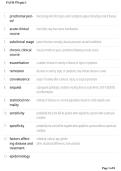
1. prodromal peri- time during which first signs and/or symptoms appear indicating onset of disease
od
2. acute clinical short-lived; may have severe manifestation
course
3. subclinical stage patient functions normally; disease processes are well established
4. chronic clinical may last months to years, sometimes following an acute course
course
5. exacerbation a sudden increase in severity of disease or signs or symptoms
6. remission decrease in severity, signs, or symptoms; may indicate disease is cured
7. convalesence stage of recovery after a disease, injury, or surgical procedure
8. sequela subsequent pathologic condition resulting from an acute illness, NOT A DISEASE
ex) inflammation
9. statistical nor- estimate of diseases in a normal population, based on a bell-shaped curve
mality
10. sensitivity probability that a test will be positive when applied to a person with a particular
condition
11. specificity probability that a test will be negative when applied to a person without a particular
condition
12. factors affect- individual: cultural, age, gender
ing disease and other: situational differences, time variations
treatment
13. epidemiology
1/8
Page 1 of 8
, PATH 370 quiz 1
PATH 370 quiz 1
Study online at https://quizlet.com/_fayl0u
study of the patterns of disease involving populations; examining the occurrence,
incidence, prevalence, transmission, and distribution of diseases in large groups
of populations/people
14. endemic native to a local region
15. epidemic spread to many people at the same time
16. pandemic spread to large geographic areas
17. homeostasis a state in which all systems are in balance, a state of equilibrium, ideal set point
despite alterations in body
18. allostasis ability to successfully adapt to changes, intricate regulatory process orchestrated
by the brain, dynamic PROCESS that maintains or re-establishes homeostasis in
light of environmental and lifestyle changes
19. stress/stressor physical, chemical, or emotional factor resulting in tension of body or mind. may
be external or internal
20. general adaption alarm, resistance, exhaustion
syndrome (GAS)
21. alarm fight or flight response due to stressful stimulus, hypothalamic-pituitary adrenal
(HPA) axis
22. resistance/adap- activity of the nervous system and endocrine systems in returning the body to
tation homeostasis
23. exhasution point where the body CANNOT return to homeostasis
allostatic overload: cost of body's organs and tissues for an ineffectively regulated
allostatic response
24. mediates the fight or flight response
2/8
Page 2 of 8
PATH 370 quiz 1
Study online at https://quizlet.com/_fayl0u
1. prodromal peri- time during which first signs and/or symptoms appear indicating onset of disease
od
2. acute clinical short-lived; may have severe manifestation
course
3. subclinical stage patient functions normally; disease processes are well established
4. chronic clinical may last months to years, sometimes following an acute course
course
5. exacerbation a sudden increase in severity of disease or signs or symptoms
6. remission decrease in severity, signs, or symptoms; may indicate disease is cured
7. convalesence stage of recovery after a disease, injury, or surgical procedure
8. sequela subsequent pathologic condition resulting from an acute illness, NOT A DISEASE
ex) inflammation
9. statistical nor- estimate of diseases in a normal population, based on a bell-shaped curve
mality
10. sensitivity probability that a test will be positive when applied to a person with a particular
condition
11. specificity probability that a test will be negative when applied to a person without a particular
condition
12. factors affect- individual: cultural, age, gender
ing disease and other: situational differences, time variations
treatment
13. epidemiology
1/8
Page 1 of 8
, PATH 370 quiz 1
PATH 370 quiz 1
Study online at https://quizlet.com/_fayl0u
study of the patterns of disease involving populations; examining the occurrence,
incidence, prevalence, transmission, and distribution of diseases in large groups
of populations/people
14. endemic native to a local region
15. epidemic spread to many people at the same time
16. pandemic spread to large geographic areas
17. homeostasis a state in which all systems are in balance, a state of equilibrium, ideal set point
despite alterations in body
18. allostasis ability to successfully adapt to changes, intricate regulatory process orchestrated
by the brain, dynamic PROCESS that maintains or re-establishes homeostasis in
light of environmental and lifestyle changes
19. stress/stressor physical, chemical, or emotional factor resulting in tension of body or mind. may
be external or internal
20. general adaption alarm, resistance, exhaustion
syndrome (GAS)
21. alarm fight or flight response due to stressful stimulus, hypothalamic-pituitary adrenal
(HPA) axis
22. resistance/adap- activity of the nervous system and endocrine systems in returning the body to
tation homeostasis
23. exhasution point where the body CANNOT return to homeostasis
allostatic overload: cost of body's organs and tissues for an ineffectively regulated
allostatic response
24. mediates the fight or flight response
2/8
Page 2 of 8


