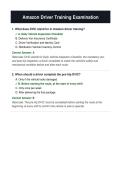
Amazon Driver Training Examination
1. What does DVIC stand for in Amazon driver training?
✓ A. Daily Vehicle Inspection Checklist
B. Delivery Van Insurance Certificate
C. Driver Verification and Identity Card
D. Distribution Vehicle Inventory Control
Correct Answer: A
Rationale: DVIC stands for Daily Vehicle Inspection Checklist, the mandatory pre-
and post-trip inspection a driver completes to check the vehicle's safety and
mechanical condition before and after each route.
2. When should a driver complete the pre-trip DVIC?
A. Only if the vehicle looks damaged
✓ B. Before starting the route, at the start of every shift
C. Only once per week
D. After delivering the first package
Correct Answer: B
Rationale: The pre-trip DVIC must be completed before starting the route at the
beginning of every shift to confirm the vehicle is safe to operate.
,3. During the pre-trip inspection, what should a driver check regarding
tires?
A. Only the spare tire
✓ B. Tread depth, visible damage, and proper inflation
C. Tire brand only
D. Nothing, tires are checked only at the depot
Correct Answer: B
Rationale: Drivers should visually inspect tires for adequate tread depth, cuts, bulges,
or other damage, and confirm they appear properly inflated, since tire failure is a
major cause of roadside incidents.
4. What is the correct first action if a driver discovers a mechanical issue
during the pre-trip inspection?
✓ A. Report the issue immediately and do not operate the vehicle until it is
resolved
B. Ignore it if the route is short
C. Attempt to repair it themselves without authorization
D. Wait until the end of the route to report it
Correct Answer: A
Rationale: Any mechanical issue found during inspection must be reported
immediately, and the vehicle should not be driven until the issue is addressed, to
prevent unsafe operation on the road.
,5. What is the purpose of wearing a seatbelt at all times while the vehicle
is in motion?
A. It is optional for short delivery stops
✓ B. It significantly reduces the risk of serious injury in a collision and is
required by policy and law
C. It only matters on highways
D. It is only required for the first ten minutes of the route
Correct Answer: B
Rationale: Seatbelts are required at all times the vehicle is moving because they
substantially reduce the risk of serious injury or death in the event of a collision, and
this is both a legal and company safety requirement.
6. What does the term 'distracted driving' refer to in Amazon safety
training?
✓ A. Any activity that takes attention away from driving, such as texting,
eating, or adjusting the handheld device while moving
B. Only talking to a passenger
C. Only using the radio
D. Driving during daylight hours
Correct Answer: A
Rationale: Distracted driving includes any activity that diverts visual, manual, or
cognitive attention from the primary task of driving, such as texting, eating, or
interacting with a mobile device while the vehicle is in motion.
, 7. When should a driver interact with the handheld delivery device (e.g.,
checking the next stop)?
A. While driving, to save time
✓ B. Only while the vehicle is safely parked
C. While at a stop sign
D. While merging onto the highway
Correct Answer: B
Rationale: Drivers should only interact with the handheld device while the vehicle is
safely parked, never while driving, to avoid distracted driving and reduce collision risk.
8. What is the recommended following distance behind another vehicle
under normal driving conditions?
A. As close as possible to save time
✓ B. At least a 3-second following distance, increased in poor weather or
heavy traffic
C. 1 car length regardless of speed
D. There is no recommended following distance
Correct Answer: B
Rationale: A minimum 3-second following distance allows adequate time to react and
stop safely; this distance should be increased in adverse weather, heavy traffic, or
when driving a fully loaded van.
1. What does DVIC stand for in Amazon driver training?
✓ A. Daily Vehicle Inspection Checklist
B. Delivery Van Insurance Certificate
C. Driver Verification and Identity Card
D. Distribution Vehicle Inventory Control
Correct Answer: A
Rationale: DVIC stands for Daily Vehicle Inspection Checklist, the mandatory pre-
and post-trip inspection a driver completes to check the vehicle's safety and
mechanical condition before and after each route.
2. When should a driver complete the pre-trip DVIC?
A. Only if the vehicle looks damaged
✓ B. Before starting the route, at the start of every shift
C. Only once per week
D. After delivering the first package
Correct Answer: B
Rationale: The pre-trip DVIC must be completed before starting the route at the
beginning of every shift to confirm the vehicle is safe to operate.
,3. During the pre-trip inspection, what should a driver check regarding
tires?
A. Only the spare tire
✓ B. Tread depth, visible damage, and proper inflation
C. Tire brand only
D. Nothing, tires are checked only at the depot
Correct Answer: B
Rationale: Drivers should visually inspect tires for adequate tread depth, cuts, bulges,
or other damage, and confirm they appear properly inflated, since tire failure is a
major cause of roadside incidents.
4. What is the correct first action if a driver discovers a mechanical issue
during the pre-trip inspection?
✓ A. Report the issue immediately and do not operate the vehicle until it is
resolved
B. Ignore it if the route is short
C. Attempt to repair it themselves without authorization
D. Wait until the end of the route to report it
Correct Answer: A
Rationale: Any mechanical issue found during inspection must be reported
immediately, and the vehicle should not be driven until the issue is addressed, to
prevent unsafe operation on the road.
,5. What is the purpose of wearing a seatbelt at all times while the vehicle
is in motion?
A. It is optional for short delivery stops
✓ B. It significantly reduces the risk of serious injury in a collision and is
required by policy and law
C. It only matters on highways
D. It is only required for the first ten minutes of the route
Correct Answer: B
Rationale: Seatbelts are required at all times the vehicle is moving because they
substantially reduce the risk of serious injury or death in the event of a collision, and
this is both a legal and company safety requirement.
6. What does the term 'distracted driving' refer to in Amazon safety
training?
✓ A. Any activity that takes attention away from driving, such as texting,
eating, or adjusting the handheld device while moving
B. Only talking to a passenger
C. Only using the radio
D. Driving during daylight hours
Correct Answer: A
Rationale: Distracted driving includes any activity that diverts visual, manual, or
cognitive attention from the primary task of driving, such as texting, eating, or
interacting with a mobile device while the vehicle is in motion.
, 7. When should a driver interact with the handheld delivery device (e.g.,
checking the next stop)?
A. While driving, to save time
✓ B. Only while the vehicle is safely parked
C. While at a stop sign
D. While merging onto the highway
Correct Answer: B
Rationale: Drivers should only interact with the handheld device while the vehicle is
safely parked, never while driving, to avoid distracted driving and reduce collision risk.
8. What is the recommended following distance behind another vehicle
under normal driving conditions?
A. As close as possible to save time
✓ B. At least a 3-second following distance, increased in poor weather or
heavy traffic
C. 1 car length regardless of speed
D. There is no recommended following distance
Correct Answer: B
Rationale: A minimum 3-second following distance allows adequate time to react and
stop safely; this distance should be increased in adverse weather, heavy traffic, or
when driving a fully loaded van.