

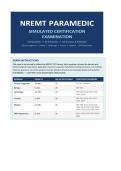
150 Questions • All 6 Domains • Full Answers & Rationales
Clinical Judgment step where applicable. Read every question fully before looking at choices. For multiple-
response questions, all correct answers must be selected. Answers and rationales follow each question
DOMAIN EXAM % Qs IN THIS EXAM QUESTION NUMBERS
Clinical Judgment 34–38% 35 Q1–Q15, scattered
Airway 8–12% 20 Q16–Q35
Cardiology 10–14% 20 Q36–Q50, Q122, Q129, Q136,
Q142, Q148
Trauma 6–10% 20 Q51–Q63, Q123, Q131, Q137,
Q143, Q144
Medical 24–28% 45 Q64–Q90, Q121, Q124, Q126,
Q128, Q130, Q134, Q135, Q138-
Q141, Q145, Q147, Q149, Q150
EMS Operations 8–12% 10 Q111–Q120, Q125, Q132, Q140,
Q146
,ClinicalJudgmentDomain rt rt
Q1. r t [Clinical Judgment — CJ Step 1] rt rt rt rt rt
unresponsive. The time is 1430. Response time is 8 minutes. A rt rt rt rt rt rt rt rt rt rt rt
BLS engine crew is also responding. The temperature outside is 28°F (-2°C).
rt rt rt rt rt rt rt rt rt rt rt
Which of the following en route information items should the paramedic prioritize for response and scene
rt rt rt rt rt rt rt rt rt rt rt rt rt rt rt rt
readiness?
A. Time of the call and day of the week
rt rt rt rt rt rt rt rt
B. BLS engine crew availability and cold environmental temperature
rt rt rt rt rt rt rt
C. Thepatient's name andemployercontactinformation
rt rt rt rt rt rt
D. Number of coworkers present in the building rt rt rt rt rt rt
temperature raises the possibility of environmental exposure as a contributing factor to collapse. Both of thes
rt rt rt rt rt rt rt rt rt rt rt rt rt rt rt
e items are actionable and clinically relevant before you arrive.
rt rt rt rt rt rt rt rt rt
actionable. C — rt rt
rt Patient name and employer contact do not change your clinical approach en route. D —
rt rt rt rt rt rt rt rt rt rt rt rt rt rt
rt
Q2. r t [Clinical Judgment — CJ Step 2] rt rt rt rt rt
6/min and shallow. Sp rt rt rt
O2 is 82% on room air. Pupils are 1 mm bilaterally and non-reactive. Bystanders report he was with friends earlier.
rt rt rt rt rt rt rt rt rt rt rt rt rt rt rt rt rt rt rt
Which two findings most strongly support a differential diagnosis of opioid to\idrome in this patient?
rt rt rt rt rt rt rt rt rt rt rt rt rt rt
A. Pale, diaphoretic skin and SpO2 of 82%
rt rt rt rt rt rt
B. Pinpoint (1 mm) pupils and respiratory rate of 6/min rt rt rt rt rt rt rt rt
C. Age of 28 and outdoor location
rt rt rt rt rt
D. Skin pallor and unresponsiveness
rt rt rt
WHY Pinpoint (miotic) pupils are the hallmark of opioid toxicity due to stimulation of the Edi
rt rt rt r t rt r t r t rt rt r t r t rt rt r t rt
nger-Westphal nucleus via mu-receptor activation. A respiratory rate of 6/min reflects opioid- rt rt rt rt rt rt rt rt rt rt rt
induced central respiratory depression. Together, these two findings form the classic opioid toxidrome. Th
rt rt rt rt rt rt rt rt rt rt rt rt rt
e other findings (pale skin, low SpO2, altered mental status) are non-specific consequences of the hypoxia.
rt rt rt rt rt rt rt rt rt rt rt rt rt rt rt
,Q3. r t [Clinical Judgment — CJ Step 3] rt rt rt rt rt
Scene: A 60-kilogram, 67-year- rt rt rt
old female is found confused in her kitchen. She has a history of Type 2 diabetes and
rt rt rt rt rt rt rt rt rt rt rt rt rt rt rt rt rt
scheduled procedure. BGL is 38 mg/dL. rt rt rt rt rt rt
Skin is diaphoretic and cool. HR is 118. BP is 142/88.
rt rt rt rt rt rt rt rt rt rt
Based on the patient's findings, which condition should the paramedic rank as the most probable diagnosis?
rt rt rt rt rt rt rt rt rt rt rt rt rt rt rt
A. Hypertensive emergency rt
B. Hypoglycemia
C. Ischemic stroke rt
D. Septic shock rt
otherwise. Glipi rt
zide stimulates insulin secretion regardless of glucose level and is a common cause of hypoglycemia in elderl
rt rt rt rt rt rt rt rt rt rt rt rt rt rt rt rt
y diabetics. The BP elevation is a compensatory sympathetic response to
rt rt rt rt rt rt rt rt rt rt rt
before attributing AMS to stroke. D —
rt rt rt rt rt rt
rt Septic shock would present with fever, hypotension, and signs of
rt rt rt rt rt rt rt rt rt rt
Q4. r t [Clinical Judgment — CJ Step 4] rt rt rt rt rt
Post Scene: A 67-year-
rt rt rt
old female with confirmed hypoglycemia received 25 g of D50 IV. She is now more alert but still confused. Repeat BGL is 58 m
rt rt rt rt rt rt rt rt rt rt rt rt rt rt rt rt rt rt rt rt rt rt rt
g/dL.ShepulledoutherIVline.TheparamediccannotreestablishIVaccess.
Which treatment should the paramedic generate as the most appropriate first-line solution for this patient?
rt rt rt rt rt rt rt rt rt rt rt rt rt rt
A. Administer oral glucose tablets rt rt rt
B. Administer glucagon 1 mg intramuscularly rt rt rt rt
C. Establish an intraosseous line and repeat D50 rt rt rt rt rt rt
D. Contact medical control to withhold further treatment rt rt rt rt rt rt
, WHY CORRECT: When IV access is unavailable and the patient cannot safely swallow (still confused
r t r t r t r t r t r t r t r t r t r t r t r t r t r t
glycogenoly
sis to raise blood glucose. This is the appropriate route-
rt rt rt rt rt rt rt rt rt
alternative when IV/IO access is not rt rt rt rt rt rt
consciousness sufficient to prevent aspiration. rt rt rt rt rt
Confusion contraindicates this route. C — rt rt rt rt rt
IO access is an
rt rt rt rt rt
intervention should come first. D — rt rt rt rt rt
Q5. r t [Clinical Judgment — CJ Step 5] rt rt rt rt rt
Post Scene: A 34-year-
rt rt rt
old male was treated for hypoglycemia with D50. His BGL rose to 120 mg/dL and his mental
rt rt rt rt rt rt rt rt rt rt rt rt rt rt rt rt rt
Vital signs: rt rt 90/60, rt 138, 22, rt
SpO2 94%.
rt shows sinus tachycardia.
rt is 46 mg/dL. rt rt rt rt rt rt
Because of the changes in the patient's condition, which two actions would be most beneficial at this time?
rt rt rt rt rt rt rt rt rt rt rt rt rt rt rt rt rt
A. Applya12-leadECGandadminister aspirin rt rt rt rt rt rt
B. Administer glucagon 1 mg IM and establish IV access r t r t rt rt rt rt r t r t
C. Apply a non-rebreather mask and monitor
rt rt rt rt rt
D. Contact medical control for transport diversion rt rt rt rt rt
attempting IV access (or IO if needed) allows repeat D50 adm
rt rt rt rt rt rt rt rt rt rt
inistration. Both actions directly address rt rt rt rt rt
Q6. r t [Clinical Judgment — CJ Step 6] rt rt rt rt rt
Post Scene: A 55-year-
rt rt rt
old female with anaphylaxis received epinephrine 0.3 mg IM, diphenhydramine 50 mg IV, and 1 L NS.At time of treatment:
rt rt rt rt rt rt rt rt rt rt rt rt rt rt rt rt rt rt rt rt rt
BP72/40,HR148,SpO288%,hives,stridor.Theparamedicperformsreassessment.
Which two changes would indicate the patient's condition is improving after treatment?
rt rt rt rt rt rt rt rt rt rt rt
A. Heart rate increases to 160 and stridor resolves
rt rt rt rt rt rt rt
B. Blood pressure increases to 98/60 and stridor resolves
rt rt rt rt rt rt rt
C. Hives spread to the trunk and respiratory rate increases to 28
rt rt rt rt rt rt rt rt rt rt
Clinical Judgment step where applicable. Read every question fully before looking at choices. For multiple-
response questions, all correct answers must be selected. Answers and rationales follow each question
DOMAIN EXAM % Qs IN THIS EXAM QUESTION NUMBERS
Clinical Judgment 34–38% 35 Q1–Q15, scattered
Airway 8–12% 20 Q16–Q35
Cardiology 10–14% 20 Q36–Q50, Q122, Q129, Q136,
Q142, Q148
Trauma 6–10% 20 Q51–Q63, Q123, Q131, Q137,
Q143, Q144
Medical 24–28% 45 Q64–Q90, Q121, Q124, Q126,
Q128, Q130, Q134, Q135, Q138-
Q141, Q145, Q147, Q149, Q150
EMS Operations 8–12% 10 Q111–Q120, Q125, Q132, Q140,
Q146
,ClinicalJudgmentDomain rt rt
Q1. r t [Clinical Judgment — CJ Step 1] rt rt rt rt rt
unresponsive. The time is 1430. Response time is 8 minutes. A rt rt rt rt rt rt rt rt rt rt rt
BLS engine crew is also responding. The temperature outside is 28°F (-2°C).
rt rt rt rt rt rt rt rt rt rt rt
Which of the following en route information items should the paramedic prioritize for response and scene
rt rt rt rt rt rt rt rt rt rt rt rt rt rt rt rt
readiness?
A. Time of the call and day of the week
rt rt rt rt rt rt rt rt
B. BLS engine crew availability and cold environmental temperature
rt rt rt rt rt rt rt
C. Thepatient's name andemployercontactinformation
rt rt rt rt rt rt
D. Number of coworkers present in the building rt rt rt rt rt rt
temperature raises the possibility of environmental exposure as a contributing factor to collapse. Both of thes
rt rt rt rt rt rt rt rt rt rt rt rt rt rt rt
e items are actionable and clinically relevant before you arrive.
rt rt rt rt rt rt rt rt rt
actionable. C — rt rt
rt Patient name and employer contact do not change your clinical approach en route. D —
rt rt rt rt rt rt rt rt rt rt rt rt rt rt
rt
Q2. r t [Clinical Judgment — CJ Step 2] rt rt rt rt rt
6/min and shallow. Sp rt rt rt
O2 is 82% on room air. Pupils are 1 mm bilaterally and non-reactive. Bystanders report he was with friends earlier.
rt rt rt rt rt rt rt rt rt rt rt rt rt rt rt rt rt rt rt
Which two findings most strongly support a differential diagnosis of opioid to\idrome in this patient?
rt rt rt rt rt rt rt rt rt rt rt rt rt rt
A. Pale, diaphoretic skin and SpO2 of 82%
rt rt rt rt rt rt
B. Pinpoint (1 mm) pupils and respiratory rate of 6/min rt rt rt rt rt rt rt rt
C. Age of 28 and outdoor location
rt rt rt rt rt
D. Skin pallor and unresponsiveness
rt rt rt
WHY Pinpoint (miotic) pupils are the hallmark of opioid toxicity due to stimulation of the Edi
rt rt rt r t rt r t r t rt rt r t r t rt rt r t rt
nger-Westphal nucleus via mu-receptor activation. A respiratory rate of 6/min reflects opioid- rt rt rt rt rt rt rt rt rt rt rt
induced central respiratory depression. Together, these two findings form the classic opioid toxidrome. Th
rt rt rt rt rt rt rt rt rt rt rt rt rt
e other findings (pale skin, low SpO2, altered mental status) are non-specific consequences of the hypoxia.
rt rt rt rt rt rt rt rt rt rt rt rt rt rt rt
,Q3. r t [Clinical Judgment — CJ Step 3] rt rt rt rt rt
Scene: A 60-kilogram, 67-year- rt rt rt
old female is found confused in her kitchen. She has a history of Type 2 diabetes and
rt rt rt rt rt rt rt rt rt rt rt rt rt rt rt rt rt
scheduled procedure. BGL is 38 mg/dL. rt rt rt rt rt rt
Skin is diaphoretic and cool. HR is 118. BP is 142/88.
rt rt rt rt rt rt rt rt rt rt
Based on the patient's findings, which condition should the paramedic rank as the most probable diagnosis?
rt rt rt rt rt rt rt rt rt rt rt rt rt rt rt
A. Hypertensive emergency rt
B. Hypoglycemia
C. Ischemic stroke rt
D. Septic shock rt
otherwise. Glipi rt
zide stimulates insulin secretion regardless of glucose level and is a common cause of hypoglycemia in elderl
rt rt rt rt rt rt rt rt rt rt rt rt rt rt rt rt
y diabetics. The BP elevation is a compensatory sympathetic response to
rt rt rt rt rt rt rt rt rt rt rt
before attributing AMS to stroke. D —
rt rt rt rt rt rt
rt Septic shock would present with fever, hypotension, and signs of
rt rt rt rt rt rt rt rt rt rt
Q4. r t [Clinical Judgment — CJ Step 4] rt rt rt rt rt
Post Scene: A 67-year-
rt rt rt
old female with confirmed hypoglycemia received 25 g of D50 IV. She is now more alert but still confused. Repeat BGL is 58 m
rt rt rt rt rt rt rt rt rt rt rt rt rt rt rt rt rt rt rt rt rt rt rt
g/dL.ShepulledoutherIVline.TheparamediccannotreestablishIVaccess.
Which treatment should the paramedic generate as the most appropriate first-line solution for this patient?
rt rt rt rt rt rt rt rt rt rt rt rt rt rt
A. Administer oral glucose tablets rt rt rt
B. Administer glucagon 1 mg intramuscularly rt rt rt rt
C. Establish an intraosseous line and repeat D50 rt rt rt rt rt rt
D. Contact medical control to withhold further treatment rt rt rt rt rt rt
, WHY CORRECT: When IV access is unavailable and the patient cannot safely swallow (still confused
r t r t r t r t r t r t r t r t r t r t r t r t r t r t
glycogenoly
sis to raise blood glucose. This is the appropriate route-
rt rt rt rt rt rt rt rt rt
alternative when IV/IO access is not rt rt rt rt rt rt
consciousness sufficient to prevent aspiration. rt rt rt rt rt
Confusion contraindicates this route. C — rt rt rt rt rt
IO access is an
rt rt rt rt rt
intervention should come first. D — rt rt rt rt rt
Q5. r t [Clinical Judgment — CJ Step 5] rt rt rt rt rt
Post Scene: A 34-year-
rt rt rt
old male was treated for hypoglycemia with D50. His BGL rose to 120 mg/dL and his mental
rt rt rt rt rt rt rt rt rt rt rt rt rt rt rt rt rt
Vital signs: rt rt 90/60, rt 138, 22, rt
SpO2 94%.
rt shows sinus tachycardia.
rt is 46 mg/dL. rt rt rt rt rt rt
Because of the changes in the patient's condition, which two actions would be most beneficial at this time?
rt rt rt rt rt rt rt rt rt rt rt rt rt rt rt rt rt
A. Applya12-leadECGandadminister aspirin rt rt rt rt rt rt
B. Administer glucagon 1 mg IM and establish IV access r t r t rt rt rt rt r t r t
C. Apply a non-rebreather mask and monitor
rt rt rt rt rt
D. Contact medical control for transport diversion rt rt rt rt rt
attempting IV access (or IO if needed) allows repeat D50 adm
rt rt rt rt rt rt rt rt rt rt
inistration. Both actions directly address rt rt rt rt rt
Q6. r t [Clinical Judgment — CJ Step 6] rt rt rt rt rt
Post Scene: A 55-year-
rt rt rt
old female with anaphylaxis received epinephrine 0.3 mg IM, diphenhydramine 50 mg IV, and 1 L NS.At time of treatment:
rt rt rt rt rt rt rt rt rt rt rt rt rt rt rt rt rt rt rt rt rt
BP72/40,HR148,SpO288%,hives,stridor.Theparamedicperformsreassessment.
Which two changes would indicate the patient's condition is improving after treatment?
rt rt rt rt rt rt rt rt rt rt rt
A. Heart rate increases to 160 and stridor resolves
rt rt rt rt rt rt rt
B. Blood pressure increases to 98/60 and stridor resolves
rt rt rt rt rt rt rt
C. Hives spread to the trunk and respiratory rate increases to 28
rt rt rt rt rt rt rt rt rt rt


