

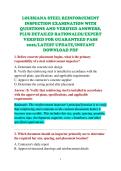
LOUISIANA STEEL REINFORCEMENT
INSPECTION EXAMINATION WITH
QUESTIONS AND VERIFIED ANSWERS,
PLUS DETAILED RATIONALES/EXPERT
VERIFIED FOR GUARANTEED PASS
2026/LATEST UPDATE/INSTANT
DOWNLOAD PDF
1. Before concrete placement begins, what is the primary
responsibility of a steel reinforcement inspector?
A. Determine the concrete mix design
B. Verify that reinforcing steel is installed in accordance with the
approved plans, specifications, and applicable requirements
C. Approve the contractor's concrete supplier
D. Determine the curing period after placement
Answer: B. Verify that reinforcing steel is installed in accordance
with the approved plans, specifications, and applicable
requirements
Rationale: The reinforcement inspector's principal function is to verify
that reinforcing steel conforms to the contract documents before it
becomes inaccessible. This includes bar size, grade, spacing, quantity,
location, laps, development, supports, cover, cleanliness, and other
specified requirements.
2. Which document should an inspector primarily use to determine
the required bar size, spacing, and placement location?
A. Contractor's daily report
B. Approved structural drawings and reinforcement details
1
,C. Concrete delivery ticket
D. Equipment manufacturer's manual
Answer: B. Approved structural drawings and reinforcement details
Rationale: Reinforcing steel requirements are established primarily by
the approved structural plans, schedules, sections, details, and project
specifications. An inspector should not rely on field assumptions or
standard practice when the contract documents establish specific
reinforcement requirements.
3. A reinforcing bar is identified as No. 5. What does the designation
primarily describe?
A. Its tensile strength
B. Its nominal bar size
C. Its concrete cover requirement
D. Its allowable lap length
Answer: B. Its nominal bar size
Rationale: A No. 5 designation identifies a particular reinforcing-bar
size. The designation does not by itself establish the steel grade,
coating, concrete cover, splice length, or structural capacity. Those
requirements must be verified separately.
4. Why is reinforcing-bar grade important during inspection?
A. Grade determines the color of the concrete
B. Grade establishes mechanical properties such as specified yield
strength
C. Grade determines the required concrete slump
D. Grade determines the bar spacing automatically
2
,Answer: B. Grade establishes mechanical properties such as
specified yield strength
Rationale: Reinforcing steel grades specify important mechanical
properties, particularly yield strength and related requirements.
Installing steel of the wrong grade can significantly alter structural
capacity even when the bar diameter and spacing appear correct.
5. An inspector observes that reinforcement is properly spaced but
several bars are smaller than those shown on the drawings. What
should the inspector conclude?
A. The installation is acceptable because spacing is correct
B. The smaller bars are acceptable if they are cleaner
C. The reinforcement does not conform to the drawings and must be
addressed before concrete placement
D. The contractor can automatically substitute smaller bars
Answer: C. The reinforcement does not conform to the drawings
and must be addressed before concrete placement
Rationale: Bar diameter is a fundamental reinforcement requirement.
Correct spacing cannot compensate for an undersized bar unless an
authorized design substitution has been approved through the project's
established process.
6. What is the primary purpose of concrete cover over reinforcing
steel?
A. To make concrete easier to finish
B. To protect reinforcement from environmental exposure and provide
adequate embedment for structural performance
C. To increase concrete slump
D. To eliminate the need for reinforcing-bar supports
3
, Answer: B. To protect reinforcement from environmental exposure
and provide adequate embedment for structural performance
Rationale: Concrete cover protects reinforcement against corrosion
and environmental exposure while providing the necessary embedment
and bond around the steel. Cover requirements vary according to
member type, exposure, reinforcement, and governing specifications.
7. If reinforcing steel is too close to the concrete surface, what is the
principal concern?
A. Excessive concrete strength
B. Insufficient protection and potentially inadequate durability or bond
C. Excessive reinforcement development
D. Increased concrete slump
Answer: B. Insufficient protection and potentially inadequate
durability or bond
Rationale: Insufficient cover can expose reinforcement to moisture,
chlorides, carbonation, and other deterioration mechanisms. It can
also affect bond and structural performance. The inspector should
measure cover rather than estimate it visually.
8. Which device is commonly used to maintain reinforcing steel at
the specified elevation within a concrete member?
A. Concrete vibrator
B. Bar chair or reinforcing support
C. Concrete thermometer
D. Expansion joint
Answer: B. Bar chair or reinforcing support
4
INSPECTION EXAMINATION WITH
QUESTIONS AND VERIFIED ANSWERS,
PLUS DETAILED RATIONALES/EXPERT
VERIFIED FOR GUARANTEED PASS
2026/LATEST UPDATE/INSTANT
DOWNLOAD PDF
1. Before concrete placement begins, what is the primary
responsibility of a steel reinforcement inspector?
A. Determine the concrete mix design
B. Verify that reinforcing steel is installed in accordance with the
approved plans, specifications, and applicable requirements
C. Approve the contractor's concrete supplier
D. Determine the curing period after placement
Answer: B. Verify that reinforcing steel is installed in accordance
with the approved plans, specifications, and applicable
requirements
Rationale: The reinforcement inspector's principal function is to verify
that reinforcing steel conforms to the contract documents before it
becomes inaccessible. This includes bar size, grade, spacing, quantity,
location, laps, development, supports, cover, cleanliness, and other
specified requirements.
2. Which document should an inspector primarily use to determine
the required bar size, spacing, and placement location?
A. Contractor's daily report
B. Approved structural drawings and reinforcement details
1
,C. Concrete delivery ticket
D. Equipment manufacturer's manual
Answer: B. Approved structural drawings and reinforcement details
Rationale: Reinforcing steel requirements are established primarily by
the approved structural plans, schedules, sections, details, and project
specifications. An inspector should not rely on field assumptions or
standard practice when the contract documents establish specific
reinforcement requirements.
3. A reinforcing bar is identified as No. 5. What does the designation
primarily describe?
A. Its tensile strength
B. Its nominal bar size
C. Its concrete cover requirement
D. Its allowable lap length
Answer: B. Its nominal bar size
Rationale: A No. 5 designation identifies a particular reinforcing-bar
size. The designation does not by itself establish the steel grade,
coating, concrete cover, splice length, or structural capacity. Those
requirements must be verified separately.
4. Why is reinforcing-bar grade important during inspection?
A. Grade determines the color of the concrete
B. Grade establishes mechanical properties such as specified yield
strength
C. Grade determines the required concrete slump
D. Grade determines the bar spacing automatically
2
,Answer: B. Grade establishes mechanical properties such as
specified yield strength
Rationale: Reinforcing steel grades specify important mechanical
properties, particularly yield strength and related requirements.
Installing steel of the wrong grade can significantly alter structural
capacity even when the bar diameter and spacing appear correct.
5. An inspector observes that reinforcement is properly spaced but
several bars are smaller than those shown on the drawings. What
should the inspector conclude?
A. The installation is acceptable because spacing is correct
B. The smaller bars are acceptable if they are cleaner
C. The reinforcement does not conform to the drawings and must be
addressed before concrete placement
D. The contractor can automatically substitute smaller bars
Answer: C. The reinforcement does not conform to the drawings
and must be addressed before concrete placement
Rationale: Bar diameter is a fundamental reinforcement requirement.
Correct spacing cannot compensate for an undersized bar unless an
authorized design substitution has been approved through the project's
established process.
6. What is the primary purpose of concrete cover over reinforcing
steel?
A. To make concrete easier to finish
B. To protect reinforcement from environmental exposure and provide
adequate embedment for structural performance
C. To increase concrete slump
D. To eliminate the need for reinforcing-bar supports
3
, Answer: B. To protect reinforcement from environmental exposure
and provide adequate embedment for structural performance
Rationale: Concrete cover protects reinforcement against corrosion
and environmental exposure while providing the necessary embedment
and bond around the steel. Cover requirements vary according to
member type, exposure, reinforcement, and governing specifications.
7. If reinforcing steel is too close to the concrete surface, what is the
principal concern?
A. Excessive concrete strength
B. Insufficient protection and potentially inadequate durability or bond
C. Excessive reinforcement development
D. Increased concrete slump
Answer: B. Insufficient protection and potentially inadequate
durability or bond
Rationale: Insufficient cover can expose reinforcement to moisture,
chlorides, carbonation, and other deterioration mechanisms. It can
also affect bond and structural performance. The inspector should
measure cover rather than estimate it visually.
8. Which device is commonly used to maintain reinforcing steel at
the specified elevation within a concrete member?
A. Concrete vibrator
B. Bar chair or reinforcing support
C. Concrete thermometer
D. Expansion joint
Answer: B. Bar chair or reinforcing support
4


