
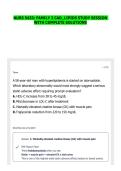
NURS 5433: FAMILY 2 CAD_LIPIDS STUDY SESSION
WITH COMPLETE SOLUTIONS
1 of 50
Term
A 58-year-old man with hyperlipidemia is started on atorvastatin.
Which laboratory abnormality would most strongly suggest a serious
statin adverse effect requiring prompt evaluation?
A. HDL-C increase from 38 to 45 mg/dL
B. Mild decrease in LDL-C after treatment
C. Markedly elevated creatine kinase (CK) with muscle pain
D. Triglyceride reduction from 220 to 150 mg/dL
Give this one a try later!
Answer: C. Markedly elevated creatine kinase (CK) with muscle pain
FNP Board Pearl
Think rhabdomyolysis when you see:
Statin + muscle pain + elevated CK ± dark urine
This is one of the highest-yield statin adverse effects tested on board exams.
, Answer: C. Reassure and continue routine health maintenance
This adolescent has a normal lipid panel:
LDL-C: 118 mg/dL ✅
HDL-C: 55 mg/dL ✅
Triglycerides: 95 mg/dL ✅
He is also:
- Healthy
- Physically active
- Without cardiovascular risk factors
No additional treatment, specialist referral, or medication is indicated
Answer: B. Address the severe hypertriglyceridemia because of pancreatitis risk
The most urgent issue is the triglyceride level >500 mg/dL.
When triglycerides reach this level, the priority shifts from ASCVD prevention to
preventing acute pancreatitis.
Answer: C. ACC/AHA ASCVD Risk Estimator
ACC/AHA ASCVD Risk Estimator: 10-year cardiovascular risk
CHA₂DS₂-VASc: Stroke risk in atrial fibrillation
Wells Score: DVT/PE probability
CURB-65: Pneumonia severity
STOP-BANG: Obstructive sleep apnea screening
Don't know?
2 of 50
Term
A 45-year-old woman taking atorvastatin presents with severe muscle
pain, generalized weakness, and dark-colored urine. Laboratory testing
,reveals acute kidney injury. What is the most appropriate next step?
A. Reassure the patient that mild myalgias are common and continue
the statin
B. Increase the statin dose to improve LDL reduction
C. Suspect rhabdomyolysis and arrange urgent evaluation
D. Switch to ezetimibe and follow up in 6 months
Give this one a try later!
Answer: B. Inhibits intestinal absorption of cholesterol
Ezetimibe works at the brush border of the small intestine by blocking cholesterol
absorption. This reduces the amount of cholesterol delivered to the liver, which in
turn increases LDL receptor activity and lowers circulating LDL-C levels.
It is commonly used:
- As an add-on to statin therapy when LDL goals are not achieved
- In patients who cannot tolerate high-intensity statins
Answer: C. Suspect rhabdomyolysis and arrange urgent evaluation
This patient is demonstrating classic signs of statin-induced rhabdomyolysis:
-Severe muscle pain (myopathy)
-Generalized weakness
-Dark-colored urine (myoglobinuria)
-Acute kidney injury
Rhabdomyolysis is a rare but life-threatening adverse effect of statins and
requires immediate evaluation and treatment. Patients may need
hospitalization, IV fluids, monitoring of CK levels, electrolytes, and renal
function.
, Answer: C. PCSK9 inhibitor
PCSK9 inhibitors (e.g., evolocumab, alirocumab) work by:
- Inhibiting the PCSK9 protein
- Preventing degradation of LDL receptors
- Increasing the number of LDL receptors available on hepatocytes
- Enhancing removal of LDL-C from the bloodstream
They can produce substantial LDL reductions and are commonly used when:
- LDL remains elevated despite maximally tolerated statin therapy
- Familial hypercholesterolemia is present
- Patients are at very high ASCVD risk
Statins: Inhibit HMG-CoA reductase
Ezetimibe: Decrease intestinal cholesterol absorption
Fibrates: Increase lipoprotein lipase activity
P
ACnsSw
Ke9ri:nCh.ibDitiorse: tPerseviseantmLaDjo
ab L rreAcSeCpVtoDr rdisekgfra
ad
ctaotiroinn adults age 40–75 years
Adults aged 40–75 years with diabetes are one of the primary statin-benefit
groups. Even with a relatively modest LDL-C of 128 mg/dL, she should be
considered for statin therapy because diabetes significantly increases
cardiovascular risk.
FNP Board Pearl
If you see:
Age 40–75 + Diabetes
You should immediately think:
✅ Statin therapy is likely indicated.
This is one of the most commonly tested dyslipidemia concepts on FNP boards.
Don't know?
3 of 50
Term
Which of the following adults automatically qualifies for statin therapy
regardless of calculated ASCVD risk?
WITH COMPLETE SOLUTIONS
1 of 50
Term
A 58-year-old man with hyperlipidemia is started on atorvastatin.
Which laboratory abnormality would most strongly suggest a serious
statin adverse effect requiring prompt evaluation?
A. HDL-C increase from 38 to 45 mg/dL
B. Mild decrease in LDL-C after treatment
C. Markedly elevated creatine kinase (CK) with muscle pain
D. Triglyceride reduction from 220 to 150 mg/dL
Give this one a try later!
Answer: C. Markedly elevated creatine kinase (CK) with muscle pain
FNP Board Pearl
Think rhabdomyolysis when you see:
Statin + muscle pain + elevated CK ± dark urine
This is one of the highest-yield statin adverse effects tested on board exams.
, Answer: C. Reassure and continue routine health maintenance
This adolescent has a normal lipid panel:
LDL-C: 118 mg/dL ✅
HDL-C: 55 mg/dL ✅
Triglycerides: 95 mg/dL ✅
He is also:
- Healthy
- Physically active
- Without cardiovascular risk factors
No additional treatment, specialist referral, or medication is indicated
Answer: B. Address the severe hypertriglyceridemia because of pancreatitis risk
The most urgent issue is the triglyceride level >500 mg/dL.
When triglycerides reach this level, the priority shifts from ASCVD prevention to
preventing acute pancreatitis.
Answer: C. ACC/AHA ASCVD Risk Estimator
ACC/AHA ASCVD Risk Estimator: 10-year cardiovascular risk
CHA₂DS₂-VASc: Stroke risk in atrial fibrillation
Wells Score: DVT/PE probability
CURB-65: Pneumonia severity
STOP-BANG: Obstructive sleep apnea screening
Don't know?
2 of 50
Term
A 45-year-old woman taking atorvastatin presents with severe muscle
pain, generalized weakness, and dark-colored urine. Laboratory testing
,reveals acute kidney injury. What is the most appropriate next step?
A. Reassure the patient that mild myalgias are common and continue
the statin
B. Increase the statin dose to improve LDL reduction
C. Suspect rhabdomyolysis and arrange urgent evaluation
D. Switch to ezetimibe and follow up in 6 months
Give this one a try later!
Answer: B. Inhibits intestinal absorption of cholesterol
Ezetimibe works at the brush border of the small intestine by blocking cholesterol
absorption. This reduces the amount of cholesterol delivered to the liver, which in
turn increases LDL receptor activity and lowers circulating LDL-C levels.
It is commonly used:
- As an add-on to statin therapy when LDL goals are not achieved
- In patients who cannot tolerate high-intensity statins
Answer: C. Suspect rhabdomyolysis and arrange urgent evaluation
This patient is demonstrating classic signs of statin-induced rhabdomyolysis:
-Severe muscle pain (myopathy)
-Generalized weakness
-Dark-colored urine (myoglobinuria)
-Acute kidney injury
Rhabdomyolysis is a rare but life-threatening adverse effect of statins and
requires immediate evaluation and treatment. Patients may need
hospitalization, IV fluids, monitoring of CK levels, electrolytes, and renal
function.
, Answer: C. PCSK9 inhibitor
PCSK9 inhibitors (e.g., evolocumab, alirocumab) work by:
- Inhibiting the PCSK9 protein
- Preventing degradation of LDL receptors
- Increasing the number of LDL receptors available on hepatocytes
- Enhancing removal of LDL-C from the bloodstream
They can produce substantial LDL reductions and are commonly used when:
- LDL remains elevated despite maximally tolerated statin therapy
- Familial hypercholesterolemia is present
- Patients are at very high ASCVD risk
Statins: Inhibit HMG-CoA reductase
Ezetimibe: Decrease intestinal cholesterol absorption
Fibrates: Increase lipoprotein lipase activity
P
ACnsSw
Ke9ri:nCh.ibDitiorse: tPerseviseantmLaDjo
ab L rreAcSeCpVtoDr rdisekgfra
ad
ctaotiroinn adults age 40–75 years
Adults aged 40–75 years with diabetes are one of the primary statin-benefit
groups. Even with a relatively modest LDL-C of 128 mg/dL, she should be
considered for statin therapy because diabetes significantly increases
cardiovascular risk.
FNP Board Pearl
If you see:
Age 40–75 + Diabetes
You should immediately think:
✅ Statin therapy is likely indicated.
This is one of the most commonly tested dyslipidemia concepts on FNP boards.
Don't know?
3 of 50
Term
Which of the following adults automatically qualifies for statin therapy
regardless of calculated ASCVD risk?


