
BIOMOLECULE:-
PROTEINS:-
Proteins are the most abundant biomolecules in cell.They are defined as the polymers of amino
acids.Proteins are important for the structure of cells.they also participate in everything
organisms do.
Structure of Proteins:-
Proteins are made up of monomers called amino acids.Different proteins contain different
amino acids.For example:- insulin protein has 51 amino acids and haemoglobin has 574 amino
acids.
AMINO ACIDS:-
Amino acids are the organic molecules that join in specific number and sequence to make
proteins.About 170 types of amino acids occur in organisms.However,20 types of amino acids
participate in making most of the proteins.
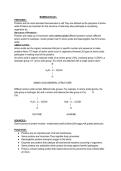
An amino acid is organic molecule made of an amino group ( NH2 ),carboxyl group ( COOH ),a
hydrogen group ( H ) and a side group ( R ) which are attached with a single carbon atom:
R
I
H2N – C – COOH
I
H
AMINO ACID-GENERAL STRUCTURE
Different amino acids contain different side groups. For example, in amino acids glycine, the
side group is hydrogen (H) and in amino acid alanine,the side group is CH3 H
CH3
I I
H2N – C – COOH H2N – C – COOH
I I
H H
GLYCINE ALANINE
SOURCES:-
Good sources of protein include:- meat(mutton,beef,chicken),fish,eggs,milk,pulses,beans,etc.
FUNCTION:-
● Proteins are an important part of all cell membranes.
● Some proteins are hormones.They regulate body processes.
● Haemoglobin proteins transport oxygen in the blood.
● Enzymes are proteins that catalyse all biochemical reactions occurring in organisms.
● Some proteins are antibodies which protect the body against harmful pathogens.
● Firing is a blood clotting protein that makes blood clot to prevent the loss of blood after
an injury.
PROTEINS:-
Proteins are the most abundant biomolecules in cell.They are defined as the polymers of amino
acids.Proteins are important for the structure of cells.they also participate in everything
organisms do.
Structure of Proteins:-
Proteins are made up of monomers called amino acids.Different proteins contain different
amino acids.For example:- insulin protein has 51 amino acids and haemoglobin has 574 amino
acids.
AMINO ACIDS:-
Amino acids are the organic molecules that join in specific number and sequence to make
proteins.About 170 types of amino acids occur in organisms.However,20 types of amino acids
participate in making most of the proteins.
An amino acid is organic molecule made of an amino group ( NH2 ),carboxyl group ( COOH ),a
hydrogen group ( H ) and a side group ( R ) which are attached with a single carbon atom:
R
I
H2N – C – COOH
I
H
AMINO ACID-GENERAL STRUCTURE
Different amino acids contain different side groups. For example, in amino acids glycine, the
side group is hydrogen (H) and in amino acid alanine,the side group is CH3 H
CH3
I I
H2N – C – COOH H2N – C – COOH
I I
H H
GLYCINE ALANINE
SOURCES:-
Good sources of protein include:- meat(mutton,beef,chicken),fish,eggs,milk,pulses,beans,etc.
FUNCTION:-
● Proteins are an important part of all cell membranes.
● Some proteins are hormones.They regulate body processes.
● Haemoglobin proteins transport oxygen in the blood.
● Enzymes are proteins that catalyse all biochemical reactions occurring in organisms.
● Some proteins are antibodies which protect the body against harmful pathogens.
● Firing is a blood clotting protein that makes blood clot to prevent the loss of blood after
an injury.


