

Master Esthetics Utah State Board
Master Esthetics Utah State Board
Study online at https://quizlet.com/_2hjng1
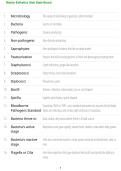
1. Microbiology The study of small living organisms called microbes
2. Bacteria Germs or microbes
3. Pathogenic Disease-producing
4. Non-pathogenic Non-disease producing
5. Saprophytes Non-pathogenic bacteria that live on dead matter
6. Pasteurization Process that kills microorganisms in food and beverage by heating them
7. Staphylococci Staph infections, grape-like bunches
8. Streptococci Strep throat, chain-like formations
9. Diplococci Pneumonia, pairs
10. Bacilli Tetanus, influenza, tuberculosis, bar or rod shaped
11. Spirilla Syphilis and cholera, spiral-shaped
12. Bloodborne Issued by OSHA in 1991, uses standard precaution to assume that all body
Pathogens Standard fluids are infectious and contact with all tissue is hazardous
13. Bacteria thrive in: Dark, damp, dirty areas where there is a food source
14. Bacteria's active Reproduce and grow rapidly, absorb food, divides in two when fully grown
stage
15. Bacteria's inactive Cells die or become inactive, create spores resistant to disinfectant, cold, or
stage heat
16. Flagella or Cilia Hair-like projections that give bacteria like bacilli and spirilla the ability to
move
1
, Master Esthetics Utah State Board
Master Esthetics Utah State Board
Study online at https://quizlet.com/_2hjng1
17. Virus An infectious agent that replicates only within cells of living hosts, much
smaller than bacteria
18. External parasites Organisms that grow and feed on other living organisms called hosts
19. Parasitic Plants Molds, Fungus, Yeast
20. Parasitic Animals Head lice, Scabies
21. Infection Occurs when disease-causing bacteria or virus enter the body and multiply
to the point of interfering with the body's normal state
22. Bloodborne Transmitted through blood or body fluids and cause infectious diseases such
Pathogens as HBV or HIV
23. Common means of Contact with open sores, contact with contaminated hands and implements,
spreading infection exposure to coughing and sneezing, unsanitary conditions, use of common
drinking cups and towels, facial beds that are not properly disinfected
between clients
24. Contagious/Commu- Cause of infection and are communicable by casual contact
nicable Disease
25. Universal Precau- Using consistent infection control procedures for all clients
tions
26. Asymptomatic Carri- A person carrying a disease-producing bacteria or virus with no recognizable
er symptoms of the disease
27. Natural Immunity Partially inherited, natural resistance to disease
28. Passive Immunity Occurs through vaccinations or injections of antigens (acquired)
29. Efficacy Ability to produce results or effectiveness
2
, Master Esthetics Utah State Board
Master Esthetics Utah State Board
Study online at https://quizlet.com/_2hjng1
30. What are the 3 levels Sanitation, Disinfection, Sterilization
of Infection Control?
(lowest to highest)
31. Sanitation Physical removal of debris such as blood and skin particles
32. Examples of Sanita- Washing hands, wear protective gloves, provide new items for each client,
tion discard disposable items
33. Ventilation Ensures that the air does not have a stable, musty odor or the odor of various
chemicals
34. Disinfection Uses products that kill or destroy bacteria and a broad spectrum of viruses
35. OSHA stands for: Occupational Safety and Health Administration
36. OSHA is: The regulating agency under the Department of Labor that enforces safety
and health standards in the workplace
37. MSDS stands for: Material Safety Data Sheet
38. MSDS are: Sheets that provide key information on a specific product regarding ingre-
dients, associated hazards, combustion levels, and storage requirements
39. EPA stands for: Environmental Protection Agency
40. EPA approves: The efficacy of products used for infection control
41. Examples of Disin- Remove all debris by pre-cleaning, rinse thoroughly and pat dry, completely
fection submerge in disinfectant, follow and read directions
42. Blood Spill Proce- Stop service and wash hands, cover hands with gloves, attend tot he injury,
dures disinfect
43. Sterilization
3
Master Esthetics Utah State Board
Study online at https://quizlet.com/_2hjng1
1. Microbiology The study of small living organisms called microbes
2. Bacteria Germs or microbes
3. Pathogenic Disease-producing
4. Non-pathogenic Non-disease producing
5. Saprophytes Non-pathogenic bacteria that live on dead matter
6. Pasteurization Process that kills microorganisms in food and beverage by heating them
7. Staphylococci Staph infections, grape-like bunches
8. Streptococci Strep throat, chain-like formations
9. Diplococci Pneumonia, pairs
10. Bacilli Tetanus, influenza, tuberculosis, bar or rod shaped
11. Spirilla Syphilis and cholera, spiral-shaped
12. Bloodborne Issued by OSHA in 1991, uses standard precaution to assume that all body
Pathogens Standard fluids are infectious and contact with all tissue is hazardous
13. Bacteria thrive in: Dark, damp, dirty areas where there is a food source
14. Bacteria's active Reproduce and grow rapidly, absorb food, divides in two when fully grown
stage
15. Bacteria's inactive Cells die or become inactive, create spores resistant to disinfectant, cold, or
stage heat
16. Flagella or Cilia Hair-like projections that give bacteria like bacilli and spirilla the ability to
move
1
, Master Esthetics Utah State Board
Master Esthetics Utah State Board
Study online at https://quizlet.com/_2hjng1
17. Virus An infectious agent that replicates only within cells of living hosts, much
smaller than bacteria
18. External parasites Organisms that grow and feed on other living organisms called hosts
19. Parasitic Plants Molds, Fungus, Yeast
20. Parasitic Animals Head lice, Scabies
21. Infection Occurs when disease-causing bacteria or virus enter the body and multiply
to the point of interfering with the body's normal state
22. Bloodborne Transmitted through blood or body fluids and cause infectious diseases such
Pathogens as HBV or HIV
23. Common means of Contact with open sores, contact with contaminated hands and implements,
spreading infection exposure to coughing and sneezing, unsanitary conditions, use of common
drinking cups and towels, facial beds that are not properly disinfected
between clients
24. Contagious/Commu- Cause of infection and are communicable by casual contact
nicable Disease
25. Universal Precau- Using consistent infection control procedures for all clients
tions
26. Asymptomatic Carri- A person carrying a disease-producing bacteria or virus with no recognizable
er symptoms of the disease
27. Natural Immunity Partially inherited, natural resistance to disease
28. Passive Immunity Occurs through vaccinations or injections of antigens (acquired)
29. Efficacy Ability to produce results or effectiveness
2
, Master Esthetics Utah State Board
Master Esthetics Utah State Board
Study online at https://quizlet.com/_2hjng1
30. What are the 3 levels Sanitation, Disinfection, Sterilization
of Infection Control?
(lowest to highest)
31. Sanitation Physical removal of debris such as blood and skin particles
32. Examples of Sanita- Washing hands, wear protective gloves, provide new items for each client,
tion discard disposable items
33. Ventilation Ensures that the air does not have a stable, musty odor or the odor of various
chemicals
34. Disinfection Uses products that kill or destroy bacteria and a broad spectrum of viruses
35. OSHA stands for: Occupational Safety and Health Administration
36. OSHA is: The regulating agency under the Department of Labor that enforces safety
and health standards in the workplace
37. MSDS stands for: Material Safety Data Sheet
38. MSDS are: Sheets that provide key information on a specific product regarding ingre-
dients, associated hazards, combustion levels, and storage requirements
39. EPA stands for: Environmental Protection Agency
40. EPA approves: The efficacy of products used for infection control
41. Examples of Disin- Remove all debris by pre-cleaning, rinse thoroughly and pat dry, completely
fection submerge in disinfectant, follow and read directions
42. Blood Spill Proce- Stop service and wash hands, cover hands with gloves, attend tot he injury,
dures disinfect
43. Sterilization
3


