

Business — Finance (paper 2)
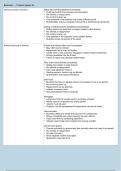
Internal sources of nance Retained pro t (established businesses):
• Pro t kept within the business and reinvested
• No interest or repayments
• No control is given up
• Only available if the business has made su cient pro t
• Shareholders may be unhappy if less pro t is distributed as dividends
Selling unwanted assets (established businesses):
• Selling assets the business no longer needs to raise nance
• No interest or repayments
• No control is given up
• Only possible if the business owns suitable assets
• Business loses ownership of the asset
External sources of nance Family and friends (often new businesses)
• May o er low/no interest
• Repayment terms may be exible
• Useful when a new business struggles to obtain nance elsewhere
• Amount available may be limited
• Failure to repay may damage relationships
New share issue (limited companies)
• Selling new shares to raise nance
• No interest or repayments
• Can raise signi cant nance
• Existing owners' control may be diluted
• Shareholders may expect dividends
Bank loan
• Business borrows an agreed amount and repays it over a set period
• No control is given up
• Repayments can be planned
• Interest increases costs
• Security/collateral may be required
Mortgage
• Long-term nance usually used to purchase property
• Allows cost to be spread over a long period
• Interest must be paid
• Property may be repossessed if repayments cannot be made
Hire purchase
• Business obtains an asset and pays for it in installments
• Allows immediate use without paying full cost upfront
• Helps cash ow by spreading payments
• Interest means total cost is higher than buying outright
Government grants
• Finance provided by government that normally does not need to be repaid
• No interest or repayments
• No loss of control
• Strict eligibility criteria may apply
• Application may take time
fi ff fiflfi fi fififi flfi fi ffi fi fifi
, Business — Finance (paper 2)
External sources of nance (continued) Overdraft (short term)
• Allows the business to spend more than the amount available in its bank
account, up to an agreed limit
• Flexible for unexpected/short-term cash shortages
• Interest usually only charged on amount borrowed
• No control is given up
• Interest rates may be higher than loans
• Bank may reduce or withdraw the overdraft facility
Trade credit (short term)
• Allows a business to obtain goods/services from suppliers and pay later
• Improves short-term cash ow
• No control is given up
• Late payment may damage supplier relationships
• Business may lose discounts for immediate payment
Appropriateness of sources of nance The most appropriate source depends on:
• amount required - larger investments may require loans, mortgages or share
issues
• purpose - mortgage for property; hire purchase for equipment/vehicles;
overdraft for short-term cash shortages
• time period - short-term vs long-term nance
• cost - interest and other charges
• ability to repay - whether the business can a ord repayments
• control - issuing shares may dilute existing owners' control
• business circumstances - new businesses do not have retained pro ts,
whereas established pro table businesses may
New businesses: may use family/friends, loans, overdrafts, grants or other
external nance because retained pro t is unavailable
Established businesses: may have access to retained pro t and asset sales as
well as external sources
Suitability must be judged in context - a source that is suitable for one business
may not be suitable for another
Importance of cash to businesses Cash ow: the movement of cash into and out of a business.
Cash in ow: cash entering a business.
Cash out ow: cash leaving a business.
Importance of cash:
• businesses need cash to pay day-to-day expenses, e.g. suppliers,
employees, rent and bills
• su cient cash allows a business to continue operating and meet payments
on time
• cash can allow businesses to expand, take advantage of opportunities and
deal with unexpected costs
Consequences of cash ow problems • Unable to pay suppliers on time - may damage supplier relationships
• Unable to pay employees on time - may reduce motivation
• More di cult to expand the business
• Unable to take advantage of opportunities
• Unable to deal with unexpected costs
• Severe cash shortages may cause the business to become insolvent
ffi fl flffififl
fi flfi fl fi fi ff fi fi
Internal sources of nance Retained pro t (established businesses):
• Pro t kept within the business and reinvested
• No interest or repayments
• No control is given up
• Only available if the business has made su cient pro t
• Shareholders may be unhappy if less pro t is distributed as dividends
Selling unwanted assets (established businesses):
• Selling assets the business no longer needs to raise nance
• No interest or repayments
• No control is given up
• Only possible if the business owns suitable assets
• Business loses ownership of the asset
External sources of nance Family and friends (often new businesses)
• May o er low/no interest
• Repayment terms may be exible
• Useful when a new business struggles to obtain nance elsewhere
• Amount available may be limited
• Failure to repay may damage relationships
New share issue (limited companies)
• Selling new shares to raise nance
• No interest or repayments
• Can raise signi cant nance
• Existing owners' control may be diluted
• Shareholders may expect dividends
Bank loan
• Business borrows an agreed amount and repays it over a set period
• No control is given up
• Repayments can be planned
• Interest increases costs
• Security/collateral may be required
Mortgage
• Long-term nance usually used to purchase property
• Allows cost to be spread over a long period
• Interest must be paid
• Property may be repossessed if repayments cannot be made
Hire purchase
• Business obtains an asset and pays for it in installments
• Allows immediate use without paying full cost upfront
• Helps cash ow by spreading payments
• Interest means total cost is higher than buying outright
Government grants
• Finance provided by government that normally does not need to be repaid
• No interest or repayments
• No loss of control
• Strict eligibility criteria may apply
• Application may take time
fi ff fiflfi fi fififi flfi fi ffi fi fifi
, Business — Finance (paper 2)
External sources of nance (continued) Overdraft (short term)
• Allows the business to spend more than the amount available in its bank
account, up to an agreed limit
• Flexible for unexpected/short-term cash shortages
• Interest usually only charged on amount borrowed
• No control is given up
• Interest rates may be higher than loans
• Bank may reduce or withdraw the overdraft facility
Trade credit (short term)
• Allows a business to obtain goods/services from suppliers and pay later
• Improves short-term cash ow
• No control is given up
• Late payment may damage supplier relationships
• Business may lose discounts for immediate payment
Appropriateness of sources of nance The most appropriate source depends on:
• amount required - larger investments may require loans, mortgages or share
issues
• purpose - mortgage for property; hire purchase for equipment/vehicles;
overdraft for short-term cash shortages
• time period - short-term vs long-term nance
• cost - interest and other charges
• ability to repay - whether the business can a ord repayments
• control - issuing shares may dilute existing owners' control
• business circumstances - new businesses do not have retained pro ts,
whereas established pro table businesses may
New businesses: may use family/friends, loans, overdrafts, grants or other
external nance because retained pro t is unavailable
Established businesses: may have access to retained pro t and asset sales as
well as external sources
Suitability must be judged in context - a source that is suitable for one business
may not be suitable for another
Importance of cash to businesses Cash ow: the movement of cash into and out of a business.
Cash in ow: cash entering a business.
Cash out ow: cash leaving a business.
Importance of cash:
• businesses need cash to pay day-to-day expenses, e.g. suppliers,
employees, rent and bills
• su cient cash allows a business to continue operating and meet payments
on time
• cash can allow businesses to expand, take advantage of opportunities and
deal with unexpected costs
Consequences of cash ow problems • Unable to pay suppliers on time - may damage supplier relationships
• Unable to pay employees on time - may reduce motivation
• More di cult to expand the business
• Unable to take advantage of opportunities
• Unable to deal with unexpected costs
• Severe cash shortages may cause the business to become insolvent
ffi fl flffififl
fi flfi fl fi fi ff fi fi


