

CPDT-KA prep
CPDT-KA prep.pdf CPDT-KA prep.pdf CPDT-KA prep.pdf
Study online at https://quizlet.com/_ety1ld
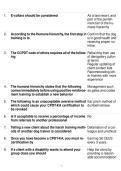
1. E-collars should be considered As a last resort, and
part of the punish-
ment tier of the hu-
mane hierarchy
2. According to the Humane hierarchy, the first step in Confirm that the dog
training is to is in good health and
receiving proper nu-
trition
3. The CCPDT code of ethics requires all of the follow- Refraining from use
ing of derogatory cultur-
al terms
Regular updating of
client contact lists
Recommending oth-
er trainers with more
experience
4. The humane hierarchy states that the following Management such
comes immediately before using positive reinforce- as gates and crates
ment training to establish a new behavior
5. The following is an unacceptable aversive method Ear pinch method of
which could cause your CPDT-KA certification to dumbell retrieve
be revoked
6. Is it acceptable to receive a percentage of income No
from referrals to another professional
7. Telling a new client about the harsh training meth- Defamation of a col-
ods of another dog trainer is considered league and unethical
8. Once you have become a CPDT-KA, you must re- Earning 36 CEUS
certification by every 3 years.
9. If a client with a disability wants to attend your Help the client by
group class you should providing a reason-
able accommodation
CPDT-KA prep.pdf CPDT-KA prep.pdf CPDT-KA prep.pdf
, CPDT-KA prep
CPDT-KA prep.pdf CPDT-KA prep.pdf CPDT-KA prep.pdf
Study online at https://quizlet.com/_ety1ld
to mediate her dis-
ability
10. To protect your clients identity at all times you Keep registration
should never forms where class
members can see
them
11. True or False. It is permissible to bring noted into False
the CPDT-KA exam testing center.
12. True or False. It is permissible to turn clients away False
if you don't like their lifestyle choices or breed of
dog.
13. True or False. A CPDT-KA should acquire writ- True
ten permission prior to photographing or videoing
clients
14. + Positive Adding something to
the environment giv-
ing something to the
learner.
15. - Negative Taking something
away from the envi-
ronment. Removing
or withholding some-
thing from the learn-
er.
16. Reinforcer Something the learn-
er will work to earn.
Something the learn-
er finds pleasur-
able. Something that
strengthens the like-
lihood that a behav-
ior will repeat.
CPDT-KA prep.pdf CPDT-KA prep.pdf CPDT-KA prep.pdf
, CPDT-KA prep
CPDT-KA prep.pdf CPDT-KA prep.pdf CPDT-KA prep.pdf
Study online at https://quizlet.com/_ety1ld
17. Punisher Something the learn-
er will work to avoid.
Something the learn-
er finds aversive.
Something that di-
minishes the likeli-
hood that a behavior
will be repeated
18. Primary reinforcer Food, reproductive
opportunity, water,
physical and emo-
tional security, and
play
19. Secondary reinforcer A stimulus that has
been paired with a
primary reinforcer. A
clicker, a simple be-
havior
20. Tertiary reinforcer A behavior or stim-
ulus that has been
paired with a sec-
ondary reinforcer
21. Stimulus Something that elic-
its a behavior
22. Response The behavior elicited
by a stimulus
23. Antecedent Something that
comes before a be-
havior. Often a stim-
ulus or a cue.
24. Behavior Something that the
learner does in re-
CPDT-KA prep.pdf CPDT-KA prep.pdf CPDT-KA prep.pdf
CPDT-KA prep.pdf CPDT-KA prep.pdf CPDT-KA prep.pdf
Study online at https://quizlet.com/_ety1ld
1. E-collars should be considered As a last resort, and
part of the punish-
ment tier of the hu-
mane hierarchy
2. According to the Humane hierarchy, the first step in Confirm that the dog
training is to is in good health and
receiving proper nu-
trition
3. The CCPDT code of ethics requires all of the follow- Refraining from use
ing of derogatory cultur-
al terms
Regular updating of
client contact lists
Recommending oth-
er trainers with more
experience
4. The humane hierarchy states that the following Management such
comes immediately before using positive reinforce- as gates and crates
ment training to establish a new behavior
5. The following is an unacceptable aversive method Ear pinch method of
which could cause your CPDT-KA certification to dumbell retrieve
be revoked
6. Is it acceptable to receive a percentage of income No
from referrals to another professional
7. Telling a new client about the harsh training meth- Defamation of a col-
ods of another dog trainer is considered league and unethical
8. Once you have become a CPDT-KA, you must re- Earning 36 CEUS
certification by every 3 years.
9. If a client with a disability wants to attend your Help the client by
group class you should providing a reason-
able accommodation
CPDT-KA prep.pdf CPDT-KA prep.pdf CPDT-KA prep.pdf
, CPDT-KA prep
CPDT-KA prep.pdf CPDT-KA prep.pdf CPDT-KA prep.pdf
Study online at https://quizlet.com/_ety1ld
to mediate her dis-
ability
10. To protect your clients identity at all times you Keep registration
should never forms where class
members can see
them
11. True or False. It is permissible to bring noted into False
the CPDT-KA exam testing center.
12. True or False. It is permissible to turn clients away False
if you don't like their lifestyle choices or breed of
dog.
13. True or False. A CPDT-KA should acquire writ- True
ten permission prior to photographing or videoing
clients
14. + Positive Adding something to
the environment giv-
ing something to the
learner.
15. - Negative Taking something
away from the envi-
ronment. Removing
or withholding some-
thing from the learn-
er.
16. Reinforcer Something the learn-
er will work to earn.
Something the learn-
er finds pleasur-
able. Something that
strengthens the like-
lihood that a behav-
ior will repeat.
CPDT-KA prep.pdf CPDT-KA prep.pdf CPDT-KA prep.pdf
, CPDT-KA prep
CPDT-KA prep.pdf CPDT-KA prep.pdf CPDT-KA prep.pdf
Study online at https://quizlet.com/_ety1ld
17. Punisher Something the learn-
er will work to avoid.
Something the learn-
er finds aversive.
Something that di-
minishes the likeli-
hood that a behavior
will be repeated
18. Primary reinforcer Food, reproductive
opportunity, water,
physical and emo-
tional security, and
play
19. Secondary reinforcer A stimulus that has
been paired with a
primary reinforcer. A
clicker, a simple be-
havior
20. Tertiary reinforcer A behavior or stim-
ulus that has been
paired with a sec-
ondary reinforcer
21. Stimulus Something that elic-
its a behavior
22. Response The behavior elicited
by a stimulus
23. Antecedent Something that
comes before a be-
havior. Often a stim-
ulus or a cue.
24. Behavior Something that the
learner does in re-
CPDT-KA prep.pdf CPDT-KA prep.pdf CPDT-KA prep.pdf


