

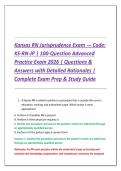
Kansas RN Jurisprudence Exam — Code:
KS-RN-JP | 100-Question Advanced
Practice Exam 2026 | Questions &
Answers with Detailed Rationales |
Complete Exam Prep & Study Guide
1. A Kansas RN is asked to perform a procedure that is outside the nurse's
education, training, and authorized scope. Which action is most
appropriate?
A. Perform it if another RN is present
B. Perform it if the physician requests it
C. Decline the procedure and ensure the patient's needs are addressed through
an appropriately qualified person
D. Perform it if the patient signs a consent form
Answer: C. Decline the procedure and ensure the patient's needs are addressed
through an appropriately qualified person
Rationale: An RN must practice within the authorized scope of nursing and
maintain the knowledge, preparation, and competency necessary for assigned
,responsibilities. Performing acts beyond the authorized scope may constitute
unprofessional conduct.
2. Under the Kansas Nurse Practice Act, professional nursing includes which
activity?
A. Only administration of medications
B. Only carrying out physician orders
C. Care, nursing diagnosis, treatment, counseling, health teaching, and
execution of prescribed medical regimens
D. Independent medical diagnosis of disease
Answer: C. Care, nursing diagnosis, treatment, counseling, health teaching, and
execution of prescribed medical regimens
Rationale: Kansas defines professional nursing broadly and specifically
distinguishes nursing diagnosis from medical diagnosis.
3. Which statement best distinguishes a Kansas RN's nursing diagnosis from a
medical diagnosis?
A. Nursing diagnosis identifies the underlying disease
B. Nursing diagnosis determines the physician's treatment plan
C. Nursing diagnosis identifies and discriminates between physical and
psychosocial signs and symptoms relevant to nursing care
D. Nursing diagnosis replaces medical diagnosis
Answer: C. Nursing diagnosis identifies and discriminates between physical and
psychosocial signs and symptoms relevant to nursing care
Rationale: Kansas law expressly defines nursing diagnosis as distinct from
medical diagnosis.
4. An RN receives an order that appears unsafe because the patient's current
condition has changed. What is the nurse's best initial response?
A. Carry out the order without question
B. Ask another nurse to give the medication
,C. Assess the patient, clarify the order, and take appropriate action to protect
the patient
D. Document the order and leave the decision to the patient
Answer: C. Assess the patient, clarify the order, and take appropriate action to
protect the patient
Rationale: Patient safety is central to professional nursing practice. An RN
should not blindly implement an order that appears unsafe or inconsistent with
the patient's condition.
5. Which person is generally prohibited from representing themselves as a
registered professional nurse in Kansas?
A. A nursing student performing clinical duties
B. A retired nurse
C. A person who has not been duly licensed as a registered professional nurse
D. A family caregiver
Answer: C. A person who has not been duly licensed as a registered professional
nurse
Rationale: Kansas law prohibits unauthorized practice and the unauthorized use
of titles or representations indicating RN licensure.
6. A nursing student performs patient care as part of an approved clinical
course. Which statement is most accurate?
A. The student is automatically licensed as an RN
B. The student may independently practice as an RN
C. Kansas law recognizes nursing practice by students as part of an approved
nursing clinical course
D. The student may use the title RN while in clinical
Answer: C. Kansas law recognizes nursing practice by students as part of an
approved nursing clinical course
, Rationale: Kansas specifically identifies student nursing practice as an activity
that is not prohibited when performed as part of an approved clinical course.
7. An RN's Kansas license is approaching its renewal date. Under current
Kansas law, what is the general license cycle?
A. Every year
B. Every three years
C. Every two years
D. Every five years
Answer: C. Every two years
Rationale: Kansas licenses, including multistate licenses under the Nurse
Licensure Compact, have a renewal date set every two years.
8. A Kansas RN's renewal date has passed. What does the current law provide
regarding the first 30 days following the renewal date?
A. The license immediately becomes permanently revoked
B. The nurse may practice only with physician approval
C. The license remains valid and active during the 30-day period following the
renewal date
D. The nurse must obtain a temporary license before working
Answer: C. The license remains valid and active during the 30-day period
following the renewal date
Rationale: Current Kansas law provides a 30-day late-renewal period during
which the license remains valid and active, subject to the statutory
requirements.
9. What happens if a Kansas RN does not complete renewal within the 30-day
period following the renewal date?
A. The license remains automatically active
B. The nurse may continue practicing indefinitely
C. The license is considered lapsed and the nurse is not eligible to practice by
KS-RN-JP | 100-Question Advanced
Practice Exam 2026 | Questions &
Answers with Detailed Rationales |
Complete Exam Prep & Study Guide
1. A Kansas RN is asked to perform a procedure that is outside the nurse's
education, training, and authorized scope. Which action is most
appropriate?
A. Perform it if another RN is present
B. Perform it if the physician requests it
C. Decline the procedure and ensure the patient's needs are addressed through
an appropriately qualified person
D. Perform it if the patient signs a consent form
Answer: C. Decline the procedure and ensure the patient's needs are addressed
through an appropriately qualified person
Rationale: An RN must practice within the authorized scope of nursing and
maintain the knowledge, preparation, and competency necessary for assigned
,responsibilities. Performing acts beyond the authorized scope may constitute
unprofessional conduct.
2. Under the Kansas Nurse Practice Act, professional nursing includes which
activity?
A. Only administration of medications
B. Only carrying out physician orders
C. Care, nursing diagnosis, treatment, counseling, health teaching, and
execution of prescribed medical regimens
D. Independent medical diagnosis of disease
Answer: C. Care, nursing diagnosis, treatment, counseling, health teaching, and
execution of prescribed medical regimens
Rationale: Kansas defines professional nursing broadly and specifically
distinguishes nursing diagnosis from medical diagnosis.
3. Which statement best distinguishes a Kansas RN's nursing diagnosis from a
medical diagnosis?
A. Nursing diagnosis identifies the underlying disease
B. Nursing diagnosis determines the physician's treatment plan
C. Nursing diagnosis identifies and discriminates between physical and
psychosocial signs and symptoms relevant to nursing care
D. Nursing diagnosis replaces medical diagnosis
Answer: C. Nursing diagnosis identifies and discriminates between physical and
psychosocial signs and symptoms relevant to nursing care
Rationale: Kansas law expressly defines nursing diagnosis as distinct from
medical diagnosis.
4. An RN receives an order that appears unsafe because the patient's current
condition has changed. What is the nurse's best initial response?
A. Carry out the order without question
B. Ask another nurse to give the medication
,C. Assess the patient, clarify the order, and take appropriate action to protect
the patient
D. Document the order and leave the decision to the patient
Answer: C. Assess the patient, clarify the order, and take appropriate action to
protect the patient
Rationale: Patient safety is central to professional nursing practice. An RN
should not blindly implement an order that appears unsafe or inconsistent with
the patient's condition.
5. Which person is generally prohibited from representing themselves as a
registered professional nurse in Kansas?
A. A nursing student performing clinical duties
B. A retired nurse
C. A person who has not been duly licensed as a registered professional nurse
D. A family caregiver
Answer: C. A person who has not been duly licensed as a registered professional
nurse
Rationale: Kansas law prohibits unauthorized practice and the unauthorized use
of titles or representations indicating RN licensure.
6. A nursing student performs patient care as part of an approved clinical
course. Which statement is most accurate?
A. The student is automatically licensed as an RN
B. The student may independently practice as an RN
C. Kansas law recognizes nursing practice by students as part of an approved
nursing clinical course
D. The student may use the title RN while in clinical
Answer: C. Kansas law recognizes nursing practice by students as part of an
approved nursing clinical course
, Rationale: Kansas specifically identifies student nursing practice as an activity
that is not prohibited when performed as part of an approved clinical course.
7. An RN's Kansas license is approaching its renewal date. Under current
Kansas law, what is the general license cycle?
A. Every year
B. Every three years
C. Every two years
D. Every five years
Answer: C. Every two years
Rationale: Kansas licenses, including multistate licenses under the Nurse
Licensure Compact, have a renewal date set every two years.
8. A Kansas RN's renewal date has passed. What does the current law provide
regarding the first 30 days following the renewal date?
A. The license immediately becomes permanently revoked
B. The nurse may practice only with physician approval
C. The license remains valid and active during the 30-day period following the
renewal date
D. The nurse must obtain a temporary license before working
Answer: C. The license remains valid and active during the 30-day period
following the renewal date
Rationale: Current Kansas law provides a 30-day late-renewal period during
which the license remains valid and active, subject to the statutory
requirements.
9. What happens if a Kansas RN does not complete renewal within the 30-day
period following the renewal date?
A. The license remains automatically active
B. The nurse may continue practicing indefinitely
C. The license is considered lapsed and the nurse is not eligible to practice by


